


Platelets in the neonate: Not just a small adult
- PMID: 35592812
- PMCID: PMC9102610
- DOI: 10.1002/rth2.12719
Platelets in the neonate: Not just a small adult
Abstract
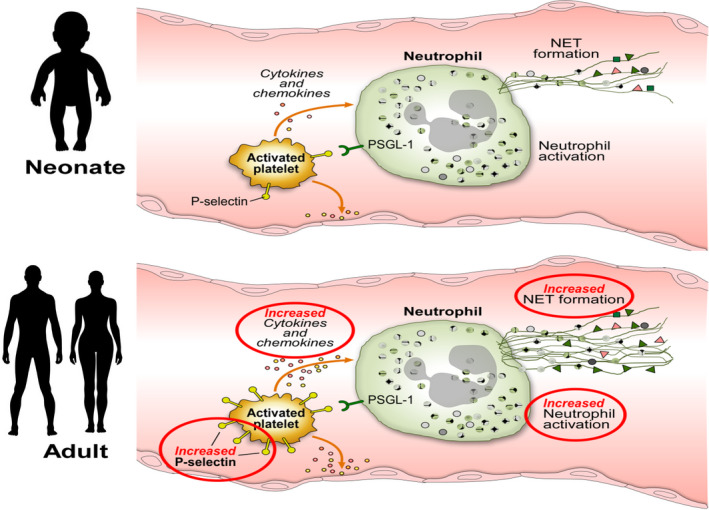
Neonates, particularly those born preterm, have a high incidence of thrombocytopenia and bleeding, most commonly in the brain. Because of this, it has historically been accepted that neonates should be transfused at higher platelet counts than older children or adults, to decrease their bleeding risk. However, a number of observational studies and a recent large, randomized trial found a higher incidence of bleeding and mortality in neonates who received more platelet transfusions. The mechanisms underlying the deleterious effects of platelet transfusions in neonates are unknown, but it has been hypothesized that transfusing adult platelets into the very different physiological environment of a neonate may result in a "developmental mismatch" with potential negative consequences. Specifically, neonatal platelets are hyporeactive in response to multiple agonists and upon activation express less surface P-selectin than adult platelets. However, this hyporeactivity is well balanced by factors in neonatal blood that promote clotting, such as the elevated hematocrit, elevated von Willebrand factor (VWF) levels, and a predominance of ultra-long VWF polymers, with the net result of normal neonatal primary hemostasis. So far, most studies on the developmental differences between neonatal and adult platelets have focused on their hemostatic functions. However, it is now clear that platelets have important nonhemostatic functions, particularly in angiogenesis, immune responses, and inflammation. Whether equally important developmental differences exist with regard to those nonhemostatic platelet functions and how platelet transfusions perturb those processes in neonates remain unanswered questions.
Keywords: hemostasis; inflammation; neonate; platelet; platelet transfusion.
© 2022 The Authors. Research and Practice in Thrombosis and Haemostasis published by Wiley Periodicals LLC on behalf of International Society on Thrombosis and Haemostasis (ISTH).
Figures
References
-
- Andrew M, Castle V, Saigal S, Carter C, Kelton JG. Clinical impact of neonatal thrombocytopenia. J Pediatr. 1987;110:457. - PubMed
-
- Castle V, Andrew M, Kelton J, Giron D, Johnston M, Carter C. Frequency and mechanism of neonatal thrombocytopenia. J Pediatr. 1986;108:749. - PubMed
-
- Christensen RD, Henry E, Wiedmeier SE, et al. Thrombocytopenia among extremely low birth weight neonates: data from a multihospital healthcare system. J Perinatol. 2006;26:348. - PubMed
-
- Bolisetty S, Dhawan A, Abdel‐Latif M, et al. Intraventricular hemorrhage and neurodevelopmental outcomes in extreme preterm infants. Pediatrics. 2014;133:55. - PubMed
-
- Cremer M, Sola‐Visner M, Roll S, et al. Platelet transfusions in neonates: practices in the United States vary significantly from those in Austria, Germany, and Switzerland. Transfusion. 2011;51:2634. - PubMed
LinkOut - more resources
Full Text Sources
Miscellaneous
