


Identification of Potential Urinary Metabolite Biomarkers of Pseudomonas aeruginosa Ventilator-Associated Pneumonia
- PMID: 35592849
- PMCID: PMC9112676
- DOI: 10.1177/11772719221099131
Identification of Potential Urinary Metabolite Biomarkers of Pseudomonas aeruginosa Ventilator-Associated Pneumonia
Abstract
Introduction: Ventilator-associated pneumonia (VAP) caused by Pseudomonas aeruginosa is a major cause of morbidity and mortality in hospital intensive care units (ICU). Rapid identification of P. aeruginosa-derived markers in easily accessible patients' samples can enable an early detection of P. aeruginosa VAP (VAP-PA), thereby stewarding antibiotic use and improving clinical outcomes.
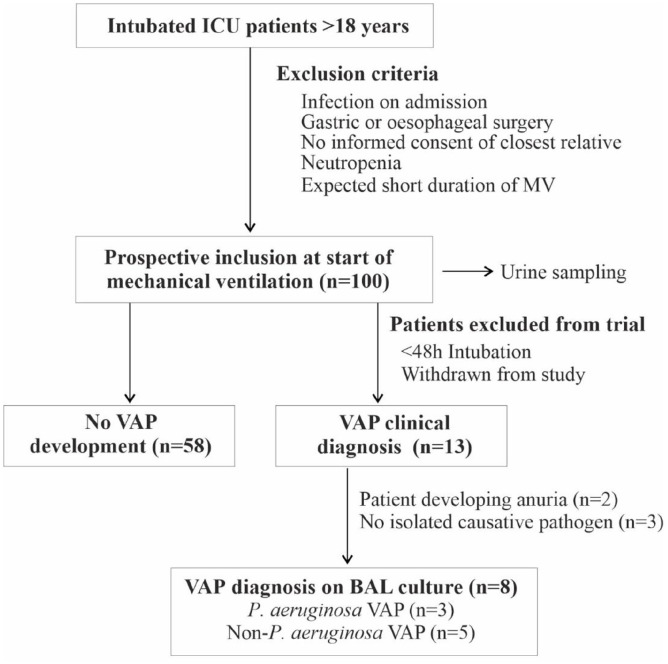
Methods: Metabolites were analysed using liquid chromatography-mass spectrometry (LC-MS) in prospectively collected urine samples from mechanically ventilated patients admitted to the Antwerp University Hospital ICU. Patients were followed from the start of mechanical ventilation (n = 100 patients) till the time of clinical diagnosis of VAP (n = 13). Patients (n = 8) in whom diagnosis of VAP was further confirmed by culturing respiratory samples and urine samples were studied for semi-quantitative metabolomics.
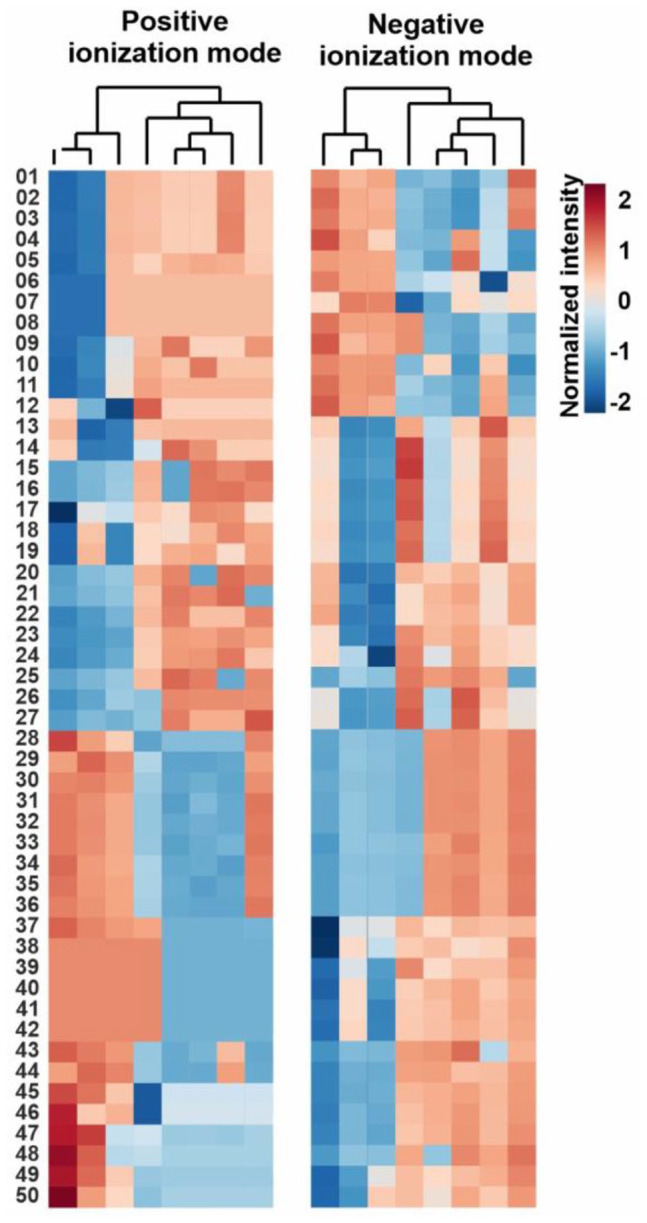
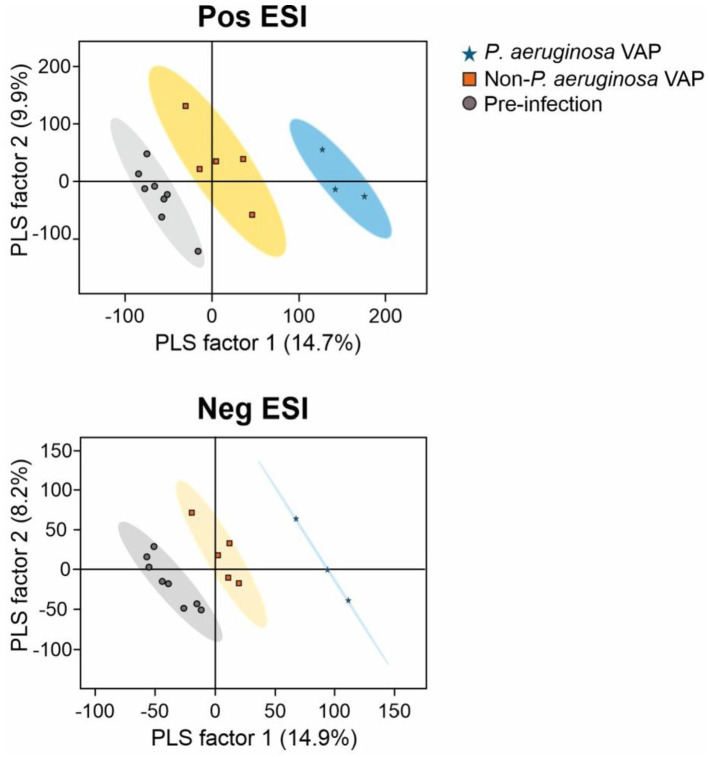
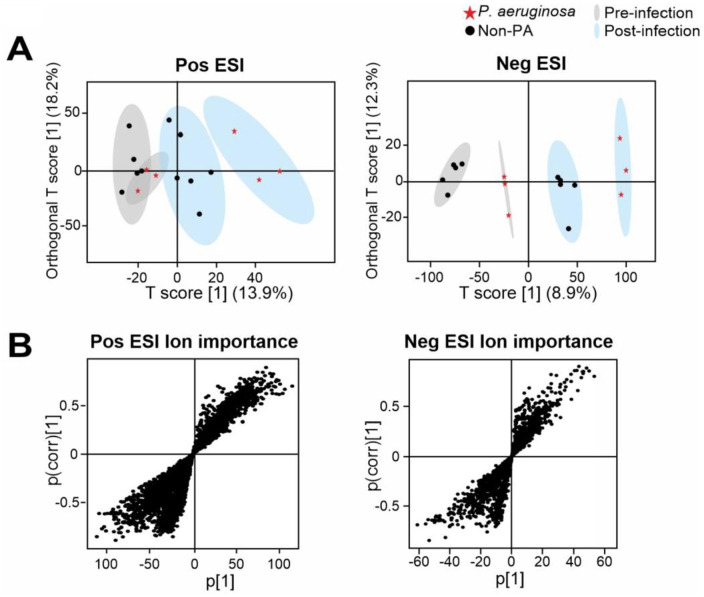
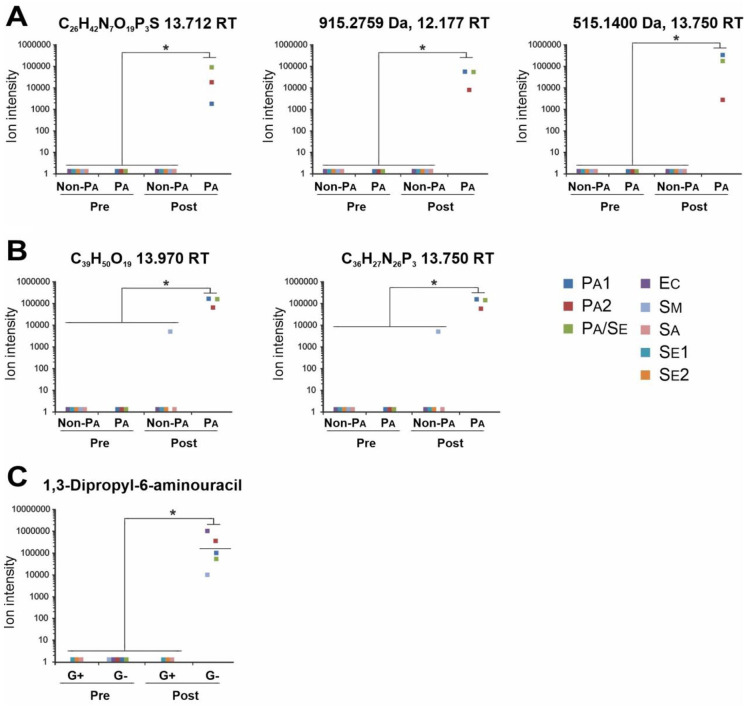
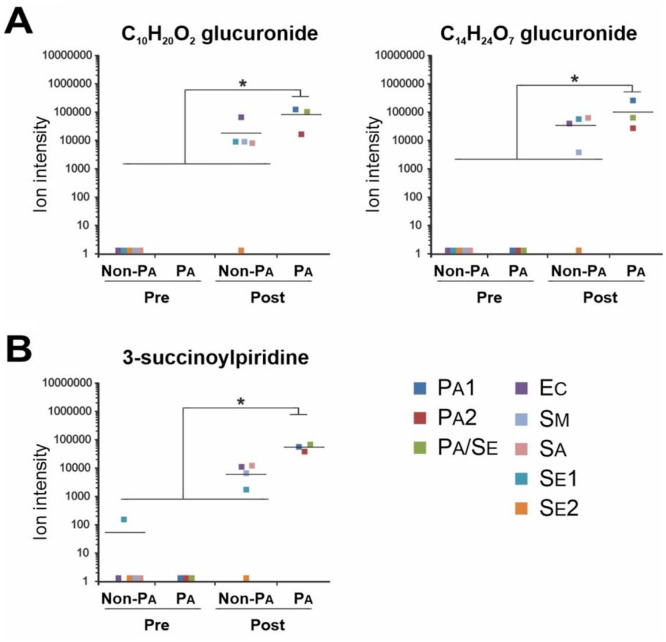
Results: We first show that multivariate analyses highly discriminated VAP-PA from VAP-non-PA as well as from the pre-infection groups (R 2 = .97 and .98, respectively). A further univariate analysis identified 58 metabolites that were significantly elevated or uniquely present in VAP-PA compared to the VAP-non-PA and pre-infection groups (P < .05). These comprised both a known metabolite of histidine as well as a novel nicotine metabolite. Most interestingly, we identified 3 metabolites that were not only highly upregulated for, but were also highly specific to, VAP-PA, as these metabolites were completely absent in all pre-infection timepoints and in VAP-non-PA group.
Conclusions: Considerable differences exist between urine metabolites in VAP-PA compared to VAP due to other bacterial aetiologies as well to non-VAP (pre-infection) timepoints. The unique urinary metabolic biomarkers we describe here, if further validated, could serve as highly specific diagnostic biomarkers of VAP-PA.
Keywords: Hospital-acquired pneumonia; Pseudomonas aeruginosa; VAP; mass spectrometry; metabolomics; urine biomarkers.
© The Author(s) 2022.
Conflict of interest statement
Declaration of Conflicting Interests: The author(s) declared no potential conflicts of interest with respect to the research, authorship, and/or publication of this article.
Figures
References
-
- Martin-Loeches I, Povoa P, Rodríguez A, et al.. Incidence and prognosis of ventilator-associated tracheobronchitis (TAVeM): a multicentre, prospective, observational study. Lancet Respir Med. 2015;3:859-868. - PubMed
-
- Koulenti D, Tsigou E, Rello J. Nosocomial pneumonia in 27 ICUs in Europe: perspectives from the EU-VAP/CAP study. Eur J Clin Microbiol Infect Dis. 2017;36:1999-2006. - PubMed
-
- Rello J, Diaz E. Pneumonia in the intensive care unit. Crit Care Med. 2003;31:2544-2551. - PubMed
-
- Crouch Brewer S, Wunderink RG, Jones CB, Leeper KV., Jr. Ventilator-associated pneumonia due to Pseudomonas aeruginosa. Chest. 1996;109:1019-1029. - PubMed
-
- American Thoracic Society, Infectious Diseases Society of America. Guidelines for the management of adults with hospital-acquired, ventilator-associated, and healthcare-associated pneumonia. Am J Respir Crit Care Med. 2005;171:388-416. - PubMed
LinkOut - more resources
Full Text Sources
