


Improving Outcomes Measurement in Palliative Care: The Lasting Impact of Randy Curtis and his Collaborators
- PMID: 35595371
- PMCID: PMC9173670
- DOI: 10.1016/j.jpainsymman.2022.03.012
Improving Outcomes Measurement in Palliative Care: The Lasting Impact of Randy Curtis and his Collaborators
Abstract
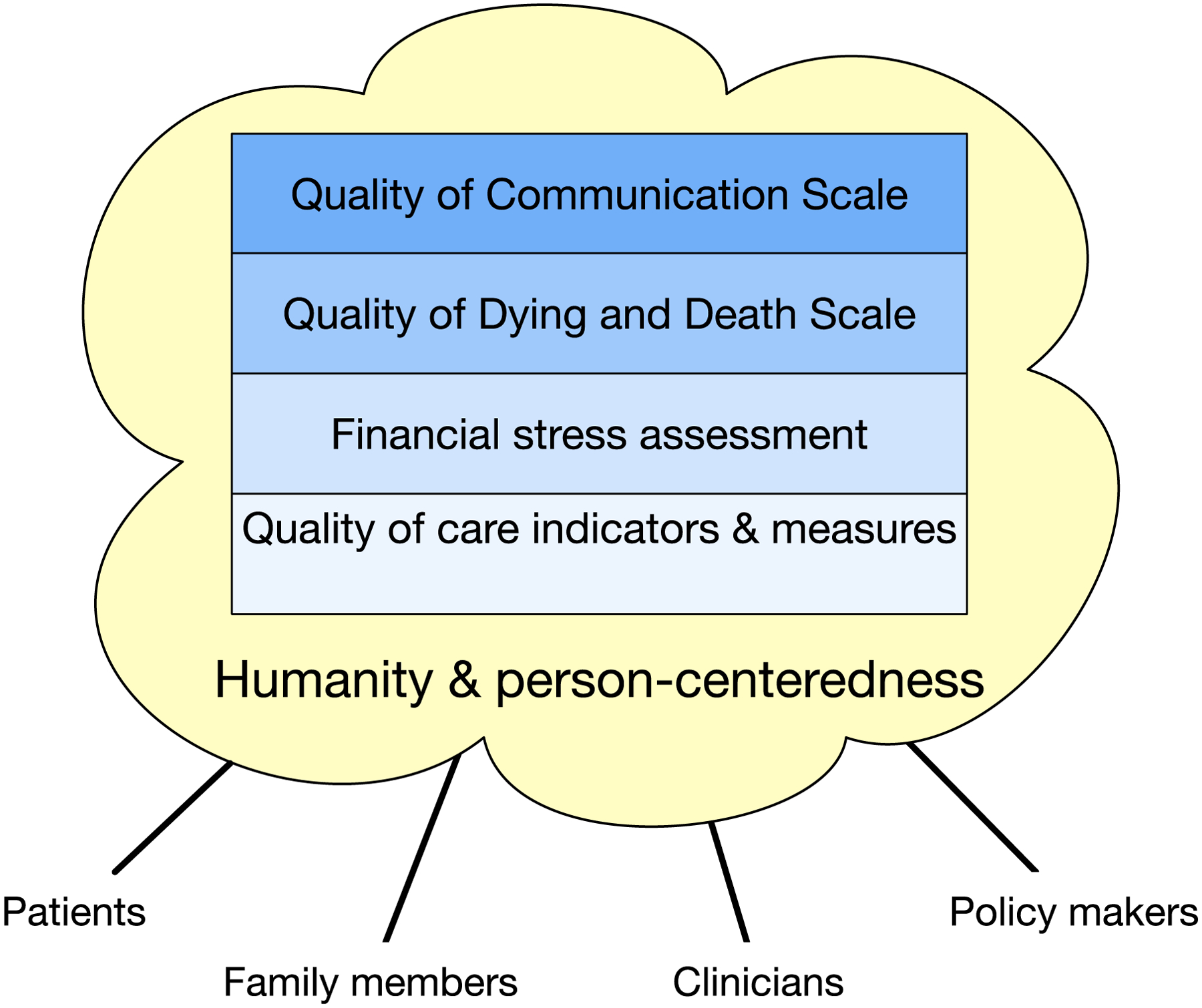
Palliative care research is deeply challenging for many reasons, not the least of which is the conceptual and operational difficulty of measuring outcomes within a seriously ill population such as critically ill patients and their family members. This manuscript describes how Randy Curtis and his network of collaborators successfully confronted some of the most vexing outcomes measurement problems in the field, and by so doing, have enhanced clinical care and research alike. Beginning with a discussion of the clinical challenges of measurement in palliative care, we then discuss a selection of the novel measures developed by Randy and his collaborators and conclude with a look toward the future evolution of these concepts. Randy and his foundational work, including both successes as well as the occasional near miss, have enriched and advanced the field as well as (immeasurably) impacted the work of so many others-including this manuscript's authors.
Keywords: Quality of death and dying; critical illness; palliative care; quality of communication.
Copyright © 2022 American Academy of Hospice and Palliative Medicine. Published by Elsevier Inc. All rights reserved.
Figures
References
-
- Curtis JR, Engelberg RA, Wenrich MD, Shannon SE, Treece PD, Rubenfeld GD. Missed opportunities during family conferences about end-of-life care in the intensive care unit. Am J Respir Crit Care Med. Apr 15 2005;171(8):844–9. - PubMed
MeSH terms
Grants and funding
LinkOut - more resources
Full Text Sources
Medical
