


Chemical fixation creates nanoscale clusters on the cell surface by aggregating membrane proteins
- PMID: 35595960
- PMCID: PMC9122943
- DOI: 10.1038/s42003-022-03437-2
Chemical fixation creates nanoscale clusters on the cell surface by aggregating membrane proteins
Abstract
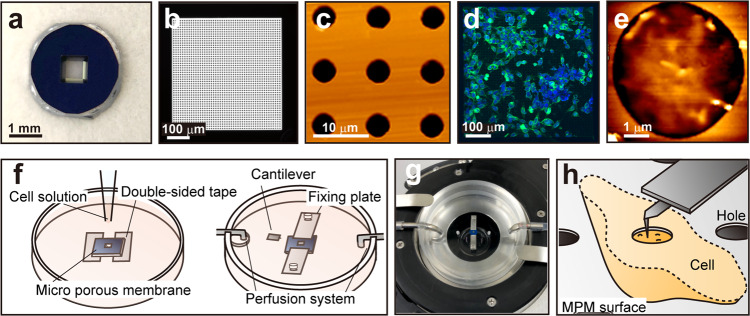
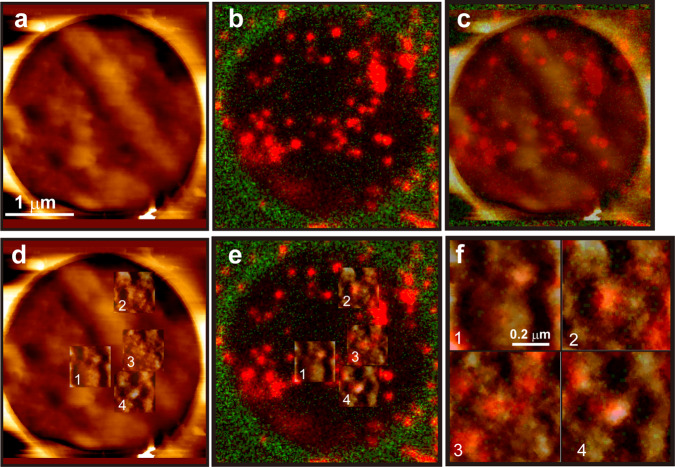
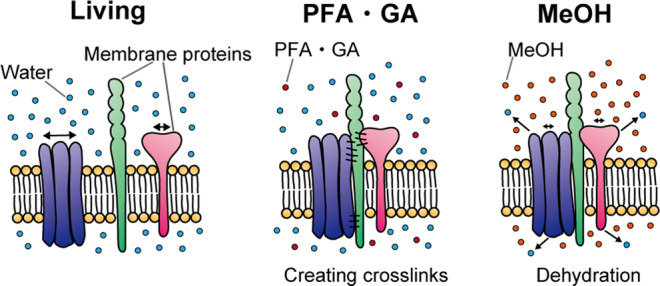
Chemical fixations have been thought to preserve the structures of the cells or tissues. However, given that the fixatives create crosslinks or aggregate proteins, there is a possibility that these fixatives create nanoscale artefacts by aggregation of membrane proteins which move around freely to some extent on the cell surface. Despite this, little research has been conducted about this problem, probably because there has been no method for observing cell surface structures at the nanoscale. In this study, we have developed a method to observe cell surfaces stably and with high resolution using atomic force microscopy and a microporous silicon nitride membrane. We demonstrate that the size of the protrusions on the cell surface is increased after treatment with three commonly used fixatives and show that these protrusions were created by the aggregation of membrane proteins by fixatives. These results call attention when observing fixed cell surfaces at the nanoscale.
© 2022. The Author(s).
Conflict of interest statement
The authors declare no competing interests.
Figures



References
-
- Kiernan JA. Formaldehyde, formalin, paraformaldehyde and glutaraldehyde: what they are and what they do. Microsc. Today. 2000;1:8–12. doi: 10.1017/S1551929500057060. - DOI
-
- Eltoum I, Fredenburgh J, Myers RB, Grizzle WE. Introduction to the theory and practice of fixation of tissues. J. Histotechnol. 2001;24:173–190. doi: 10.1179/his.2001.24.3.173. - DOI
Publication types
MeSH terms
Substances
Associated data
LinkOut - more resources
Full Text Sources
Miscellaneous
