


Modulation of CREB and its associated upstream signaling pathways in pesticide-induced neurotoxicity
- PMID: 35596844
- PMCID: PMC9618525
- DOI: 10.1007/s11010-022-04472-7
Modulation of CREB and its associated upstream signaling pathways in pesticide-induced neurotoxicity
Abstract
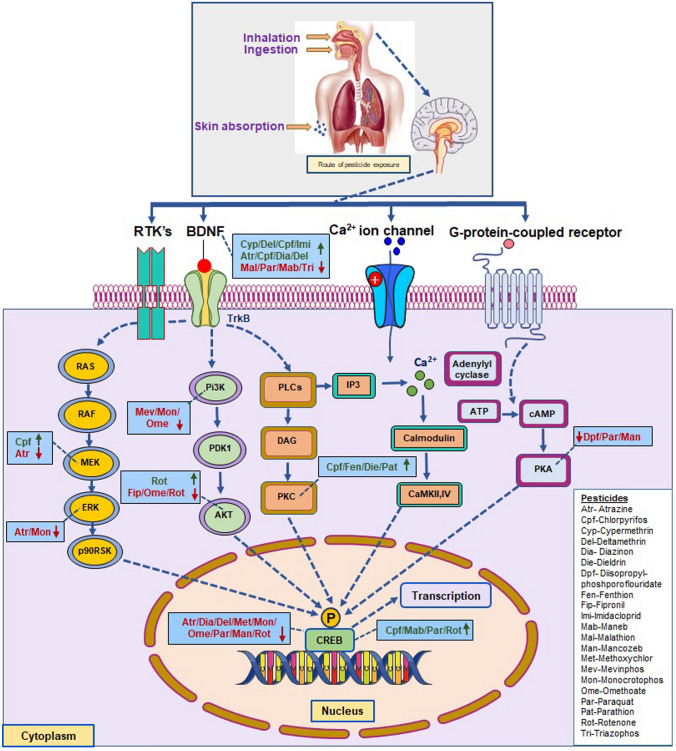
Human beings are exposed to various environmental xenobiotics throughout their life consisting of a broad range of physical and chemical agents that impart bodily harm. Among these, pesticide exposure that destroys insects mainly by damaging their central nervous system also exerts neurotoxic effects on humans and is implicated in the etiology of several degenerative disorders. The connectivity between CREB (cAMP Response Element Binding Protein) signaling activation and neuronal activity is of broad interest and has been thoroughly studied in various diseased states. Several genes, as well as protein kinases, are involved in the phosphorylation of CREB, including BDNF (Brain-derived neurotrophic factor), Pi3K (phosphoinositide 3-kinase), AKT (Protein kinase B), RAS (Rat Sarcoma), MEK (Mitogen-activated protein kinase), PLC (Phospholipase C), and PKC (Protein kinase C) that play an essential role in neuronal plasticity, long-term potentiation, neuronal survival, learning, and memory formation, cognitive function, synaptic transmission, and suppressing apoptosis. These elements, either singularly or in a cascade, can result in the modulation of CREB, making it a vulnerable target for various neurotoxic agents, including pesticides. This review provides insight into how these various intracellular signaling pathways converge to bring about CREB activation and how the activated or deactivated CREB levels can affect the gene expression of the upstream molecules. We also discuss the various target genes within the cascade vulnerable to different types of pesticides. Thus, this review will facilitate future investigations associated with pesticide neurotoxicity and identify valuable therapeutic targets.
Keywords: AKT; BDNF; CREB; Neurotoxicity; PI3K; Pesticides.
© 2022. The Author(s).
Conflict of interest statement
The authors declare that the research was conducted in the absence of any commercial or financial relationships that could be construed as a potential conflict of interest.
Figures

References
-
- Islam A, Malik MF. Toxicity of Pesticides on CNS Neurotoxicity Types of Toxicity with respect to Exposure. iMedPub J. 2018;1(1):1–6.
Publication types
MeSH terms
Substances
Grants and funding
LinkOut - more resources
Full Text Sources
Medical
