


Socioeconomic status associates with worse asthma morbidity among Black and Latinx adults
- PMID: 35597370
- PMCID: PMC9724153
- DOI: 10.1016/j.jaci.2022.04.030
Socioeconomic status associates with worse asthma morbidity among Black and Latinx adults
Abstract
Background: Asthma disproportionately affects African American/Black (AA/B) and Hispanic/Latinx (H/L) patients and individuals with low socioeconomic status (SES), but the relationship between SES and asthma morbidity within these racial/ethnic groups is inadequately understood.
Objective: To determine the relationship between SES and asthma morbidity among AA/B and H/L adults with moderate to severe asthma using multidomain SES frameworks and mediation analyses.
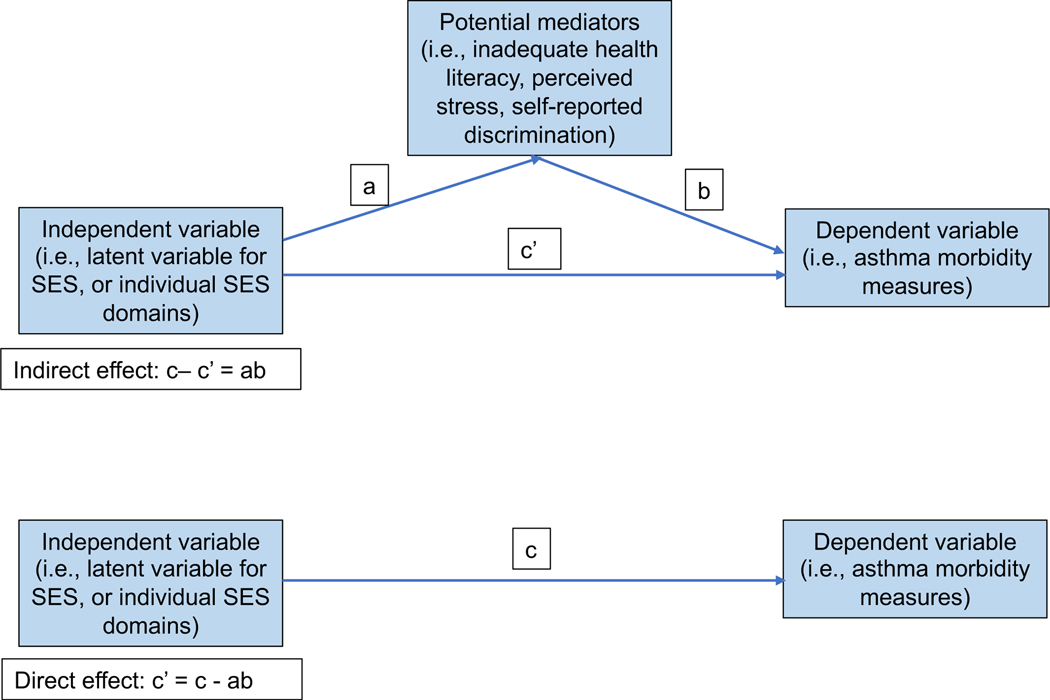
Methods: We analyzed enrollment data from the PeRson EmPowered Asthma RElief randomized trial, evaluating inhaled corticosteroid supplementation to rescue therapy. We tested for direct and indirect relationships between SES and asthma morbidity using structural equation models. For SES, we used a latent variable defined by poverty, education, and unemployment. For asthma morbidity, we used self-reported asthma exacerbations in the year before enrollment (corticosteroid bursts, emergency room/urgent care visits, or hospitalizations), and Asthma Control Test scores. We tested for mediation via health literacy, perceived stress, and self-reported discrimination. All models adjusted for age, sex, body mass index, ethnicity, and comorbidities.
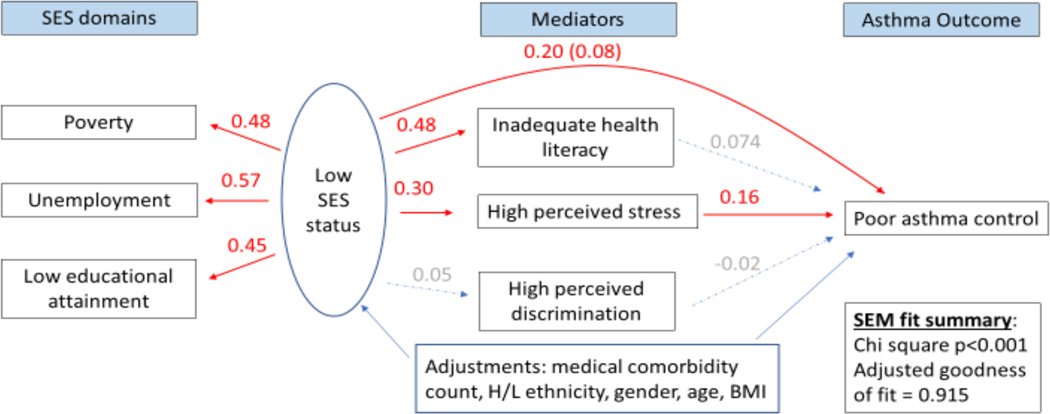
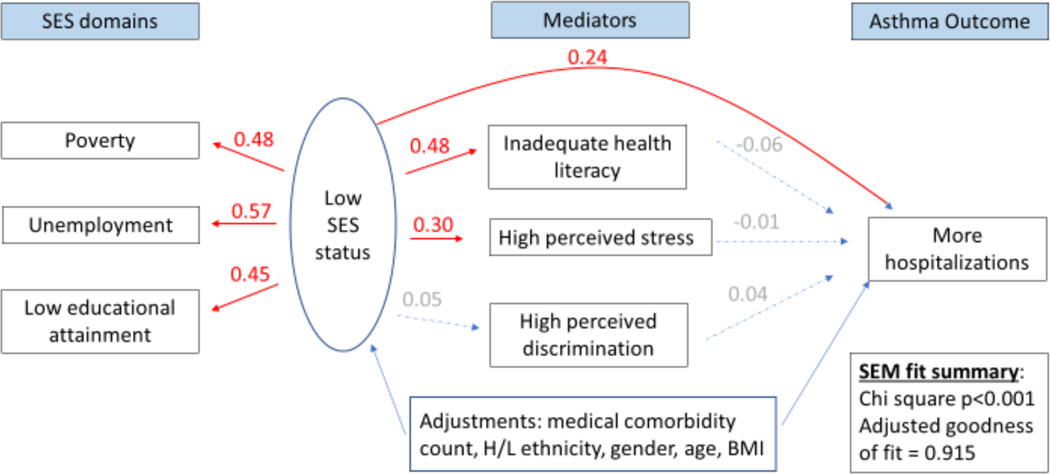
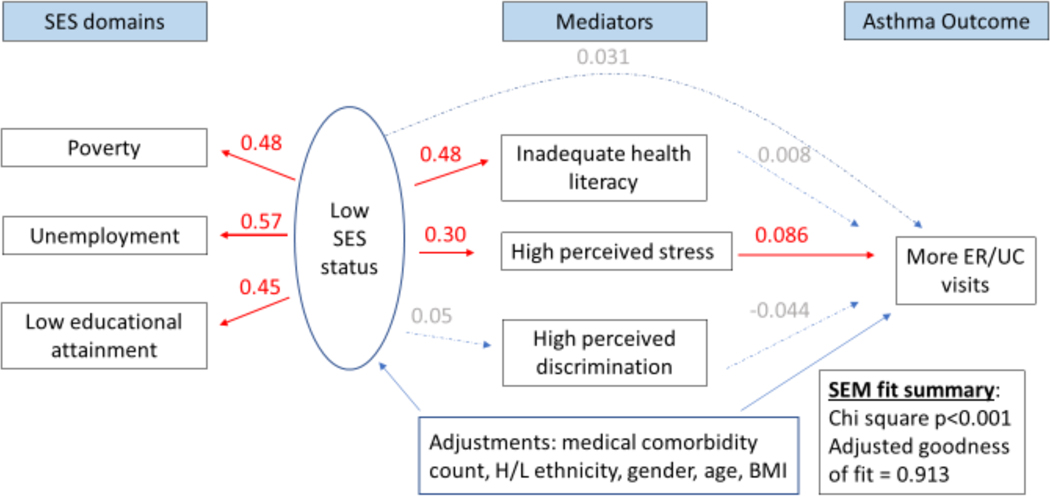
Results: Among 990 AA/B and H/L adults, low SES (latent variable) was directly associated with hospitalizations (β = 0.24) and worse Asthma Control Test scores (β = 0.20). Stress partially mediated the relationship between SES and increased emergency room/urgent care visits and worse asthma control (β = 0.03 and = 0.05, respectively). Individual SES domains were directly associated with asthma morbidity. Stress mediated indirect associations between low educational attainment and unemployment with worse asthma control (β = 0.05 and = 0.06, respectively).
Conclusions: Lower SES is directly, and indirectly through stress, associated with asthma morbidity among AA/B and H/L adults. Identification of stressors and relevant management strategies may lessen asthma-related morbidity among these populations.
Keywords: Minority populations; asthma exacerbations; discrimination; education; employment; health literacy; income; mediation analysis; severe persistent asthma; stress; structural equation models.
Copyright © 2022 American Academy of Allergy, Asthma & Immunology. Published by Elsevier Inc. All rights reserved.
Figures
References
-
- Centers for Disease Control and Prevention. Asthma: Most Recent National Asthma Data [Internet]. 2021. [cited 2021 Aug 28]. Available from: https://www.cdc.gov/asthma/most_recent_national_asthma_data.htm
-
- Nurmagambetov T, Kuwahara R, Garbe P. The Economic Burden of Asthma in the United States, 2008–2013. Ann Am Thorac Soc. 2018. Mar;15(3):348–356. - PubMed
-
- Homa DM, Mannino DM, Lara M. Asthma Mortality in U.S. Hispanics of Mexican, Puerto Rican, and Cuban Heritage, 1990–1995. Am J Respir Crit Care Med. 2000. Feb;161(2):504–509. - PubMed
-
- Federico MJ, Denlinger LC, Corren J, Szefler SJ, Fuhlbrigge AL. Exacerbation-Prone Asthma: A Biological Phenotype or a Social Construct. J Allergy Clin Immunol Pract. 2021. Jul;9(7):2627–34. - PubMed
