


Clinical picture and long-term symptoms of SARS-CoV-2 infection in an Italian pediatric population
- PMID: 35598023
- PMCID: PMC9123625
- DOI: 10.1186/s13052-022-01270-1
Clinical picture and long-term symptoms of SARS-CoV-2 infection in an Italian pediatric population
Abstract
Background: SARS-CoV-2 infection in the pediatric age group has a milder course than in adults, but in some cases even children may present with severe forms or develop long-term consequences. The aim of this study was to analyze the clinical features, long-term effects, lifestyle changes and psychological effects of SARS-CoV-2 infection in a pediatric sample of the Italian population.
Methods: We conducted a telephone survey among 3075 children infected with SARS-CoV-2 in the Latina Local Health Authority. Outcomes included: clinical features of infection, long-term symptoms, lifestyle changes and emotional symptoms during the illness. The information obtained was automatically linked to a spreadsheet and analyzed.
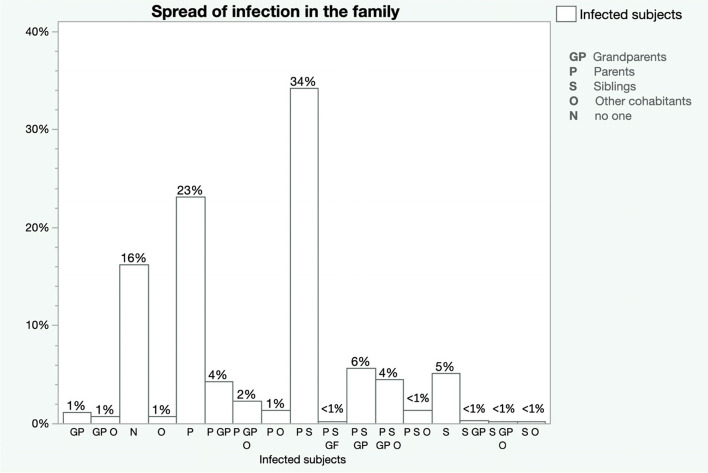
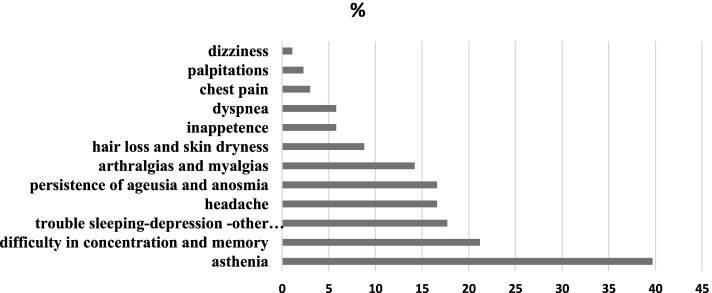
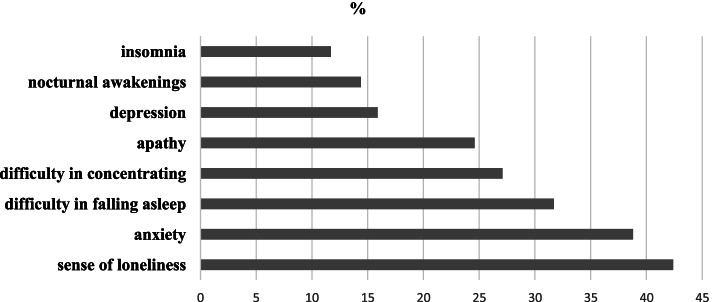
Results: One thousand four hundred thirteen children agreed to participate in the study; the mean age was 112.8 ± 21.9 months. Children were infected mainly inside familial clusters (59.6%; n = 842); 99% (n = 1399) of children were asymptomatic or exhibited mild symptoms. 20% (n = 259) of children experienced long-term symptoms; risk factors were: older age, higher body mass index and longer duration of infection. Throughout the period of infection, children spent most of the time on devices like tv-video, social media and mobile phone for non-educational activities. 58.8% (n = 620) of parents expressed a negative opinion about distance learning. Finally, we observed that 49,6% (n = 532) of children experienced psychological symptoms during quarantine period.
Conclusion: Despite a lower susceptibility to COVID-19 in children, it is important to keep the focus high in children, both because of the possible long symptoms after infection and the impact on a children's mental and physical health due to pandemic. We believe that the return to school or other extracurricular activities are important to correct some of the risk factors for the long COVID syndrome, as obesity, and to limit the cultural damage generated by distance learning and psychological effects related to restrictive measures.
Keywords: Children; Long COVID; Psychological effects; Risk factors.
© 2022. The Author(s).
Conflict of interest statement
The authors declare that they have no competing interests.
Figures
References
-
- World Health Organization Press Conference. The World Health Organization (WHO) Has Officially Named the Disease Caused by the Novel Coronavirus as COVID-19. Available online: https://www.who.int/emergencies/diseases/novel-coronavirus-2019. WHO Official Updates - Coronavirus Disease 2019 - who.int.
-
- Alharthy A, Aletreby W, Faqihi F, Balhamar A, Alaklobi F, Alanezi K, et al. Clinical Characteristics and Predictors of 28-Day Mortality in 352 Critically Ill Patients with COVID-19: A Retrospective Study. J Epidemiol Glob Health. 2021;11(1):98–104. doi: 10.2991/jegh.k.200928.001. - DOI - PMC - PubMed
MeSH terms
LinkOut - more resources
Full Text Sources
Medical
Miscellaneous
