


Development and initial validation of the HS-IGA: a novel hidradenitis suppurativa-specific investigator global assessment for use in interventional trials
- PMID: 35599448
- PMCID: PMC9542331
- DOI: 10.1111/bjd.21236
Development and initial validation of the HS-IGA: a novel hidradenitis suppurativa-specific investigator global assessment for use in interventional trials
Abstract
Background: Few validated instruments exist for use in hidradenitis suppurativa (HS) trials.
Objectives: To develop a novel HS Investigator Global Assessment (HS-IGA) and to validate its psychometric properties.
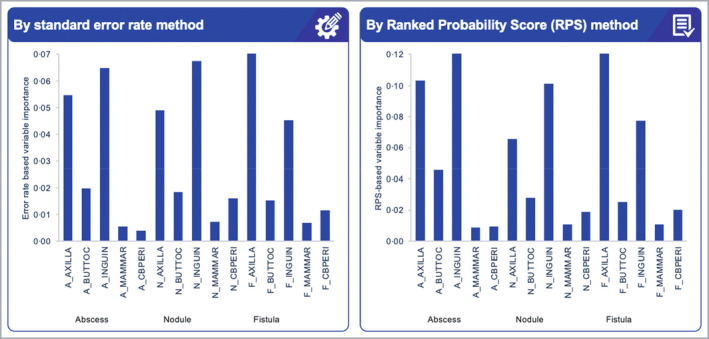
Methods: Development of HS-IGA involved discussion among stakeholders, including patients, within HISTORIC. Data from replicate phase III randomized controlled trials evaluating HS treatment were utilized. Multivariate models identified lesion type and body region as variables of importance. Classification and regression trees for ordinal responses were built. Validation included assessment of test-retest reliability, predictive validity, responsiveness and clinical meaningfulness.
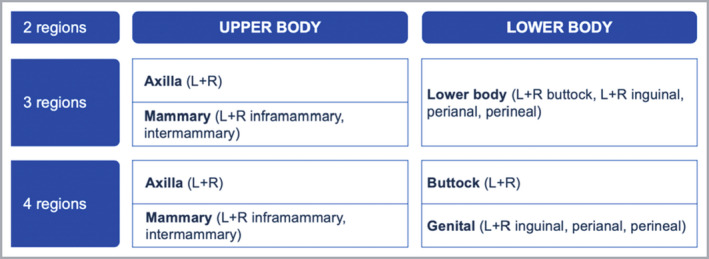
Results: There were 3024 unique measurements available in PIONEER I. Mean and median lesion counts by region were largely <10 and were highest in axillary and inguinal regions. The mean and median number of regions involved were ≤ 3 for individual lesions and combinations. Regardless of lesion type, axillary and inguinal regions most influenced the HS-IGA score. Accordingly, regions were combined into a six-point IGA based on the maximum lesion number in either upper or lower body regions with a score of 0 (0-1 lesions), 1 (2-5), 2 (6-10), 3 (11-15), 4 (16-20) and 5 (≥ 20 lesions). The intraclass correlation coefficient for test-retest reliability was 0·91 (95% confidence interval 0·87-0·94). Spearman's rank order correlations (SROCs) with HS-PGA and Hidradenitis Suppurativa Clinical Response (HiSCR) were 0·73 and 0·51, respectively (P < 0·001 for both comparisons). SROCs with Dermatology Life Quality Index (DLQI), pain numerical rating scale and HS-QoL were 0·42, 0·34 and -0·25, respectively (P < 0·001 for all comparisons). HS-IGA was responsive at weeks 12 and 36. Predictive convergent validity was very good with HS-PGA (area under the curve = 0·89) and with HiSCR (area under the curve = 0·82). Predictive divergent validity was low with DLQI and HS-QoL.
Conclusions: HS-IGA has moderate-to-strong psychometric properties and is simple to calculate.
© 2022 The Authors. British Journal of Dermatology published by John Wiley & Sons Ltd on behalf of British Association of Dermatologists.
Figures
References
-
- Garg A, Lavian J, Lin G et al. Incidence of hidradenitis suppurativa in the United States: a sex‐ and age‐adjusted population analysis. J Am Acad Dermatol 2017; 77:118–22. - PubMed
-
- Garg A, Neuren E, Cha D et al. Evaluating patients’ unmet needs in hidradenitis suppurativa: results from the Global Survey Of Impact and Healthcare Needs (VOICE) project. J Am Acad Dermatol 2020; 82:366–76. - PubMed
-
- Reddy S, Strunk A, Garg A. All‐cause mortality among patients with hidradenitis suppurativa: a population‐based cohort study in the United States. J Am Acad Dermatol 2019; 81:937–42. - PubMed
MeSH terms
Substances
LinkOut - more resources
Full Text Sources
Medical
Miscellaneous
