


Awareness, management, and practice patterns of pediatric NAFLD by primary care physicians
- PMID: 35599680
- PMCID: PMC9113856
- DOI: 10.1093/pch/pxab057
Awareness, management, and practice patterns of pediatric NAFLD by primary care physicians
Abstract
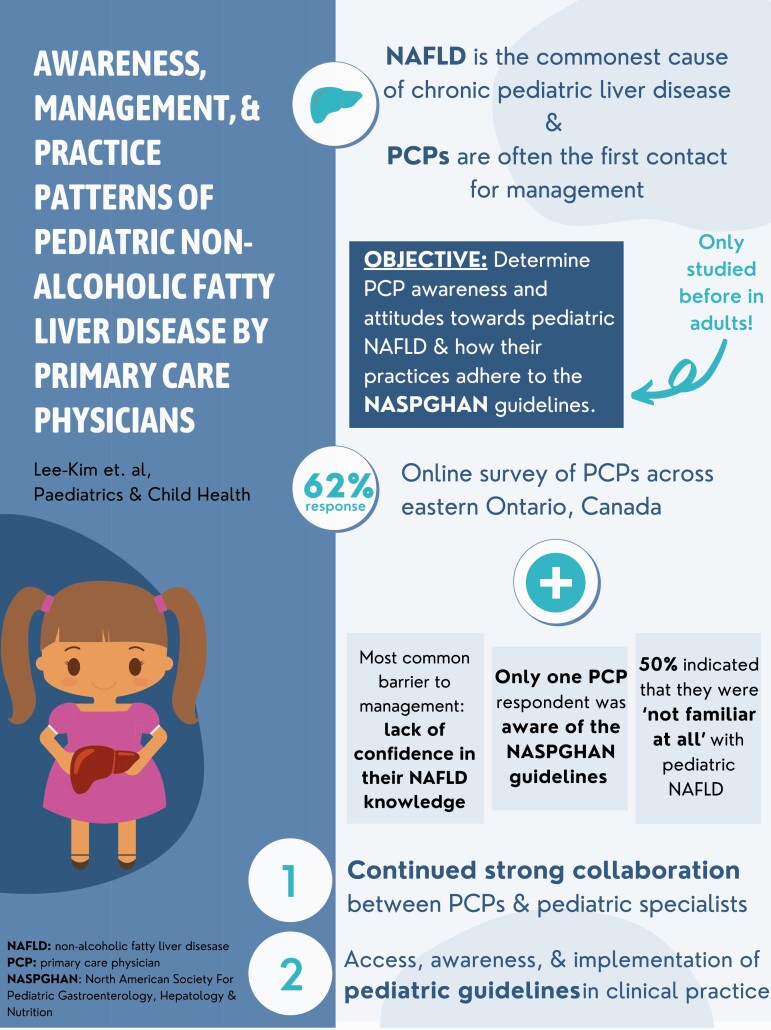
Background: Nonalcoholic fatty liver disease (NAFLD) is the most common cause of chronic liver disease in children. Primary-care physicians (PCPs) play a key role in identifying patients requiring specialist referral. In this study, we aim to determine PCPs' practice patterns for paediatric NAFLD, as knowledge gaps have been reported for adult NAFLD.
Methods: A survey was sent to 60 PCPs in the Eastern Ontario Network from July 2019 to January 2020.
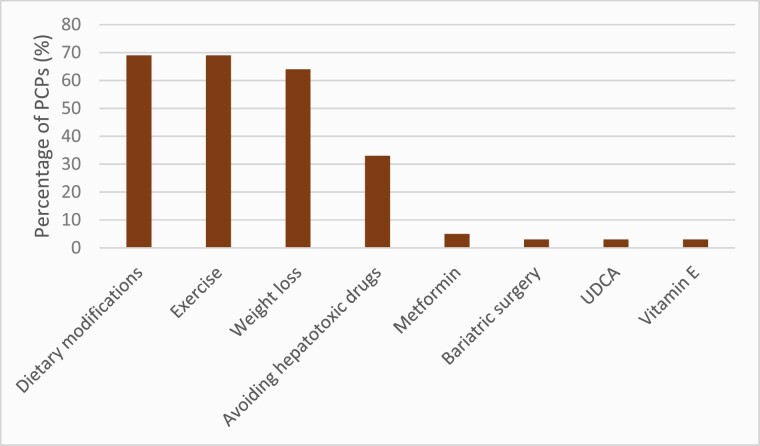
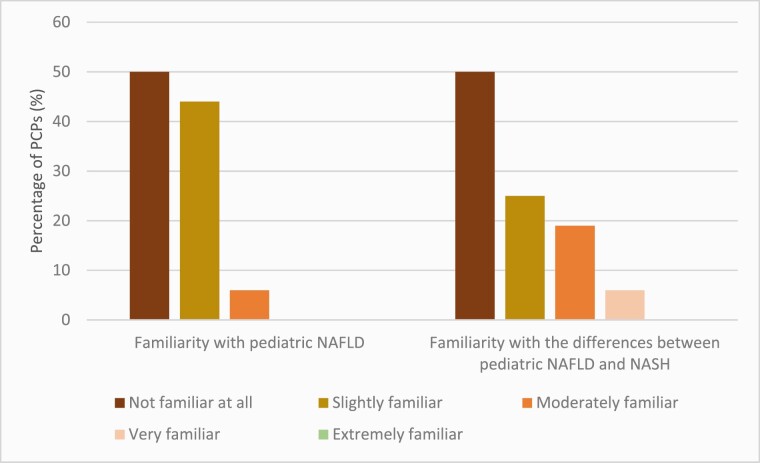
Results: Thirty-seven (62%) PCPs responded to the survey. Twenty-one incorrectly considered the prevalence of paediatric NAFLD to be ≤10%. The majority (35/36) cared for less than five paediatric NAFLD patients. Thirty-four (92%) were only 'slightly familiar' or 'not familiar at all' with paediatric NAFLD. Only one PCP routinely screens for NAFLD. Only one PCP was aware of the North American Society for Pediatric Gastroenterology, Hepatology, and Nutrition (NASPGHAN) clinical guidelines for paediatric NAFLD. Twenty-five (68%) correctly selected lifestyle modifications as a treatment option. Lack of confidence in the knowledge of NAFLD was the most common barrier for managing paediatric cases.
Conclusion: The majority of PCPs are not screening for paediatric NAFLD and are not familiar with its clinical spectrum, citing a lack of knowledge regarding NAFLD as the greatest barrier. This may cause delays in diagnosis and a presentation with advanced fibrosis at the time of specialist referral. Dissemination and implementation of clinical guidelines have the potential to improve knowledge and screening rates for NAFLD in children at the primary-care level.
Keywords: Awareness; Nonalcoholic fatty liver disease; Nonalcoholic steatohepatitis; Practice guidelines; Primary care physicians.
© The Author(s) 2021. Published by Oxford University Press on behalf of the Canadian Paediatric Society. All rights reserved. For permissions, please e-mail: journals.permissions@oup.com.
Figures
References
-
- Vernon G, Baranova A, Younossi ZM. Systematic review: the epidemiology and natural history of non-alcoholic fatty liver disease and non-alcoholic steatohepatitis in adults. Aliment Pharmacol Ther 2011;34(3):274–85. - PubMed
-
- Chalasani N, Younossi Z, Lavine JE, et al. . The diagnosis and management of non-alcoholic fatty liver disease: practice Guideline by the American Association for the Study of Liver Diseases, American College of Gastroenterology, and the American Gastroenterological Association. Hepatology 2012;55(6):2005–23. - PubMed
-
- Wong RJ, Aguilar M, Cheung R, et al. . Nonalcoholic steatohepatitis is the second leading etiology of liver disease among adults awaiting liver transplantation in the United States. Gastroenterology 2015;148(3):547–55. - PubMed
-
- Angulo P. Obesity and nonalcoholic fatty liver disease. Nutr Rev 2007;65(6 Pt 2):S57–63. - PubMed
-
- Atlas of Childhood Obesity: World Obesity Federation. 2019. http://s3-eu-west-1.amazonaws.com/wof-files/11996_Childhood_Obesity_Atla... (Accessed March 31, 2020).
LinkOut - more resources
Full Text Sources