


The Impact of Service Dogs on Military Veterans and (Ex) First Aid Responders With Post-traumatic Stress Disorder
- PMID: 35599765
- PMCID: PMC9114472
- DOI: 10.3389/fpsyt.2022.834291
The Impact of Service Dogs on Military Veterans and (Ex) First Aid Responders With Post-traumatic Stress Disorder
Abstract
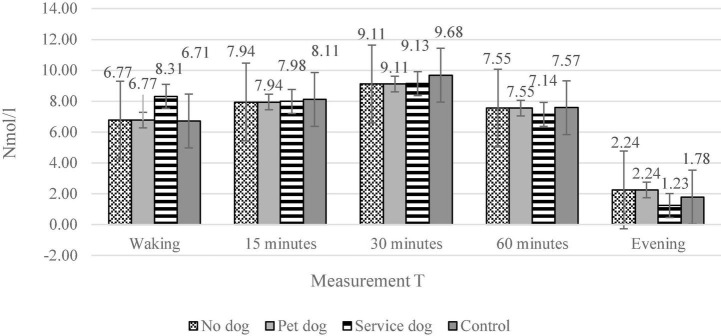
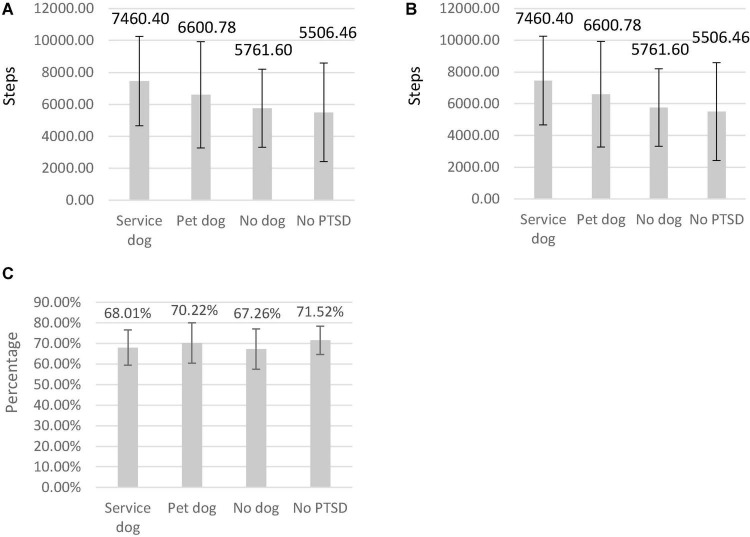
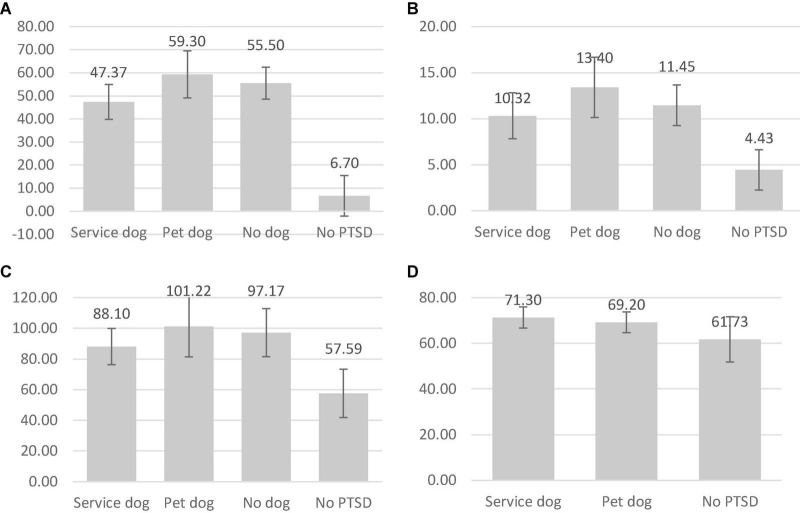
Due to its novelty and lack of empirical study it remains unclear if a service dog truly mitigates the burden of post-traumatic stress disorder (PTSD) symptoms. To cross sectionally investigate the effect of service dogs on veterans and first aid responders with PTSD, we studied subjective and physiological parameters in 65 individuals divided over four groups. These groups were: veterans and first aid responders with PTSD and a service dog (n = 20), with PTSD and a companion dog (n = 10), with PTSD without a dog (n = 12) and a group without PTSD (n = 23). We found that veterans and first aid responders with PTSD who had a service dog showed significantly less PTSD related symptoms, better sleep quality, and better wellbeing experience, than those with a companion dog. Those with a service dog additionally experienced fewer PTSD related symptoms than those without a service dog and tended to walk more than individuals without PTSD. No differences were found in cortisol levels between groups though and changes in both salivary cortisol and activity were not linked to improved welfare experience. Though the use of physiological measurement methods thus warrants more research, our study indicates that the subjective experience of wellbeing, sleep quality and PTSD related symptoms is improved by the presence of a service dog.
Keywords: PTSD; dog; post-traumatic stress disorder; service dog; veteran.
Copyright © 2022 van Houtert, Rodenburg, Vermetten and Endenburg.
Conflict of interest statement
The authors declare that the research was conducted in the absence of any commercial or financial relationships that could be construed as a potential conflict of interest.
Figures
References
-
- American Psychiatric Association. Diagnostic and Statistical Manual of Mental Disorders. 5th ed. Arlington, TX: American Psychiatric Association; (2013).
LinkOut - more resources
Full Text Sources
