


Further characterization of the renovascular effects of N6-cyclohexyladenosine in the isolated perfused rat kidney
- PMID: 3559983
- PMCID: PMC5545103
Further characterization of the renovascular effects of N6-cyclohexyladenosine in the isolated perfused rat kidney
Abstract
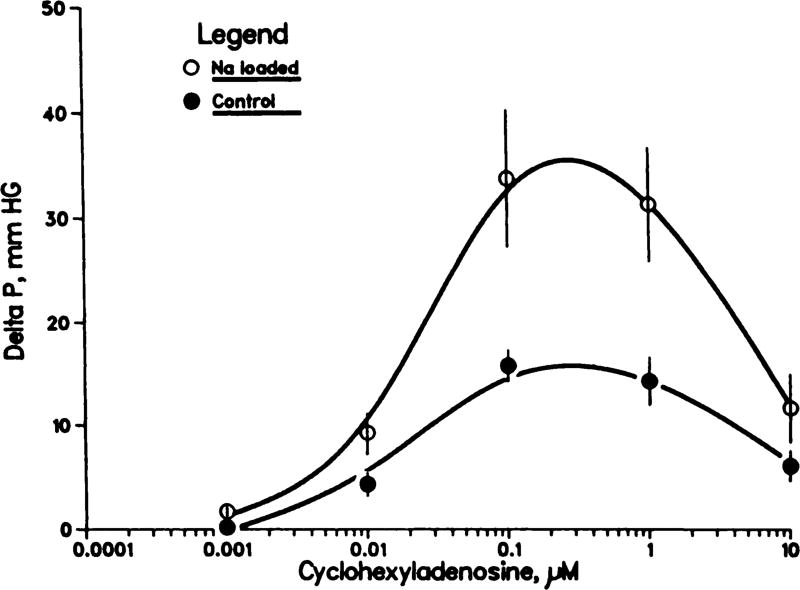
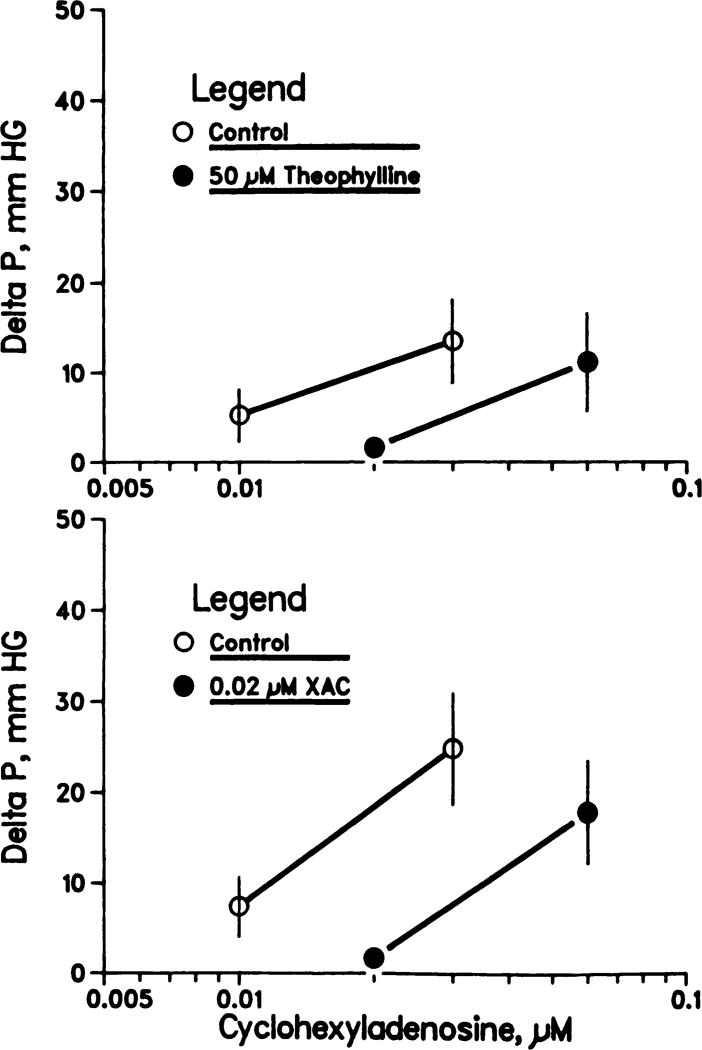
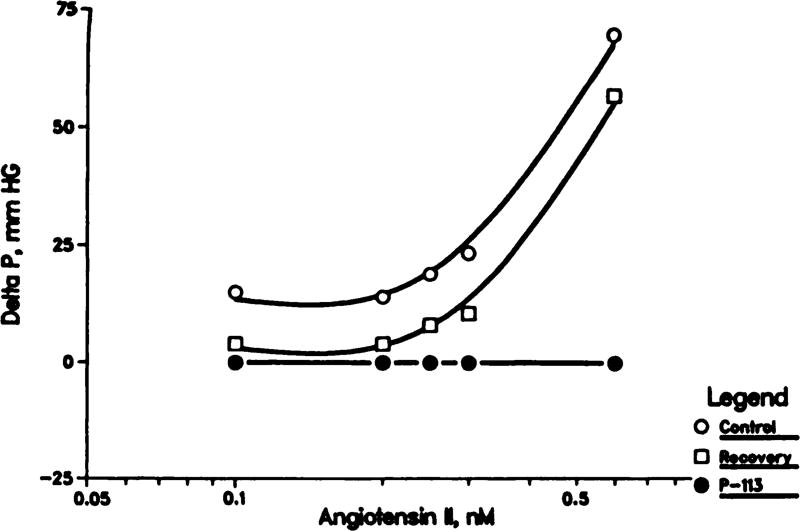
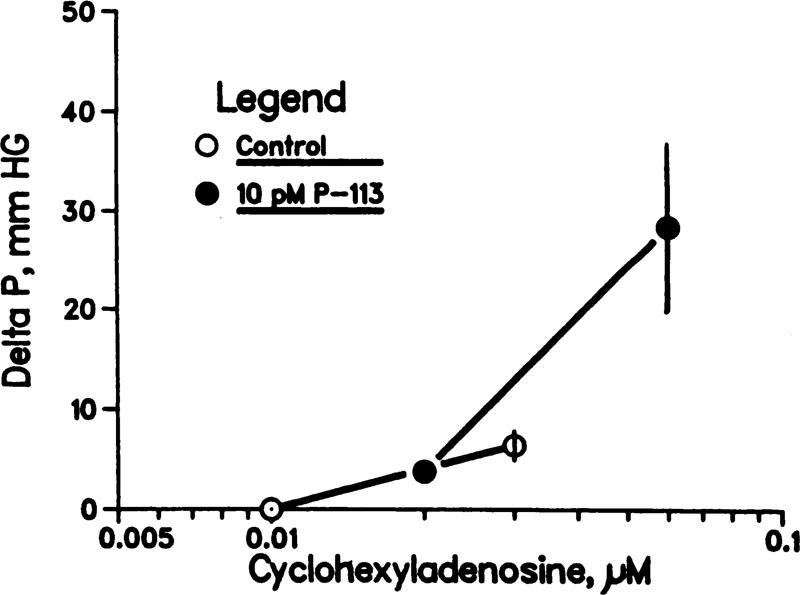
Previous studies have shown that activation of A1 adenosine receptors results in renal vasoconstriction at submicromolar concentrations of N6-cyclohexyladenosine (CHA) followed by relative vasodilation at higher concentrations. The present data confirm these findings and demonstrate that Na loading enhances the vasoconstrictor effects of CHA in the isolated rat kidney perfused at constant flow. Furthermore, adenosine receptor antagonism with both theophylline and the A1-selective antagonist, xanthine amine congener (8-[4-[(2-aminoethyl)-aminocarbonylmethyloxy]phenyl]-1, 3-dipropylxanthine), produced a rightward and apparently parallel shift in the dose response to CHA. Determination of the inhibitory constants for both antagonists revealed that xanthine amine congener was three orders of magnitude more potent than theophylline in antagonizing CHA-induced renal vasoconstriction. Other investigators have hypothesized that angiotensin II mediates adenosine-induced renal vasoconstriction. However, we have been able to show that A1 receptor activation can result in renal vasoconstriction in the isolated perfused rat kidney devoid of renin substrate. Moreover, a competitive inhibitor of angiotensin II (saralasin) failed to attenuate the hemodynamic effects of CHA at doses that completely blocked the effects of angiotensin II itself. Taken together, these data are consistent with the hypothesis that A1 receptor activation in the kidney leads to vasoconstriction, a response that is enhanced by Na loading, and that A1 adenosine receptors and angiotensin II receptors are separate and distinct biochemical entities. Independent activation of either receptor leads to renal vasoconstriction, which can be prevented by its respective antagonist.
Figures
References
-
- Arend LJ, Haramati A, Thompson CJ, Spielman WS. Adenosine-induced decrease in renin release: Dissociation from hemodynamic effects. Am. J. Physiol. 1984;247:F447–F452. - PubMed
-
- Arend LJ, Thompson CI, Spielman WS. Dipyridamole decreases glomerular filtration in the sodium-depleted dog. Evidence for mediation by intrarenal adenosine. Circ. Res. 1985;56:242–251. - PubMed
-
- Berecek KH, Murray RD, Gross F. Significance of sympathetic innervation and central adrenergic structures on renal responsiveness in DOCA-treated rats. Circ. Res. 1980;47:675–683. - PubMed
-
- Berecek KH, Murray RD, Gross F, Brody J. Vasopressin and vascular reactivity in the development of DOCA hypertension in rats with hereditary diabetes insipidus. Hypertension. 1982;4:3–12. - PubMed
-
- Buckle PJ, Spence I. The actions of adenosine and some analogues on evoked and potassium stimulated release at skeletal and autonomic neuromuscular junctions. Naunyn-Schmiedeberg’s Arch. Pharmacol. 1982;319:130–135. - PubMed
Publication types
MeSH terms
Substances
Grants and funding
LinkOut - more resources
Full Text Sources