


CDX2-induced intestinal metaplasia in human gastric organoids derived from induced pluripotent stem cells
- PMID: 35602937
- PMCID: PMC9118752
- DOI: 10.1016/j.isci.2022.104314
CDX2-induced intestinal metaplasia in human gastric organoids derived from induced pluripotent stem cells
Abstract
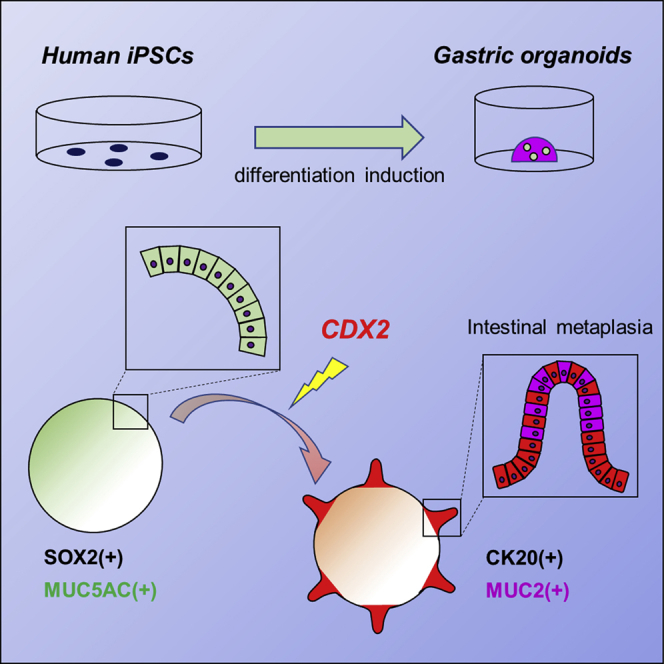
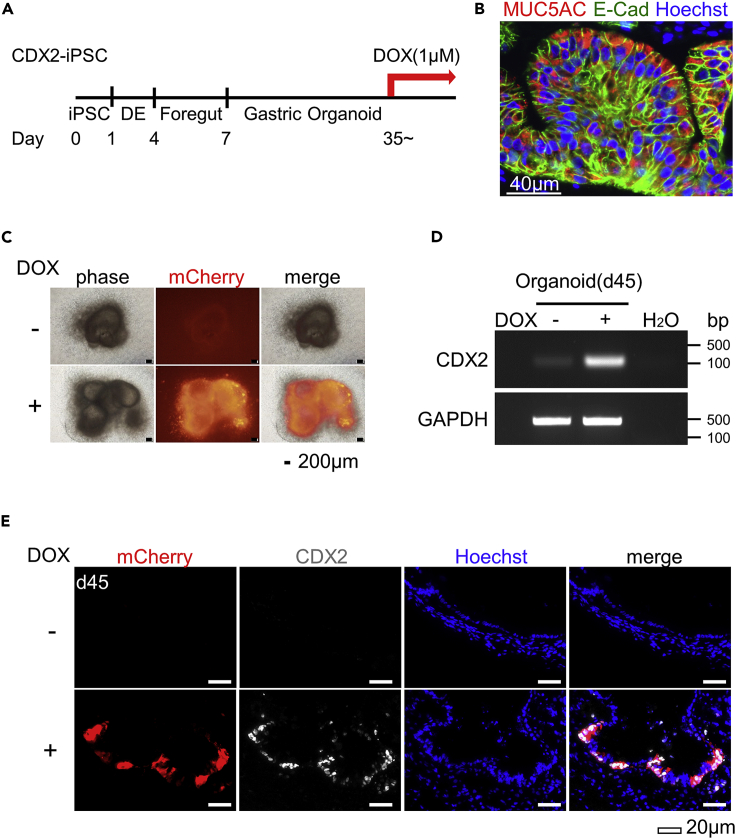
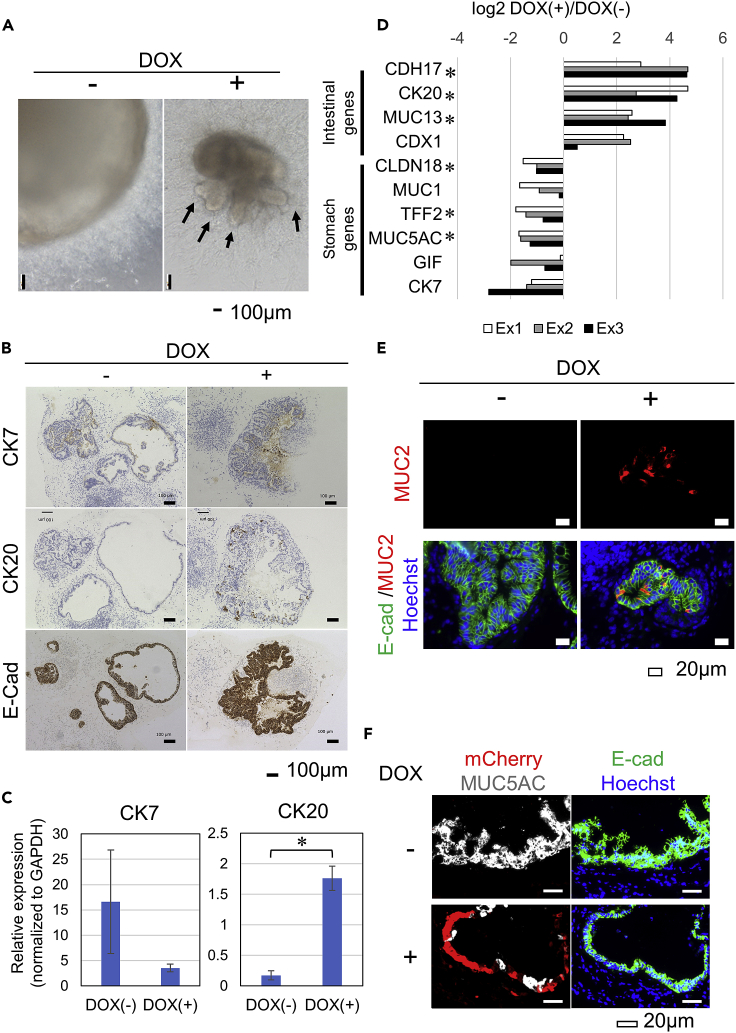
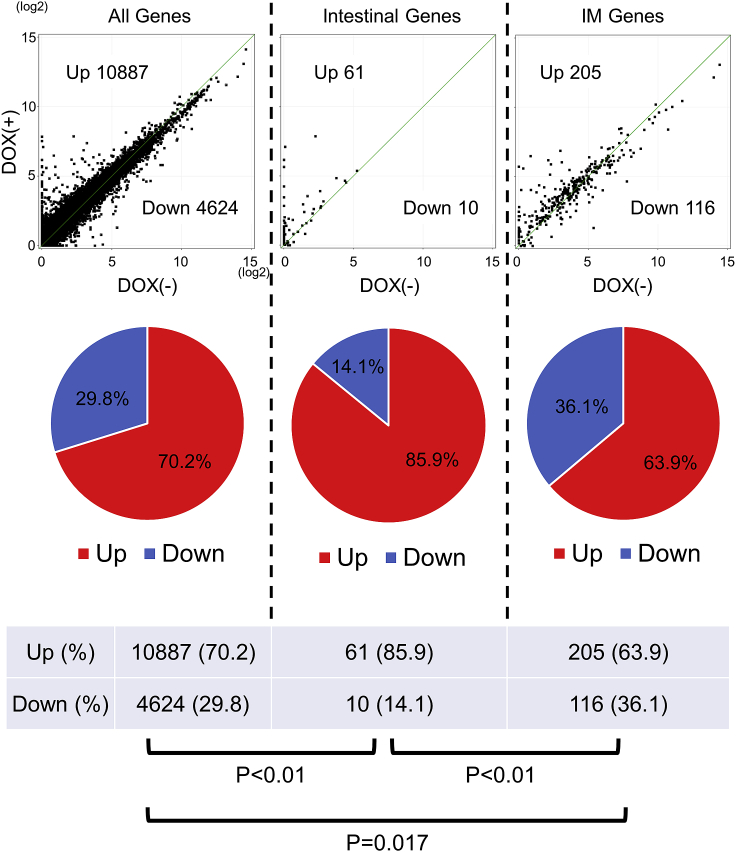
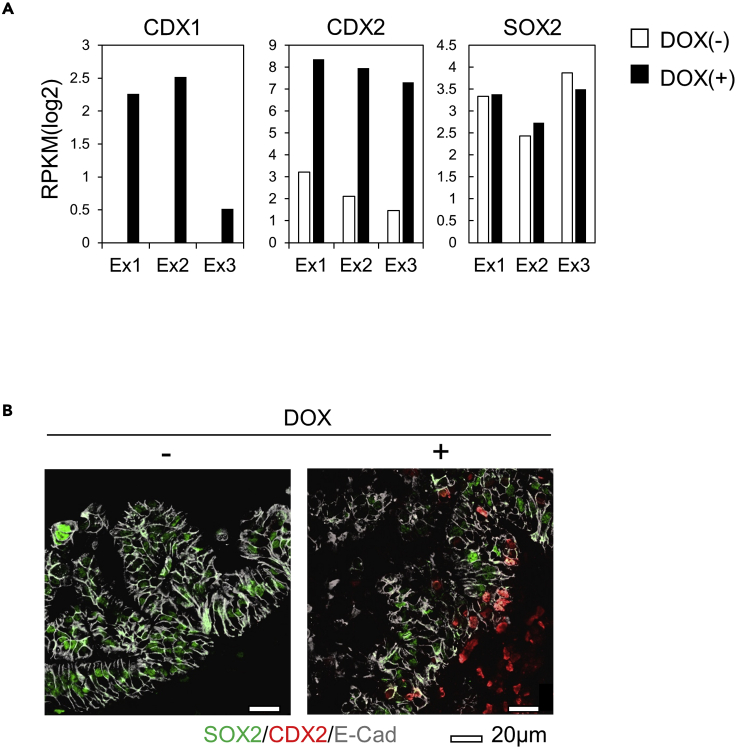
Intestinal metaplasia is related to gastric carcinogenesis. Previous studies have suggested the important role of CDX2 in intestinal metaplasia, and several reports have shown that the overexpression of CDX2 in mouse gastric mucosa caused intestinal metaplasia. However, no study has examined the induction of intestinal metaplasia using human gastric mucosa. In the present study, to produce an intestinal metaplasia model in human gastric mucosa in vitro, we differentiated human-induced pluripotent stem cells (hiPSC) to gastric organoids, followed by the overexpression of CDX2 using a tet-on system. The overexpression of CDX2 induced, although not completely, intestinal phenotypes and the enhanced expression of many, but not all, intestinal genes and previously reported intestinal metaplasia-related genes in the gastric organoids. This model can help clarify the mechanisms underlying intestinal metaplasia and carcinogenesis in human gastric mucosa and develop therapies to restitute precursor conditions of gastric cancer to normal mucosa.
Keywords: Biological sciences; Cell biology; Stem cells research.
© 2022 The Author(s).
Conflict of interest statement
The authors declare no competing interests.
Figures
References
-
- Barker N., Huch M., Kujala P., van de Wetering M., Snippert H.J., van Es J.H., Sato T., Stange D.E., Begthel H., van den Born M., et al. Lgr5(+ve) stem cells drive self-renewal in the stomach and build long-lived gastric units in vitro. Cell Stem Cell. 2010;6:25–36. doi: 10.1016/j.stem.2009.11.013. - DOI - PubMed
LinkOut - more resources
Full Text Sources
Molecular Biology Databases
Research Materials
