


Workplace Musculoskeletal Disorder Prevention Practices and Experiences
- PMID: 35603566
- PMCID: PMC9134435
- DOI: 10.1177/00469580221092132
Workplace Musculoskeletal Disorder Prevention Practices and Experiences
Abstract
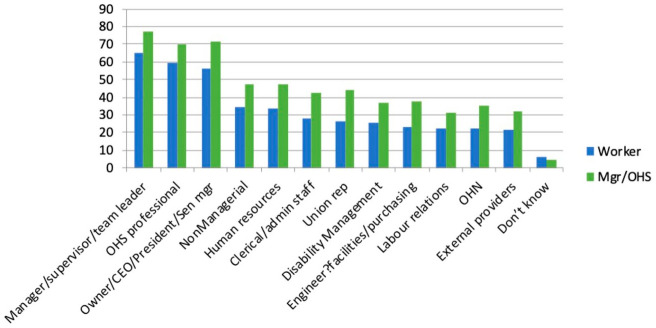
Introduction. Musculoskeletal disorders (MSD) remain a substantial burden to society and to workplaces worldwide. Evidence-based practice approaches may be helpful; however, current research evidence is not consistently strong. Workplaces must address MSD regardless of the state of the research evidence. The study objective was to describe workplace MSD prevention practices experiences and perspectives of workers, managers, and occupational health and safety practitioners. Methods. This descriptive study used a convenience sample from Newfoundland and Labrador workplaces. Data were collected via survey and interviews. The survey data was analyzed using descriptive statistics and the interview data was analyzed using thematic analysis. Results. Results were examined from 645 survey respondents and 17 interviewees. Survey findings revealed that about half of respondents reported MSD policies existed in their workplace. Many MSD practices (such as ergonomics and force reduction) were considered available by most respondents. Over fifty percent of respondents received some training on MSD. The person most often endorsed as responsible to support workers with MSD was a manager. Interview findings showed that MSD prevention practices related to awareness, training, and hazard reduction are considered important and effective. Facilitators of MSD prevention include practices that are proactive and customized and increase knowledge about MSD prevention. Barriers concerning lack of resources and poor implementation were consistently mentioned. Conclusions. Evidence from current practices may help workplaces reduce MSD burden. However, with only about fifty percent of respondents reporting that MSD policies exist in the workplace, further work to address MSD is required. Future research should examine workplace practices as an important source of evidence. OHS professionals can use the study findings and adapt it to their context(s) to guide their design and implementation of MSD prevention practices. Improved MSD prevention practices and interventions can lead to decreases in MSD in workplaces across all industrial sectors.
Keywords: evidence-based practice; injury prevention; musculoskeletal disorders; occupational health and safety programs; workplace practices.
Conflict of interest statement
Figures
References
-
- Hagberg M, Silverstein B, Wells R. Work related Musculoskeletal Disorders (WMSDs): A reference Book for Prevention. Taylor & Francis; 1995.
-
- National Research Council. Musculoskeletal Disorders in the Workplace: Low Back and Upper Extremities. National Academic Press; 2001. - PubMed
-
- Silverstein B, Evanoff B. Musculoskeletal Disorders. In: Levy BS, Wegman DH, Baron SL, eds Occupational and environmental health: recognizing and preventing disease and injury. Oxford University Press; 2011:335-365.
-
- Sluiter JK, Rest KM, Frings-Dresen MH. Criteria document for evaluating the work-relatedness of upper-extremity musculoskeletal disorders. Scand J Work Environ Health. 2001;1:27-102. - PubMed
Publication types
MeSH terms
LinkOut - more resources
Full Text Sources
Medical
