


Delirium and the risk of developing dementia: a cohort study of 12 949 patients
- PMID: 35606105
- PMCID: PMC9304115
- DOI: 10.1136/jnnp-2022-328903
Delirium and the risk of developing dementia: a cohort study of 12 949 patients
Abstract
Background: Delirium is an important risk factor for subsequent dementia. However, the field lacks large studies with long-term follow-up of delirium in subjects initially free of dementia to clearly establish clinical trajectories.
Methods: We undertook a retrospective cohort study of all patients over the age of 65 diagnosed with an episode of delirium who were initially dementia free at onset of delirium within National Health Service Greater Glasgow & Clyde between 1996 and 2020 using the Safe Haven database. We estimated the cumulative incidence of dementia accounting for the competing risk of death without a dementia diagnosis. We modelled the effects of age at delirium diagnosis, sex and socioeconomic deprivation on the cause-specific hazard of dementia via cox regression.
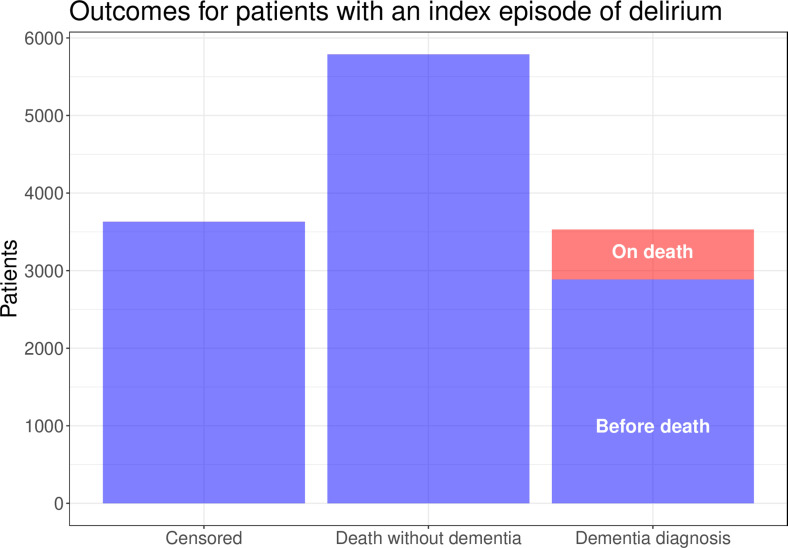
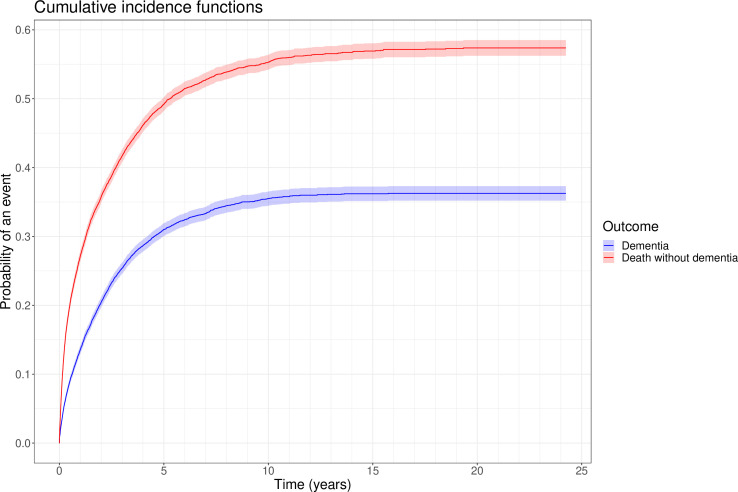
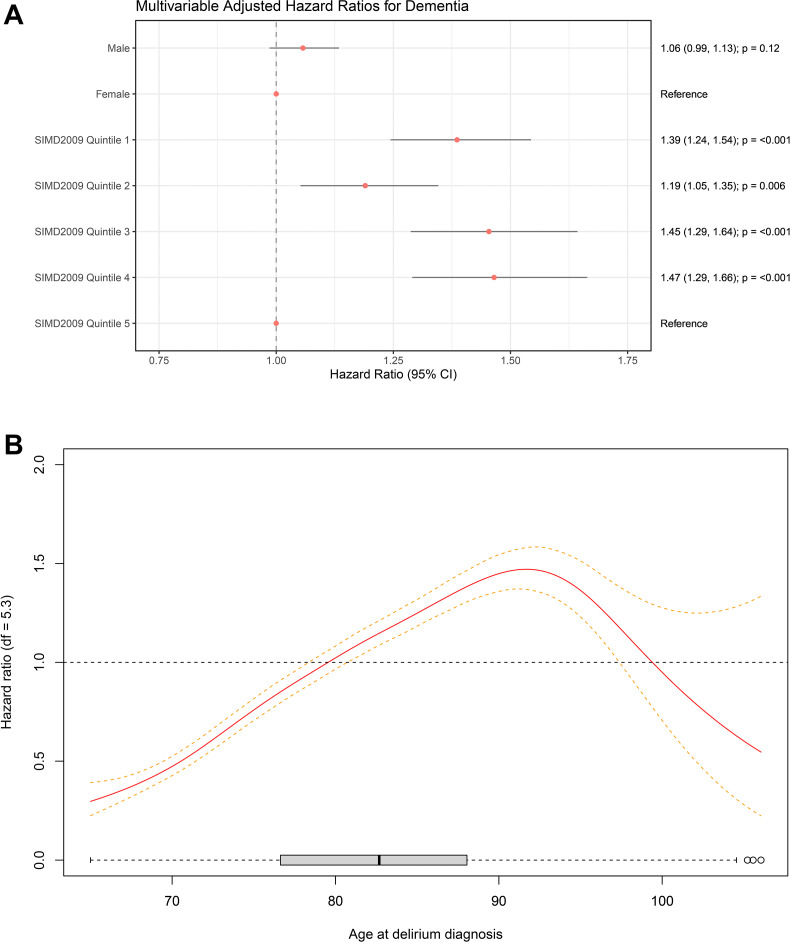
Results: 12 949 patients with an incident episode of delirium were included and followed up for an average of 741 days. The estimated cumulative incidence of dementia was 31% by 5 years. The estimated cumulative incidence of the competing risk of death without dementia was 49.2% by 5 years. The cause-specific hazard of dementia was increased with higher levels of deprivation and also with advancing age from 65, plateauing and decreasing from age 90. There did not appear to be a relationship with sex.
Conclusions: Our study reinforces the link between delirium and future dementia in a large cohort of patients. It highlights the importance of early recognition of delirium and prevention where possible.
Keywords: DEMENTIA; MEDICINE; MEMORY; NEUROPSYCHIATRY; PSYCHOGERIATRICS.
© Author(s) (or their employer(s)) 2022. Re-use permitted under CC BY. Published by BMJ.
Conflict of interest statement
Competing interests: EJ has received honorariums from Biogen and General Electric Healthcare. MS has received an honorarium from General Electric Healthcare. JC attended a Glasgow masterclass in dermatology funded by Janssen.
Figures
References
-
- Alzheimer’s Society . How much does dementia care cost? 2020. Available: https://www.alzheimers.org.uk/blog/how-much-does-dementia-care-cost [Accessed 11 Mar 2021].
Grants and funding
LinkOut - more resources
Full Text Sources
