


Comment
doi: 10.1038/s41467-022-30477-3.
Metabolic regulation by the intestinal metformin-AMPK axis
Affiliations
- PMID: 35606343
- PMCID: PMC9126964
- DOI: 10.1038/s41467-022-30477-3
Item in Clipboard
Comment
Metabolic regulation by the intestinal metformin-AMPK axis
Nat Commun.
.
Abstract
AMP-activated protein kinase (AMPK) mediates the glucose-lowering effect of the antidiabetic agent metformin, but the sites of action remain unclear. In the March issue of Nature Communications, Zhang and colleagues reported that intestinal epithelium-specific AMPKα1 knockout mice fail to respond to metformin and exhibit disruption in metabolic homeostasis secondary to changes in the gut microbiome. This highlights a therapeutic potential of targeting intestinal AMPK for diabetes.
Conflict of interest statement
The authors declare no competing interests.
Figures
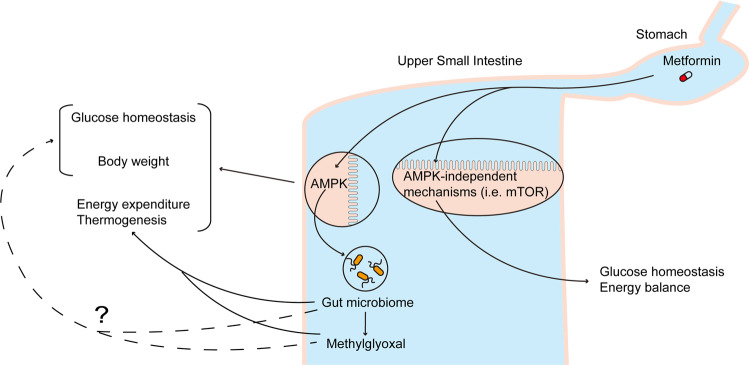
With the use of high-fat fed intestinal AMPKα1 knockout mice, Zhang et al. demonstrated that intestinal AMPKα1 deficiency per se altered energy expenditure and brown fat thermogenesis through changes in the gut microbiome and potentially methylglyoxal, impaired glucose tolerance and induced weight gain. Intestinal AMPKα1 deficiency also impaired the ability of metformin to increase glucose tolerance and lower body weight. In parallel, metformin alters intestinal AMPK-independent pathways (i.e., mTOR) to regulate glucose homeostasis. We propose metformin activates small intestinal AMPK-dependent and –independent pathways to regulate glucose homeostasis and energy balance in diabetes and obesity.
Comment on
-
Intestinal AMPK modulation of microbiota mediates crosstalk with brown fat to control thermogenesis.Nat Commun. 2022 Mar 3;13(1):1135. doi: 10.1038/s41467-022-28743-5. Nat Commun. 2022. PMID: 35241650 Free PMC article.
References
Publication types
MeSH terms
Substances
Grants and funding
LinkOut - more resources
Full Text Sources
Medical
