


The effectiveness of physical activity interventions using activity trackers during or after inpatient care: a systematic review and meta-analysis of randomized controlled trials
- PMID: 35606852
- PMCID: PMC9125831
- DOI: 10.1186/s12966-022-01261-9
The effectiveness of physical activity interventions using activity trackers during or after inpatient care: a systematic review and meta-analysis of randomized controlled trials
Abstract
Background: Promoting physical activity (PA) in patients during and/or after an inpatient stay appears important but challenging. Interventions using activity trackers seem promising to increase PA and enhance recovery of physical functioning.
Objective: To review the effectiveness of physical activity interventions using activity trackers on improving PA and physical functioning, compared to usual care in patients during and/or after inpatient care. In addition, it was determined whether the following intervention characteristics increase the effectiveness of these interventions: the number of behaviour change techniques (BCTs) used, the use of a theoretical model or the addition of coaching by a health professional.
Design: Systematic review and meta-analysis.
Data sources: PubMed, EMBASE, Cinahl, SportDiscus and Web of Science databases were searched in March 2020 and updated in March 2021.
Eligibility criteria for selecting studies: Randomized controlled trials (RCTs) including interventions using activity trackers and feedback on PA in adult patients during, or less than 3 months after, hospitalization or inpatient rehabilitation.
Methods: Following database search and title and abstract screening, articles were screened on full text for eligibility and then assessed for risk of bias by using the Physiotherapy Evidence Database (PEDro) scale. Meta-analyses, including subgroup analysis on intervention characteristics, were conducted for the outcomes PA and physical functioning.
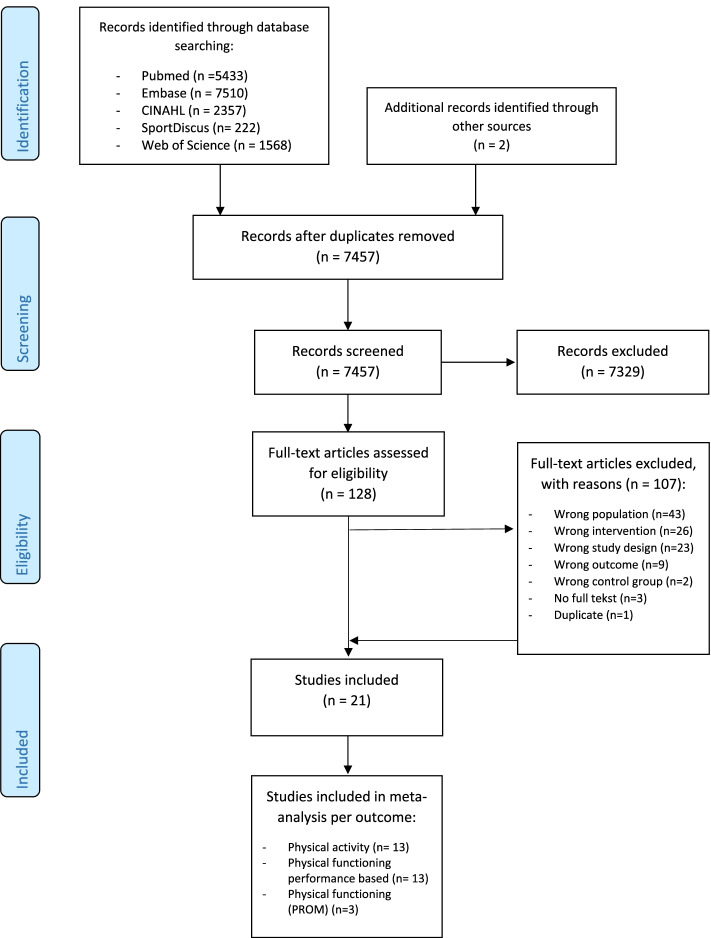
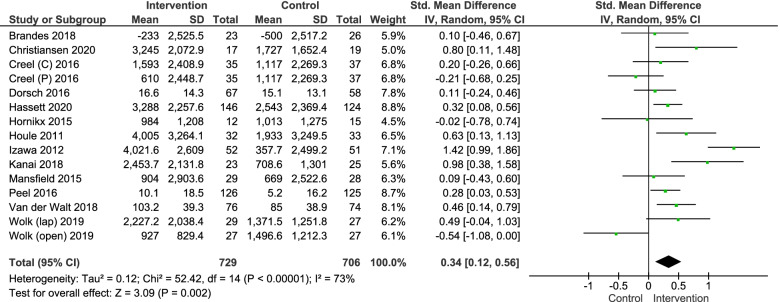
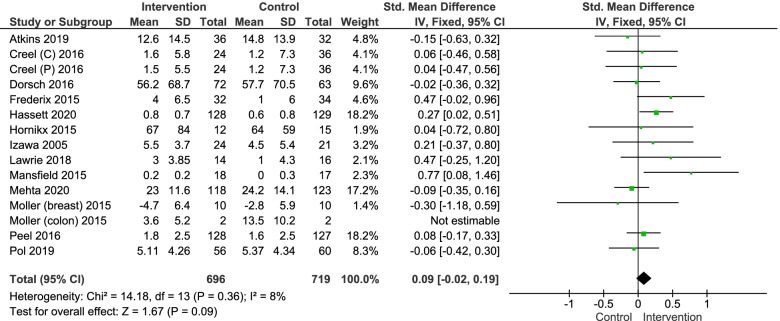
Results: Overall, 21 RCTs totalling 2355 patients were included. The trials covered a variety of clinical areas. There was considerable heterogeneity between studies. For the 13 studies that measured PA as an outcome variable(N = 1435), a significant small positive effect in favour of the intervention was found (standardized mean difference (SMD) = 0.34; 95%CI 0.12-0.56). For the 13 studies that measured physical functioning as an outcome variable (N = 1415) no significant effect was found (SMD = 0.09; 95%CI -0.02 - 0.19). Effectiveness on PA seems to improve by providing the intervention both during and after the inpatient period and by using a theoretical model, multiple BCTs and coaching by a health professional.
Conclusion: Interventions using activity trackers during and/or after inpatient care can be effective in increasing the level of PA. However, these improvements did not necessarily translate into improvements in physical functioning. Several intervention characteristics were found to increase the effectiveness of PA interventions.
Trial registration: Registered in PROSPERO ( CRD42020175977 ) on March 23th, 2020.
Keywords: Activity tracker; Hospitalization; Physical activity; Physical functioning; Rehabilitation.
© 2022. The Author(s).
Conflict of interest statement
The authors declare that they have no competing interests.
Figures

References
-
- Cabilan CJ, Hines S. The short-term impact of colorectal cancer treatment on physical activity, functional status and quality of life: a systematic review. JBI Database System Rev Implement Rep. 2017;15(2). 10.11124/jbisrir-2016003282. - PubMed
-
- van Zutphen M, Winkels RM, van Duijnhoven FJ, van Harten-Gerritsen SA, Kok DE, van Duijvendijk P, et al. An increase in physical activity after colorectal cancer surgery is associated with improved recovery of physical functioning: a prospective cohort study. BMC Cancer. 2017;17(1). 10.1186/s12885-017-3066-2. - PMC - PubMed
-
- Lawrence VA, Hazuda HP, Cornell JE, Pederson T, Bradshaw PT, Mulrow CD, et al. Functional independence after major abdominal surgery in the elderly. J Am Coll Surg. 2004;199(5). 10.1016/j.jamcollsurg.2004.05.280. - PubMed
-
- Askim T, Bernhardt J, Churilov L, Fredriksen KR, Indredavik B. Changes in physical activity and related functional and disability levels in the first six months after stroke: a longitudinal follow-up study. J Rehabil Med. 2013;45(5). 10.2340/16501977-1137. - PubMed
Publication types
MeSH terms
LinkOut - more resources
Full Text Sources
