


Engineering microbial consortia with rationally designed cellular interactions
- PMID: 35609504
- PMCID: PMC10129393
- DOI: 10.1016/j.copbio.2022.102730
Engineering microbial consortia with rationally designed cellular interactions
Abstract
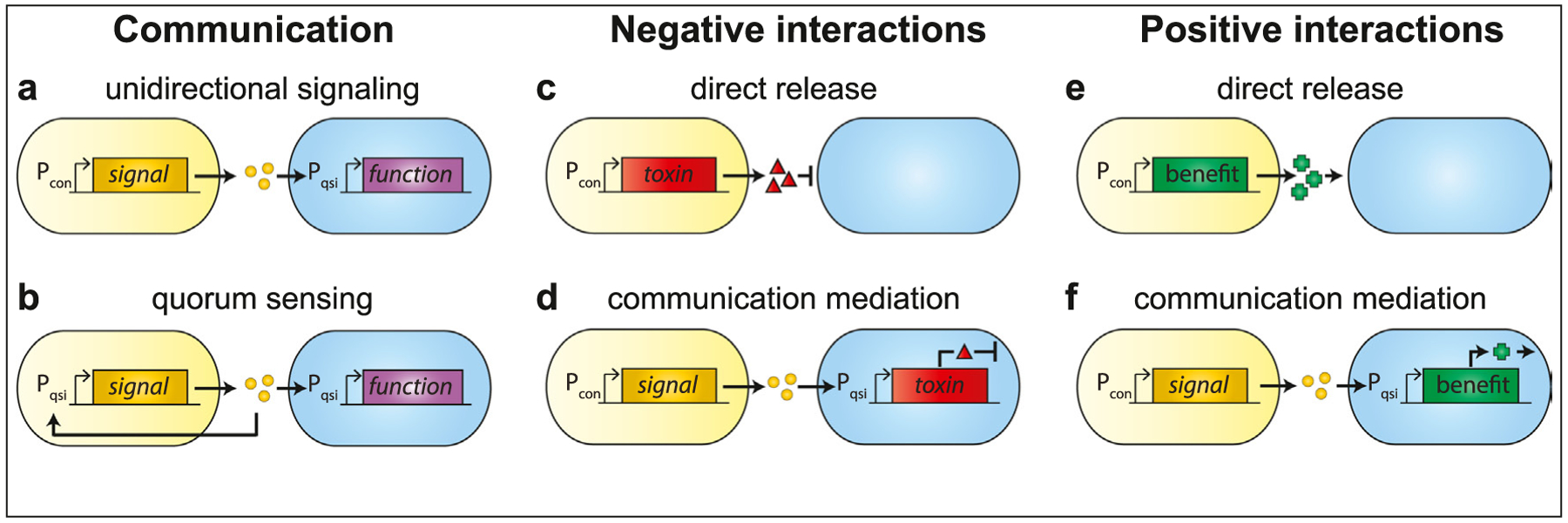
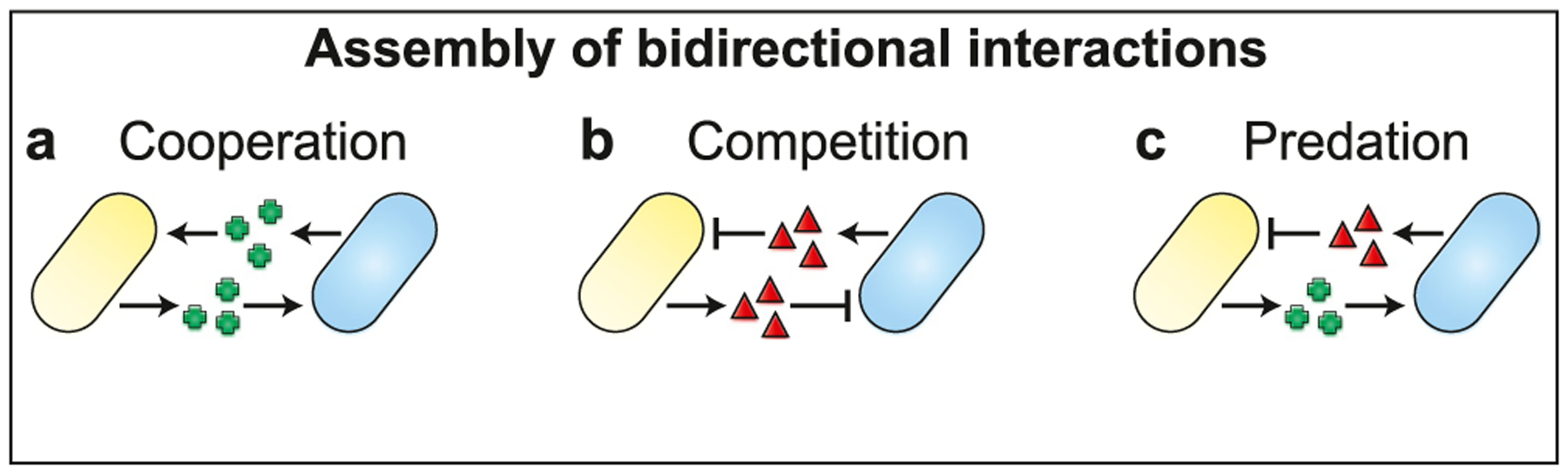
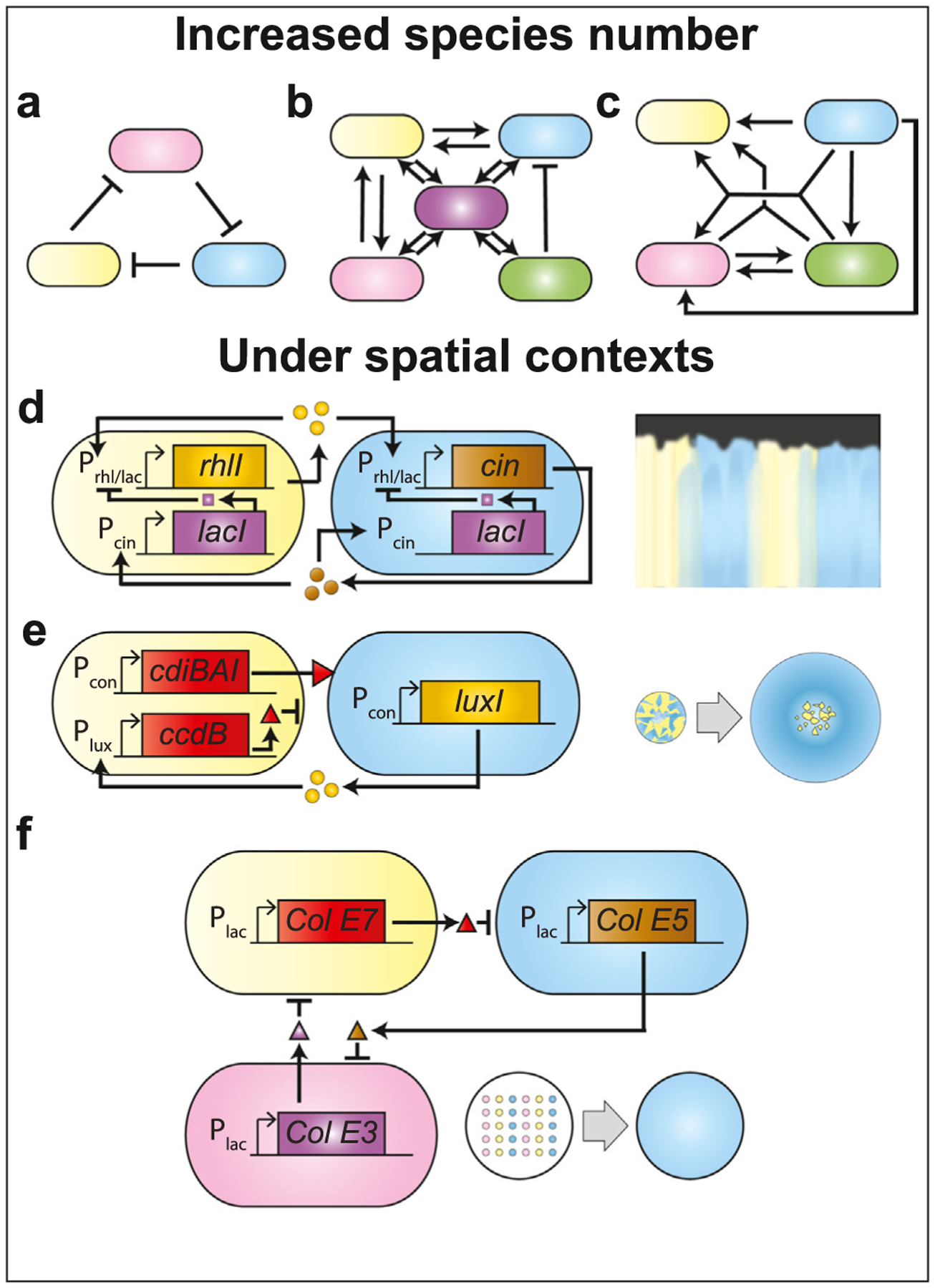
Synthetic microbial consortia represent a frontier of synthetic biology that promises versatile engineering of cellular functions. They are primarily developed through the design and construction of cellular interactions that coordinate individual dynamics and generate collective behaviors. Here we review recent advances in the engineering of synthetic communities through cellular-interaction programming. We first examine fundamental building blocks for intercellular communication and unidirectional positive and negative interactions. We then recap the assembly of the building blocks for creating bidirectional interactions in two-species ecosystems, which is followed by the discussion of engineering toward complex communities with increasing species numbers, under spatial contexts, and via model-guided design. We conclude by summarizing major challenges and future opportunities of engineered microbial ecosystems.
Copyright © 2022 Elsevier Ltd. All rights reserved.
Conflict of interest statement
Conflict of interest statement
The authors declare that they have no known competing financial interests or personal relationships that could have appeared to influence the work reported in this paper.
Figures
References
-
- Brenner K, You L, Arnold FH: Engineering microbial consortia: a new frontier in synthetic biology. Trends Biotechnol 2008, 26:483–489. - PubMed
-
- De Roy K, Marzorati M, Van den Abbeele P, Van de Wiele T, Boon N: Synthetic microbial ecosystems: an exciting tool to understand and apply microbial communities. Environ Microbiol 2014, 16:1472–1481. - PubMed
-
- Cameron DE, Bashor CJ, Collins JJ: A brief history of synthetic biology. Nat Rev Microbiol 2014, 12:381–390. - PubMed
-
- English MA, Gayet RV, Collins JJ: Designing biological circuits: synthetic biology within the operon model and beyond. Annu Rev Biochem 2021, 90:221–244. - PubMed
Publication types
MeSH terms
Grants and funding
LinkOut - more resources
Full Text Sources
