


Genetic spectrum of prenatally diagnosed skeletal dysplasias in a Finnish patient cohort
- PMID: 35611473
- PMCID: PMC9796183
- DOI: 10.1002/pd.6186
Genetic spectrum of prenatally diagnosed skeletal dysplasias in a Finnish patient cohort
Abstract
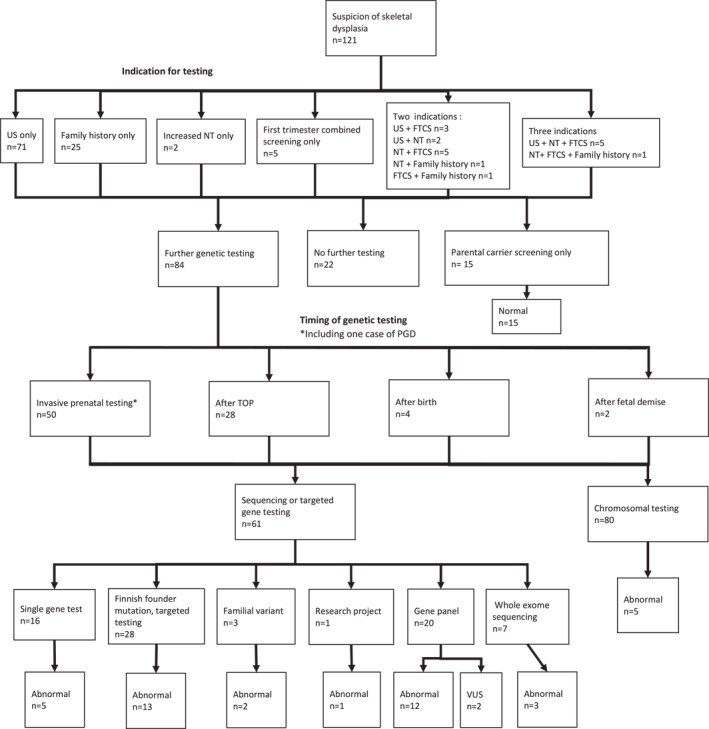
Objective: This retrospective cohort study aims to describe the genetic spectrum of fetal skeletal dysplasias detected in a Finnish patient cohort and the diagnostic yield of various analysis methods used.
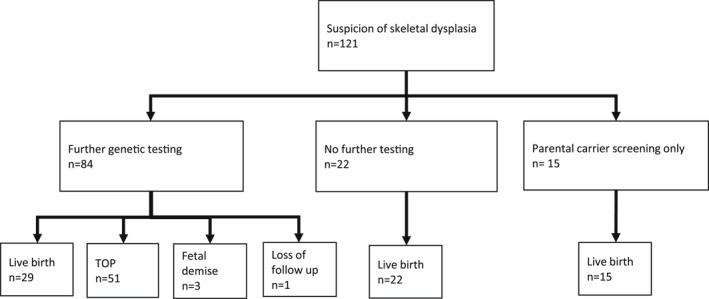
Method: A total of 121 pregnancies with prenatally suspected or diagnosed skeletal dysplasia were analyzed between 2013 and 2020. Clinical details and findings from genetic testing were collected.
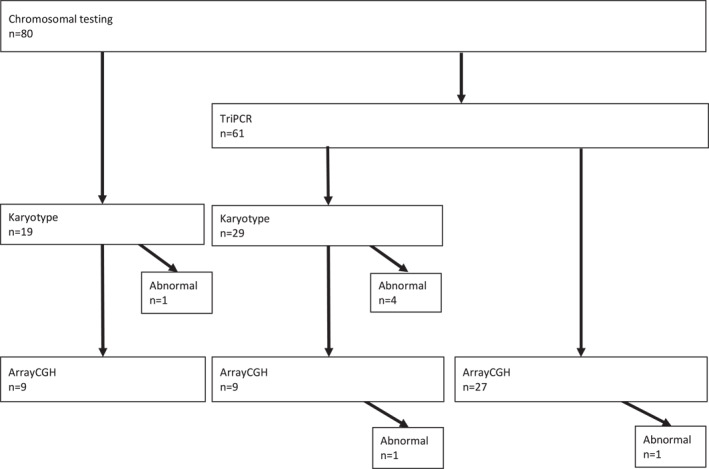
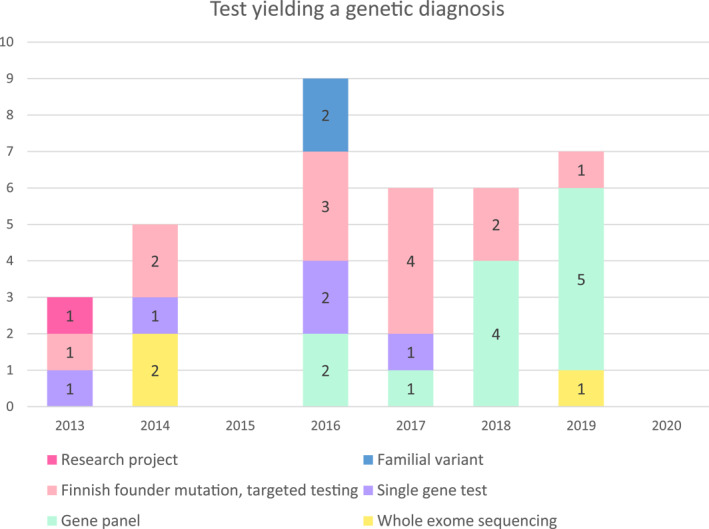
Results: Abnormal ultrasound triggered further testing in most cases. However, there were several cases with increased nuchal translucency and/or abnormal risk ratio in the first trimester combined screening as the initial finding. Further genetic testing was performed in 84/121 (69.4%) cases. A genetic diagnosis was confirmed in 36/84 (42.9%) cases. Half of the identified cases could be attributed to a founder mutation specific to the Finnish Disease Heritage, whereas the other half consisted of a variety of other genetic defects.
Conclusion: In our patient cohort, the overall genetic spectrum of prenatally diagnosed skeletal dysplasias was wide. However, the impact of Finnish founder mutations was considerable, suggesting that the genetic spectrum of skeletal dysplasias may differ significantly between populations. This should be taken into consideration during the diagnostic process especially as initial ultrasound findings may be unspecific and the interpretation of ultrasound features is usually difficult.
© 2022 The Authors. Prenatal Diagnosis published by John Wiley & Sons Ltd.
Conflict of interest statement
The authors declared that they have no conflicts of interest to this work.
Figures
References
MeSH terms
LinkOut - more resources
Full Text Sources
