


How common is patient and public involvement (PPI)? Cross-sectional analysis of frequency of PPI reporting in health research papers and associations with methods, funding sources and other factors
- PMID: 35613748
- PMCID: PMC9131100
- DOI: 10.1136/bmjopen-2022-063356
How common is patient and public involvement (PPI)? Cross-sectional analysis of frequency of PPI reporting in health research papers and associations with methods, funding sources and other factors
Abstract
Objectives: Patient and public involvement (PPI) in health research is required by some funders and publications but we know little about how common it is. In this study we estimated the frequency of PPI inclusion in health research papers and analysed how it varied in relation to research topics, methods, funding sources and geographical regions.
Design: Cross-sectional.
Methods: Our sample consisted of 3000 research papers published in 2020 in a general health-research journal (BMJ Open) that requires a statement on whether studies included PPI. We classified each paper as 'included PPI' or 'did not include PPI' and analysed the association of this classification with location (country or region of the world), methods used, research topic (journal section) and funding source. We used adjusted regression models to estimate incident rate ratios of PPI inclusion in relation to these differences.
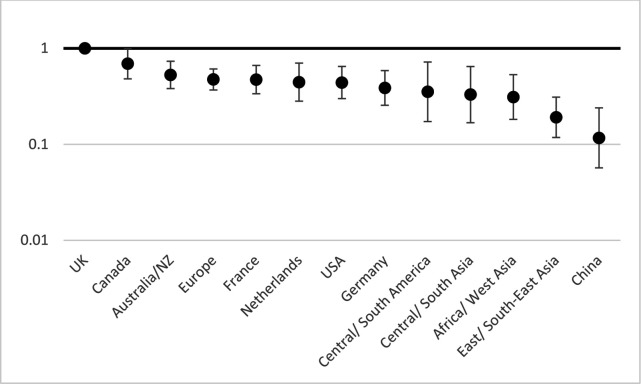
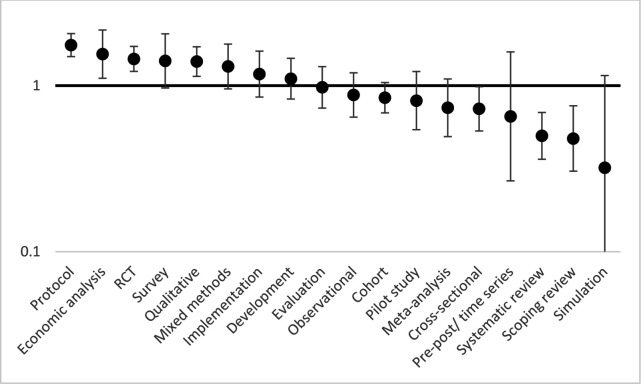
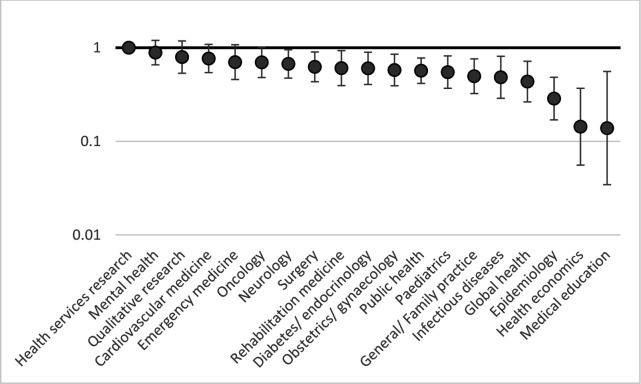
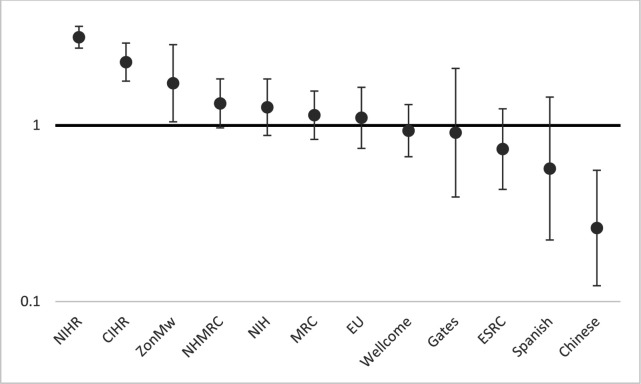
Results: 618 (20.6%) of the papers in our sample included PPI. The proportion of papers including PPI varied in relation to location (from 44.5% (95% CI 40.8% to 48.5%) in papers from the UK to 3.4% (95% CI 1.5% to 5.3%) in papers from China), method (from 38.6% (95% CI 27.1% to 50.1%) of mixed-methods papers to 5.3% (95% CI -1.9% to 12.5%) of simulation papers), topic (from 36.9% (95% CI 29.1% to 44.7%) of papers on mental health to 3.4% (95% CI -1.3% to 8.2%) of papers on medical education and training, and funding source (from 57.2% (95% CI 51.8% to 62.6%) in papers that received funding from the UK's National Institute for Health Research to 3.4% (95% CI 0.7% to 6.0%) in papers that received funding from a Chinese state funder).
Conclusions: Most research papers in our sample did not include PPI and PPI inclusion varied widely in relation to location, methods, topic and funding source.
Keywords: epidemiology; medical ethics; statistics & research methods.
© Author(s) (or their employer(s)) 2022. Re-use permitted under CC BY. Published by BMJ.
Conflict of interest statement
Competing interests: None declared.
Figures
References
-
- World Health Organisation . Declaration of Alma Ata: report of the International Conference on primary health care. Geneva: WHO, 1978. - PubMed
-
- Heron J, Reason P. Extending Epistemology within a Co-operative Inquiry. In: The SAGE Handbook of Action Research [Internet]. London: SAGE Publications Ltd, 2008: 366–80. http://methods.sagepub.com/book/the-sage-handbook-of-action-research/d32...
Publication types
MeSH terms
LinkOut - more resources
Full Text Sources
