The influence of urban exposures and residence on childhood asthma
- PMID: 35616896
- PMCID: PMC9288815
- DOI: 10.1111/pai.13784
The influence of urban exposures and residence on childhood asthma
Abstract
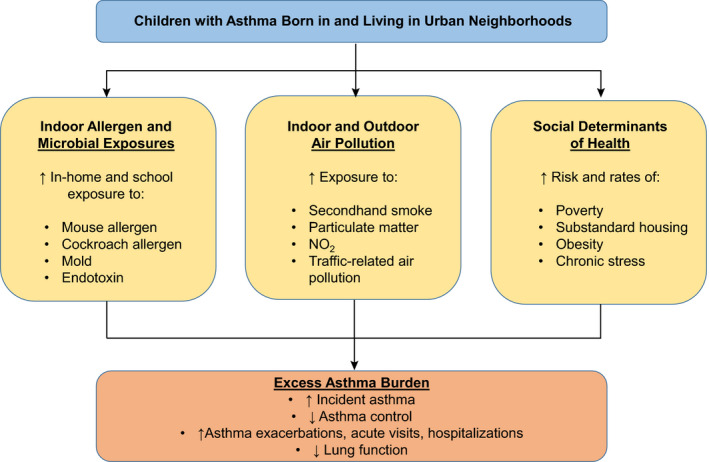
Children with asthma who live in urban neighborhoods experience a disproportionately high asthma burden, with increased incident asthma and increased asthma symptoms, exacerbations, and acute visits and hospitalizations for asthma. There are multiple urban exposures that contribute to pediatric asthma morbidity, including exposure to pest allergens, mold, endotoxin, and indoor and outdoor air pollution. Children living in urban neighborhoods also experience inequities in social determinants of health, such as increased poverty, substandard housing quality, increased rates of obesity, and increased chronic stress. These disparities then in turn can increase the risk of urban exposures and compound asthma morbidity as poor housing repair is a risk factor for pest infestation and mold exposure and poverty is a risk factor for exposure to air pollution. Environmental interventions to reduce in-home allergen concentrations have yielded inconsistent results. Population-level interventions including smoking bans in public places and legislation to decrease traffic-related air pollution have been successful at reducing asthma morbidity and improving lung function growth. Given the interface and synergy between urban exposures and social determinants of health, it is likely population and community-level changes will be needed to decrease the excess asthma burden in children living in urban neighborhoods.
Keywords: air pollution; asthma disparities; childhood asthma; pediatric urban asthma; pest allergen exposure; social determinants of health; urban asthma; urban exposures.
© 2022 The Authors. Pediatric Allergy and Immunology published by European Academy of Allergy and Clinical Immunology and John Wiley & Sons Ltd.
Figures