Review
. 2022 Sep;8(9):735-746.
doi: 10.1016/j.trecan.2022.04.007. Epub 2022 May 23.

Cellular and molecular mechanisms of plasticity in cancer

Affiliations
Review

Cellular and molecular mechanisms of plasticity in cancer

Stefan R Torborg et al. Trends Cancer. 2022 Sep.

Abstract

Cancer cells are plastic - they can assume a wide range of distinct phenotypes. Plasticity is integral to cancer initiation and progression, as well as to the emergence and maintenance of intratumoral heterogeneity. Furthermore, plastic cells can rapidly adapt to and evade therapy, which poses a challenge for effective cancer treatment. As such, targeting plasticity in cancer holds tremendous promise. Yet, the principles governing plasticity in cancer cells remain poorly understood. Here, we provide an overview of the fundamental molecular and cellular mechanisms that underlie plasticity in cancer and in other biological contexts, including development and regeneration. We propose a key role for high-plasticity cell states (HPCSs) as crucial nodes for cell state transitions and enablers of intra-tumoral heterogeneity.

Keywords: cancer therapy; cell state transition; differentiation; intratumoral heterogeneity; plasticity; tumor evolution.


Conflict of interest statement

Declaration of interests None.

Figures
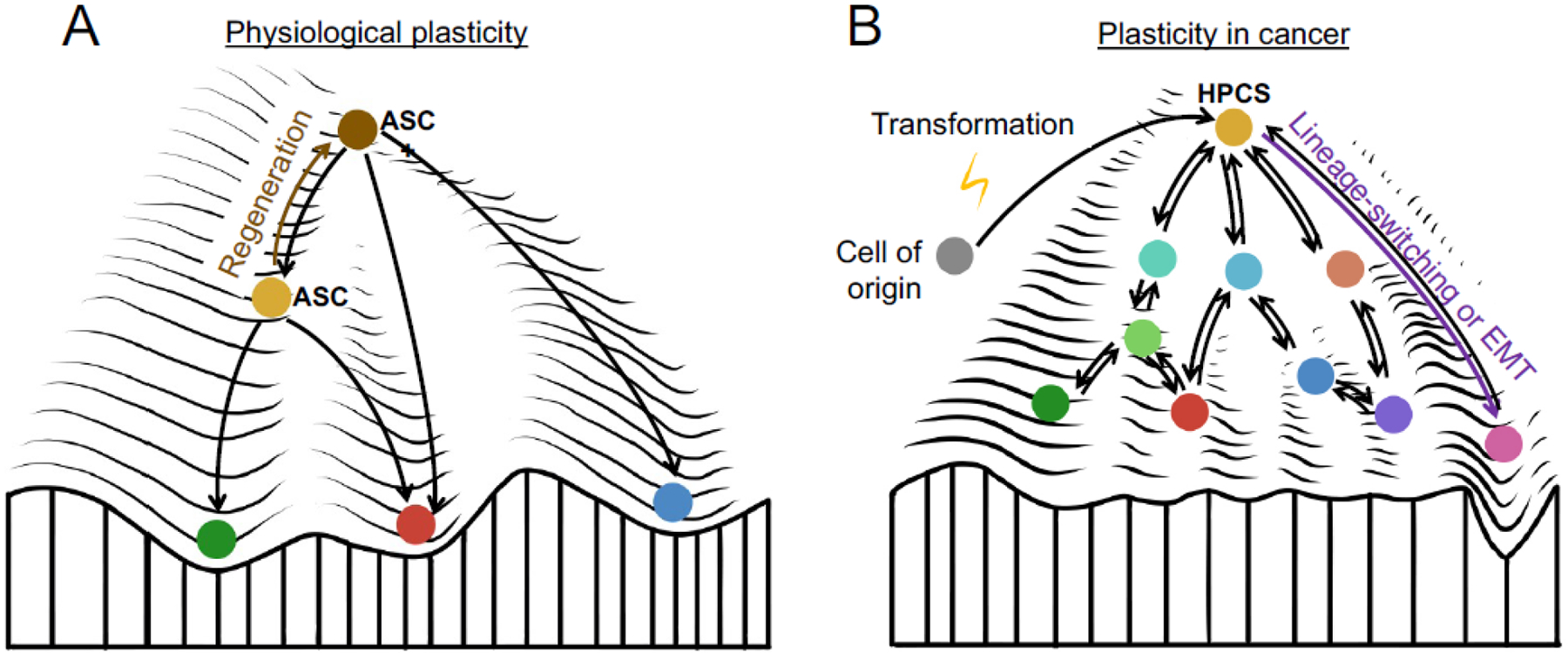
Figure 1.
Figure 1.. Plasticity in normal physiology vs. cancer in the context of the Waddington landscape.
(A) During normal tissue homeostasis, differentiated cells arise from a multipotent adult stem cell (ASC, orange). Upon injury, stem cells acquire plasticity, which manifests in increased differentiation potential towards related cellular lineages (ASC+, brown state). (B) Cellular transformation of the cell of origin (gray) is associated with the acquisition of increased plasticity. Within established tumors, cancer cell differentiation states are less defined and capable of rapid transitions. We propose that plasticity concentrates within molecularly distinct cell states (orange) that have significantly increased capacity for cell state transitions. These high-plasticity cell states (HPCSs) enable drastic phenotypic transitions, such as lineage-switching or epithelial-mesenchymal transition (EMT). The environment (peaks and valleys) in cancer also changes to facilitate the phenotypic transitions, compared to normal cells.
Figure 2.
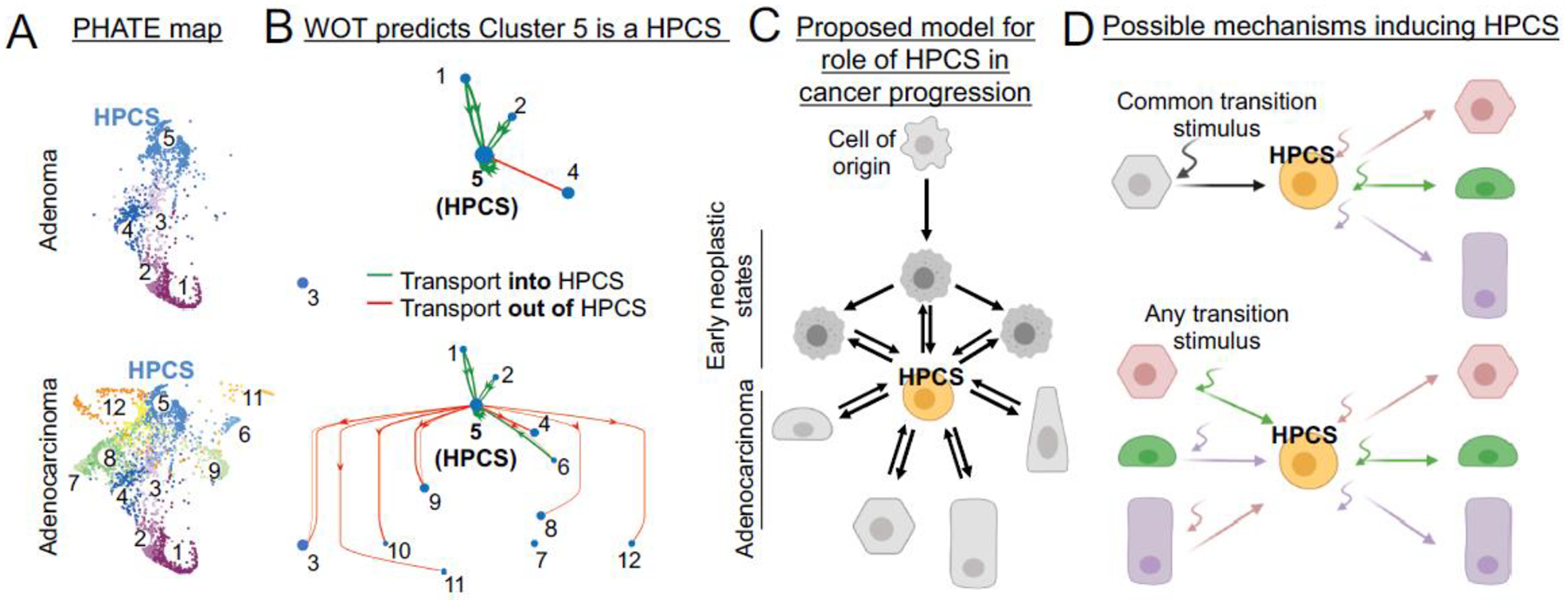
Figure 2.. Role of a high-plasticity cell state (HPCS) in lung adenocarcinoma evolution.
(A) Single-cell RNA-sequencing analysis of cell states in lung atypical adenomatous hyperplasias and adenomas (top), as well as adenocarcinomas (bottom), visualized by a potential of heat-diffusion for affinity-based trajectory embedding (PHATE) map [43]. (B) Waddington’s Optimal Transport analysis of cell state transitions. Note that only connections involving Cluster 5 (HPCS) are shown (full map is published [43]). Green HPCS-upstream (green) and HPCS-downstream (red) states are indicated. (C) Proposed model for the role of HPCS in tumor evolution: The cell of origin gives rise to early neoplastic cell states that harbor limited plasticity. The emergence of the HPCS (orange) enables a plethora of downstream cell states. In established adenocarcinomas, the HPCS forms the center of a network of discrete cancer cell states, enabling cell state transitions and promoting heterogeneity. Transitions from early neoplastic stages into the HPCS, or from the HPCS to late neoplastic states have increased probabilities (bold arrows), whereas reverse transitions can happen with lower probability or when triggered by a transition stimulus (light arrow). (D) Two conceptual models for the induction of the high-plasticity cell state in established tumors. Top: A common transition stimulus (black curved arrow) triggers activation of the HPCS program in a differentiated cancer cell. Bottom: Specific transition stimulus engenders the HPCS program, which is a necessary dedifferentiation intermediate in a phenotypic transition. In both models, the cell acquires the ability to differentiate via various trajectories once residing in the HPCS.
Figure 3.
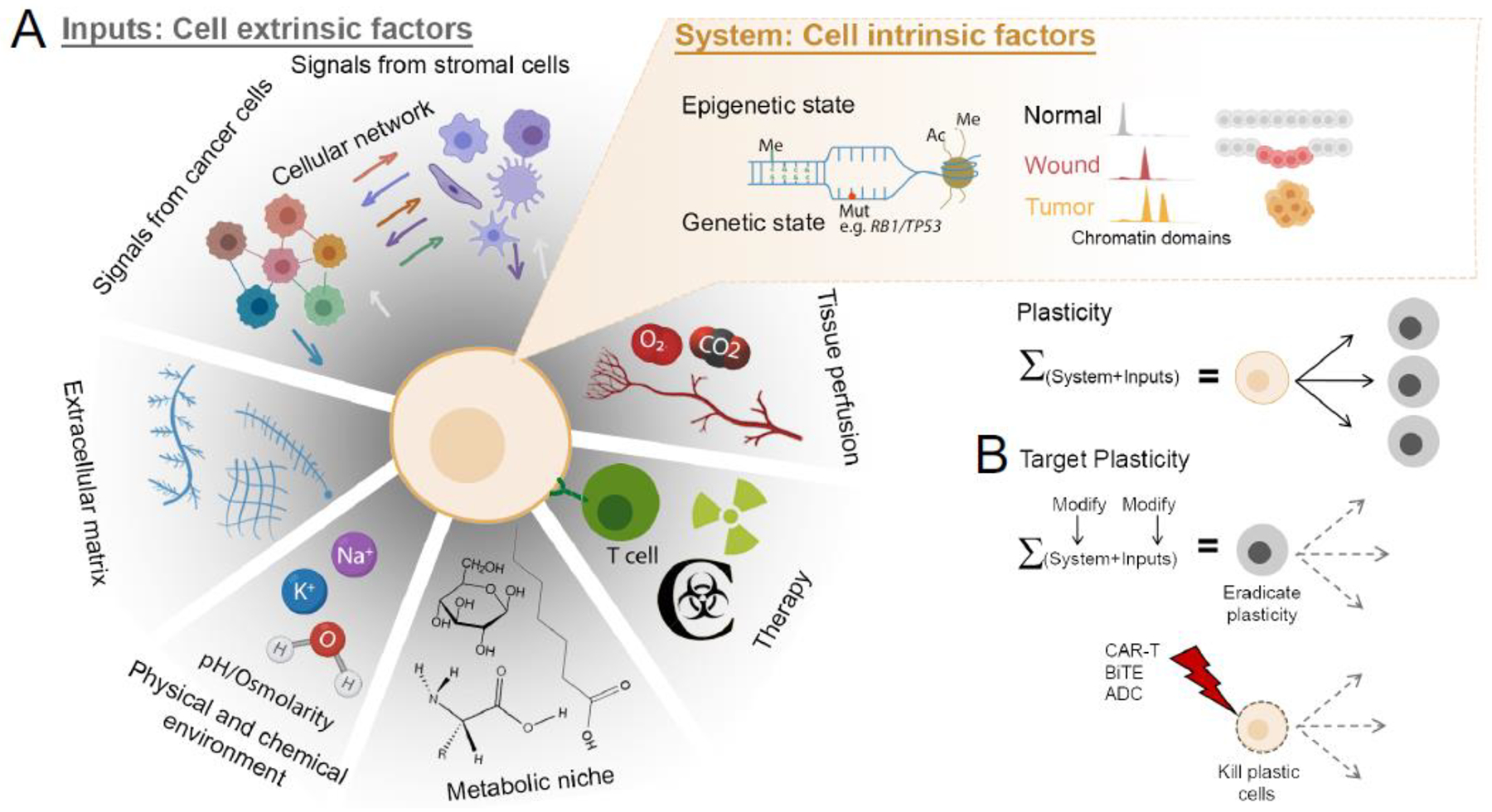
Figure 3.. Molecular mechanisms of plasticity.
(A) Cellular plasticity is the sum of cell-intrinsic molecular features (System) and cell-extrinsic factors (Inputs). Cell-intrinsic features include epigenetic mechanisms such as DNA methylation (Me), mutational state (Mut), histone modifications such as acetylation (Ac) and methylation (Me), and chromatin accessibility differences. Chromatin accessibility changes associated with wound healing increase plasticity and cooperate with tumor initiation. (B) Targeting plasticity may involve modifying the System or the Inputs that establish plastic cell states, or by directing cytotoxicity to highly plastic cancer cells through cell surface markers.

References

    1. Takahashi K and Yamanaka S (2006) Induction of pluripotent stem cells from mouse embryonic and adult fibroblast cultures by defined factors. Cell 126 (4), 663–76. - PubMed
    1. Marjanovic ND et al. (2013) Cell plasticity and heterogeneity in cancer. Clin Chem 59 (1), 168–79. - PMC - PubMed
    1. Gupta PB et al. (2019) Phenotypic Plasticity: Driver of Cancer Initiation, Progression, and Therapy Resistance. Cell Stem Cell 24 (1), 65–78. - PMC - PubMed
    1. Solini GE et al. (2017) Embryonic transplantation experiments: Past, present, and future. Trends Dev Biol 10, 13–30. - PMC - PubMed
    1. Arozarena I and Wellbrock C (2019) Phenotype plasticity as enabler of melanoma progression and therapy resistance. Nat Rev Cancer 19 (7), 377–391. - PubMed

Publication types