


Return to school and mask-wearing in class during the COVID-19 pandemic: Student perspectives from a school simulation study
- PMID: 35620563
- PMCID: PMC9126272
- DOI: 10.1093/pch/pxab102
Return to school and mask-wearing in class during the COVID-19 pandemic: Student perspectives from a school simulation study
Abstract
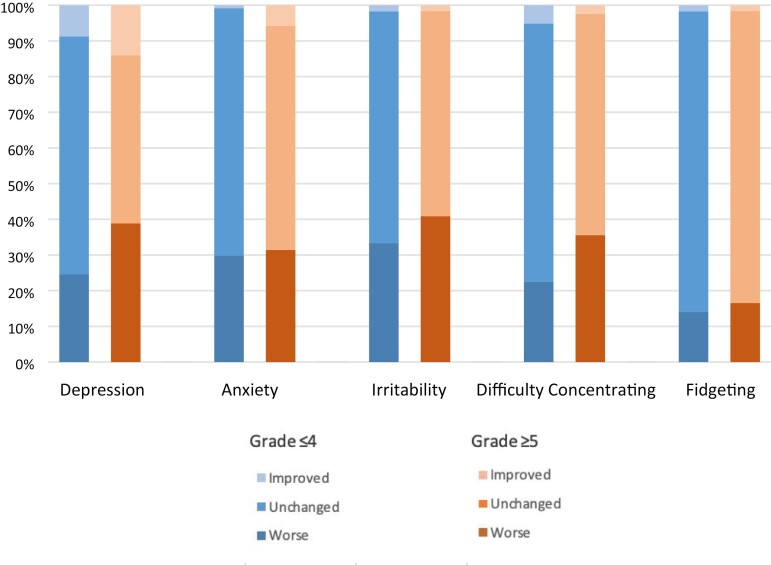
Objectives: This study examined children's perspectives about returning to in-person school following lockdown due to the pandemic and about mask-wearing in class, as well as the mental health of children and parents during the pandemic.
Methods: This cross-sectional study was part of a 2-day school simulation exercise that randomized students to different masking recommendations. Parent-report of mental health and post-simulation child-report of COVID-19-related anxiety and mask-wearing were analyzed using descriptive and multiple regression analyses. Semi-structured focus groups were conducted with older students to supplement questionnaire data.
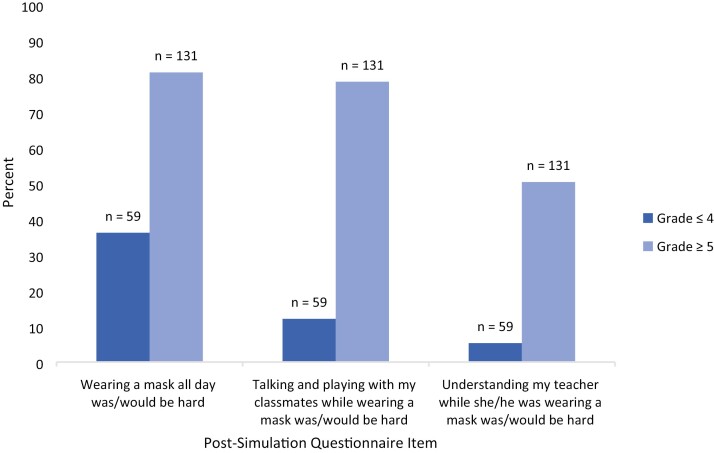
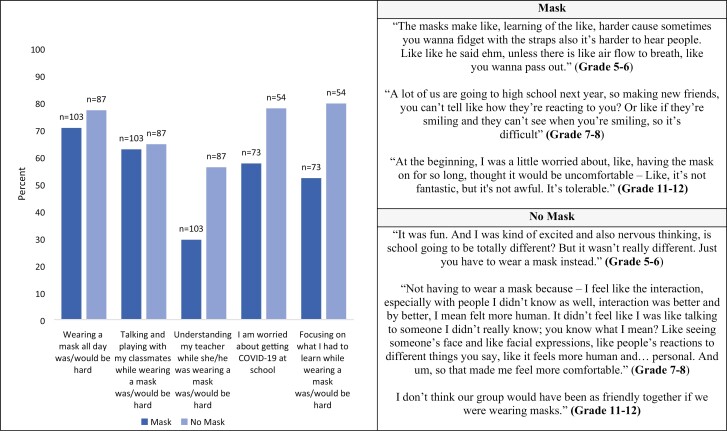
Results: Of 190 students in this study, 31% were in grade 4 or lower 95% looked forward to returning to in-person school. Greater child anxiety about COVID-19 was predicted by increased parent/caregiver anxiety (β=0.67; P<0.001), and lower parental educational attainment (β=1.86; P<0.002). Older students were more likely than younger students to report that mask-wearing interfered with their abilities to interact with peers (χ2(1)=31.16; P<0.001) and understand the teacher (χ2(1)=13.97; P<0.001). Students in the group that did not require masks were more likely than students in the masking group to report worries about contracting COVID-19 at school (χ2(1)=10.07; P<0.05), and anticipated difficulty wearing a mask (χ2(1)=18.95; P<0.001).
Conclusions: For children anxious about COVID-19, parental anxiety and education about COVID-19 may be targets for intervention. Future research should examine the impact of prolonged implementation of public health mitigation strategies in school on academic achievement and children's mental health.
Keywords: COVID-19; Children; Masks; Mental health; School reopening.
© The Author(s) 2022. Published by Oxford University Press on behalf of the Canadian Paediatric Society. All rights reserved. For permissions, please e-mail: journals.permissions@oup.com.
Figures
References
-
- Golberstein E, Wen H, Miller BF.. Coronavirus disease 2019 (COVID-19) and mental health for children and adolescents. JAMA Pediatr 2020;174(9):819–20. - PubMed
-
- Masonbrink AR, Hurley E.. Advocating for children during the COVID-19 school closures. Pediatrics 2020;146(3):e20201440. - PubMed
-
- Sprang G, Silman M.. Posttraumatic stress disorder in parents and youth after health-related disasters. Disaster Med Public Health Prep 2013;7(1):105–10. - PubMed
LinkOut - more resources
Full Text Sources