


Distribution and Frequency of Salivary Gland Tumours: An International Multicenter Study
- PMID: 35622296
- PMCID: PMC9729635
- DOI: 10.1007/s12105-022-01459-0
Distribution and Frequency of Salivary Gland Tumours: An International Multicenter Study
Abstract
Background: Salivary gland tumours (SGT) are a relatively rare group of neoplasms with a wide range of histopathological appearance and clinical features. To date, most of the epidemiological studies on salivary gland tumours are limited for a variety of reason including being out of date, extrapolated from either a single centre or country studies, or investigating either major or minor glands only.
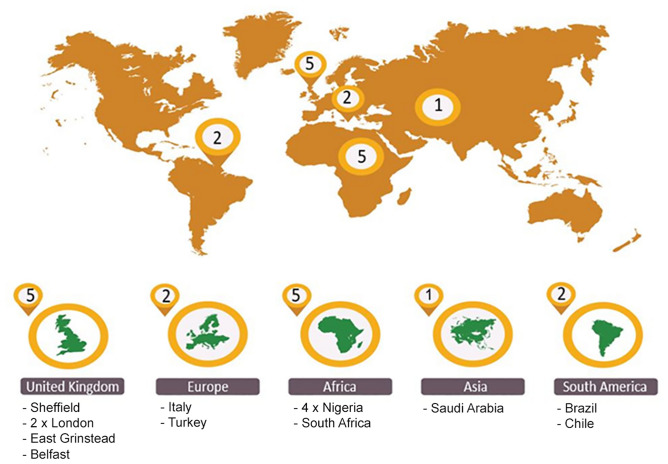
Methods: This study aimed to mitigate these shortcomings by analysing epidemiological data including demographic, anatomical location and histological diagnoses of SGT from multiple centres across the world. The analysed data included age, gender, location and histological diagnosis from fifteen centres covering the majority of the world health organisation (WHO) geographical regions between 2006 and 2019.
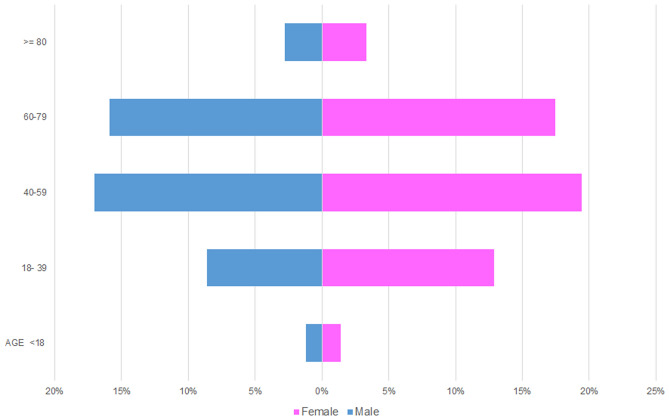
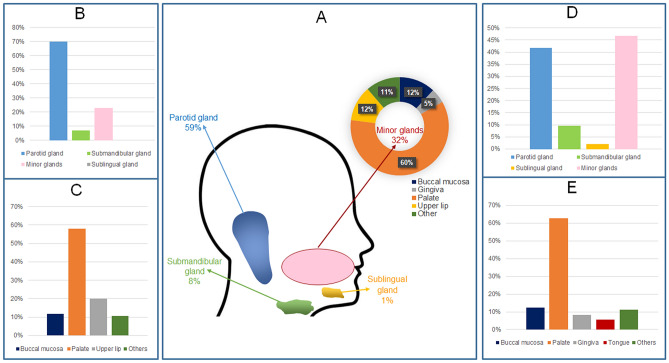
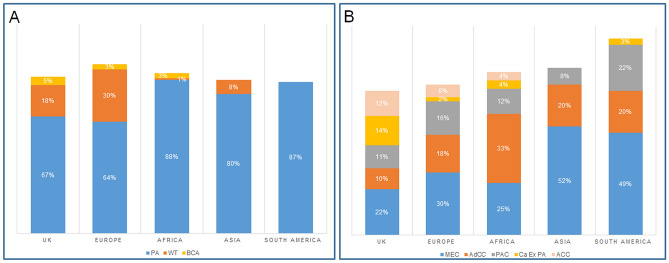
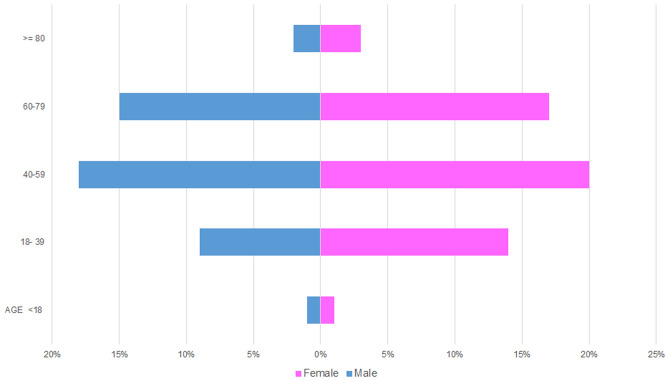
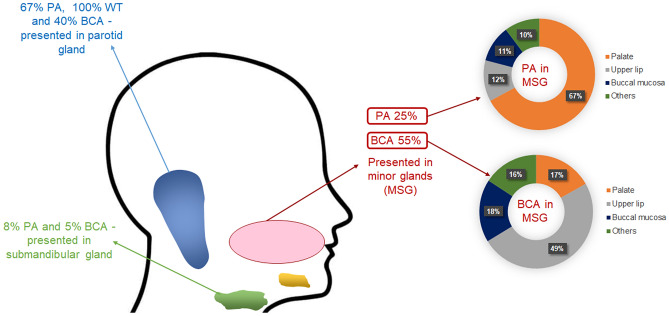
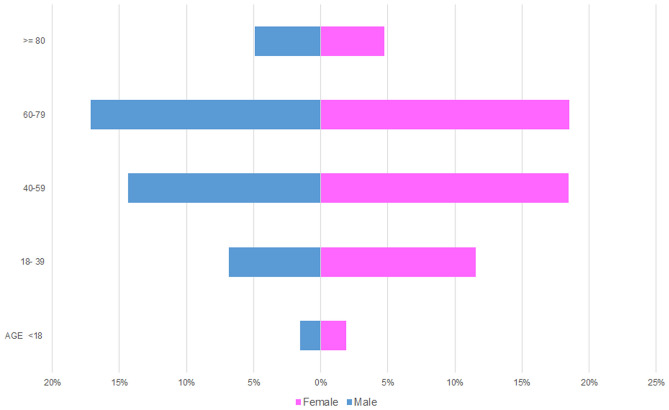
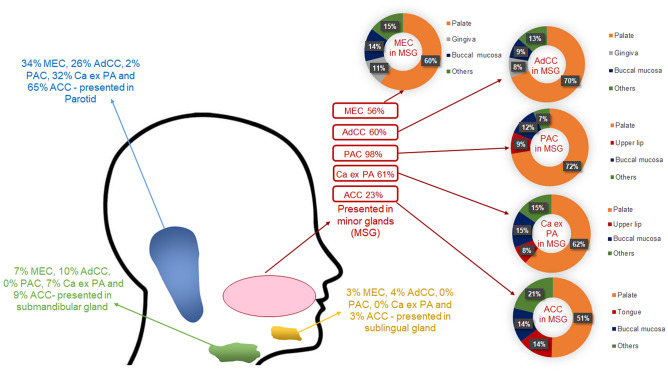
Results: A total of 5739 cases were analysed including 65% benign and 35% malignant tumours. A slight female predilection (54%) and peak incidence between the fourth and seventh decade for both benign and malignant tumours was observed. The majority (68%) of the SGT presented in major and 32% in the minor glands. The parotid gland was the most common location (70%) for benign and minor glands (47%) for malignant tumours. Pleomorphic adenoma (70%), and Warthin's tumour (17%), were the most common benign tumours whereas mucoepidermoid carcinoma (26%) and adenoid cystic carcinoma (17%) were the most frequent malignant tumours.
Conclusions: This multicentre investigation presents the largest cohort study to date analysing salivary gland tumour data from tertiary centres scattered across the globe. These findings should serve as a baseline for future studies evaluating the epidemiological landscape of these tumours.
Keywords: Demographics; Epidemiology; Head and neck; Histological diagnosis; Multicentre research study; Salivary gland neoplasms; Salivary gland tumours; Site distribution.
© 2022. The Author(s).
Conflict of interest statement
No conflict of interests to disclose.
Figures
References
-
- Sardar MA, Ganvir SM, Hazarey VK. A demographic study of salivary gland tumors. SRM J Res Dent Sci. 2018;9(2):67. doi: 10.4103/srmjrds.srmjrds_57_17. - DOI
Publication types
MeSH terms
LinkOut - more resources
Full Text Sources
Medical
