


Neurofibromatosis: New Clinical Challenges in the Era of COVID-19
- PMID: 35625677
- PMCID: PMC9138859
- DOI: 10.3390/biomedicines10050940
Neurofibromatosis: New Clinical Challenges in the Era of COVID-19
Abstract
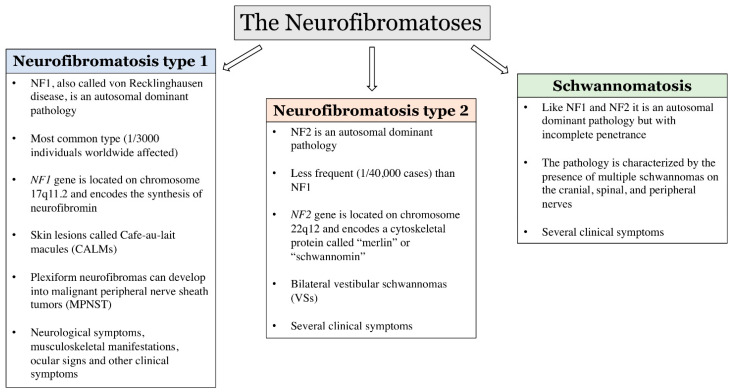
Rare diseases constitute a wide range of disorders thus defined for their low prevalence. However, taken together, rare diseases impact a considerable percentage of the world population, thus representing a public healthcare problem. In particular, neurofibromatoses are autosomal-dominant genetic disorders that include type 1 neurofibromatosis (NF1), type 2 neurofibromatosis (NF2) and schwannomatosis. Each of the three types is a genetically distinct disease with an unpredictable clinical course and for which there is still no resolutive cure. Therefore, a personalized therapeutic approach directed at improving the symptomatology as well as the search for new pharmacological strategies for the management of neurofibromatosis represents a priority for positive outcomes for affected patients. The coronavirus disease 2019 (COVID-19) pandemic has severely affected health systems around the world, impacting the provision of medical care and modifying clinical surveillance along with scientific research procedures. COVID-19 significantly worsened exchanges between healthcare personnel and neurofibromatosis patients, precluding continuous clinical monitoring in specialized clinic centers. In this new scenario, our article presents, for the first time, a comprehensive literature review on the clinical challenges for neurofibromatosis clinical care and research during the COVID-19 pandemic health emergency. The review was performed through PubMed (Medline) and Google Scholar databases until December 2021.
Keywords: COVID-19; Telemedicine; clinical care; neurofibromatosis; personalized medicine; pharmacogenetics; rare diseases; telehealth.
Conflict of interest statement
The authors declare no conflict of interest.
Figures
References
-
- Eurordis A.K., Faurisson F. The Voice of 12,000 Patients. Experiences and Expectations of Rare Disease Patients on Diagnosis and Care in Europe. European Organisation for Rare Diseases; Paris, France: 2009.
Publication types
LinkOut - more resources
Full Text Sources
Research Materials
Miscellaneous
