


Keratinocytes: An Enigmatic Factor in Atopic Dermatitis
- PMID: 35626720
- PMCID: PMC9139464
- DOI: 10.3390/cells11101683
Keratinocytes: An Enigmatic Factor in Atopic Dermatitis
Abstract
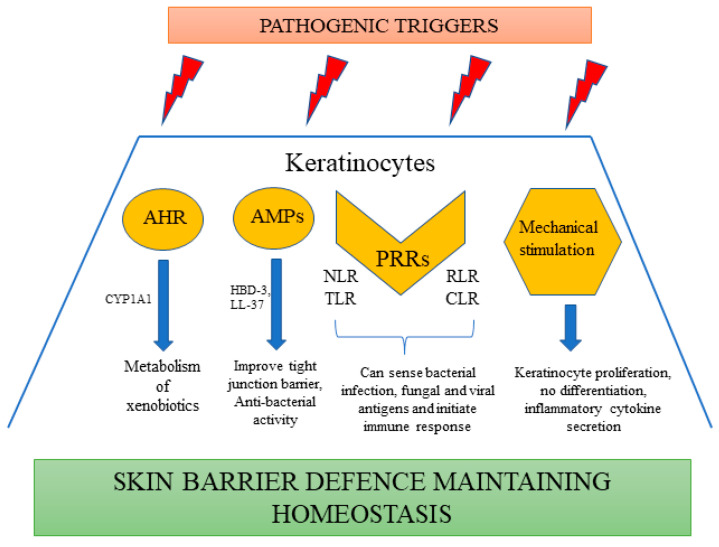
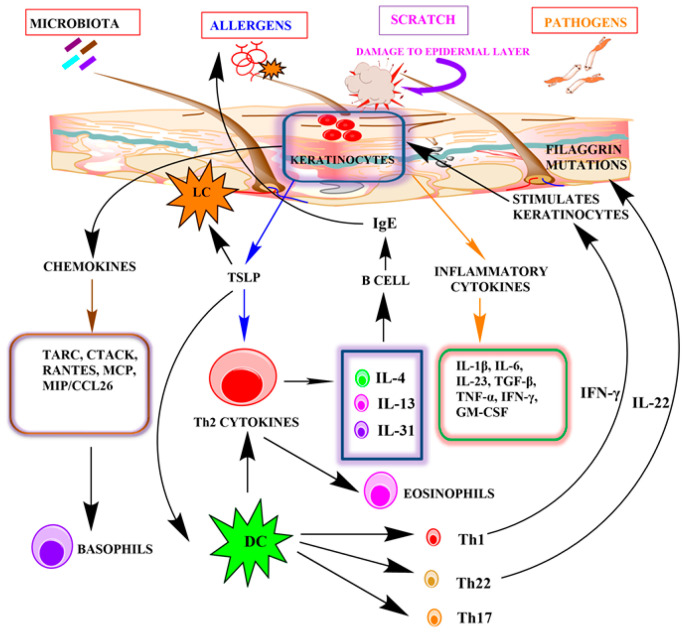
Atopic dermatitis (AD), characterized by rashes, itching, and pruritus, is a chronic inflammatory condition of the skin with a marked infiltration of inflammatory cells into the lesion. It usually commences in early childhood and coexists with other atopic diseases such as allergic rhinitis, bronchial asthma, allergic conjunctivitis, etc. With a prevalence rate of 1-20% in adults and children worldwide, AD is gradually becoming a major health concern. Immunological aspects have been frequently focused on in the pathogenesis of AD, including the role of the epidermal barrier and the consequent abnormal cytokine expressions. Disrupted epidermal barriers, as well as allergic triggers (food allergy), contact allergens, irritants, microbes, aggravating factors, and ultraviolet light directly initiate the inflammatory response by inducing epidermal keratinocytes, resulting in the abnormal release of various pro-inflammatory mediators, inflammatory cytokines, and chemokines from keratinocytes. In addition, abnormal proteinases, gene mutations, or single nucleotide polymorphisms (SNP) affecting the function of the epidermal barrier can also contribute towards disease pathophysiology. Apart from this, imbalances in cholinergic or adrenergic responses in the epidermis or the role played by immune cells in the epidermis such as Langerhans cells or antigen-presenting cells can also aggravate pathophysiology. The dearth of specific biomarkers for proper diagnosis and the lack of a permanent cure for AD necessitate investigation in this area. In this context, the widespread role played by keratinocytes in the pathogenesis of AD will be reviewed in this article to facilitate the opening up of new avenues of treatment for AD.
Keywords: atopic dermatitis; immune dysregulation; keratinocytes; skin barrier; therapeutic target.
Conflict of interest statement
The authors declare no conflict of interest.
Figures
References
Publication types
MeSH terms
Substances
LinkOut - more resources
Full Text Sources
Medical
