


Windswept Deformity a Disease or a Symptom? A Systematic Review on the Aetiologies and Hypotheses of Simultaneous Genu Valgum and Varum in Children
- PMID: 35626880
- PMCID: PMC9140164
- DOI: 10.3390/children9050703
Windswept Deformity a Disease or a Symptom? A Systematic Review on the Aetiologies and Hypotheses of Simultaneous Genu Valgum and Varum in Children
Abstract
Objective: The objective of this study is to create an overview of the possible aetiologies of windswept deformity and to emphasize the points of attention when presented with a case.
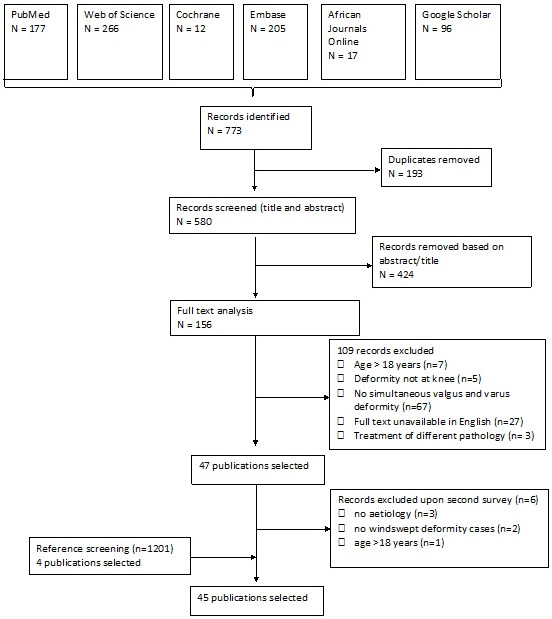
Methods: A systematic search according to the PRISMA statement was conducted using PubMed, African Journals Online, Cochrane, Embase, Google Scholar, and Web of Science. Articles investigating the aetiology of windswept deformity at the knee in children, and articles with windswept deformity as an ancillary finding were included. The bibliographic search was limited to English-language articles only. The level of evidence and methodological appraisal were assessed.
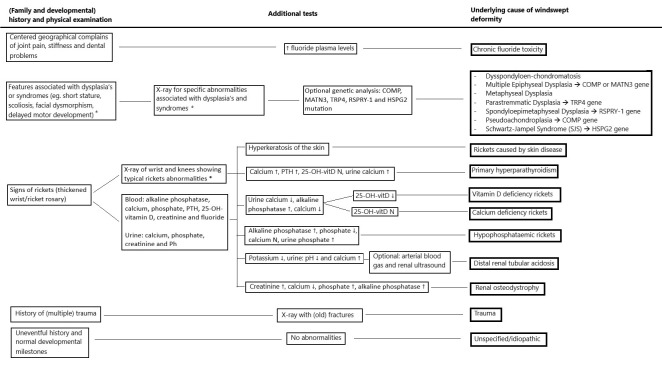
Results: Forty-five articles discussing the aetiology of windswept deformity were included. A variety of aetiologies can be brought forward. These can be divided into the following groups: 'Rickets and other metabolic disorders', 'skeletal dysplasias and other genetic disorders', 'trauma' and 'descriptive articles without specific underlying disorder'. With rickets being the largest group. Interestingly, in the group without a specific underlying disorder, all patients were from African descent, being otherwise healthy and presented with windswept deformity between two and three years of age.
Conclusion: We have presented an overview that may help identify the underlying disorder in children with windswept deformity. A step-by-step guide for clinicians who see a child with windswept deformity is provided. Even though, according to the Oxford level of evidence, most articles have a low level of evidence.
Keywords: children; genu valgum; genu varum; rickets; windswept deformity.
Conflict of interest statement
The authors declare no conflict of interest.
Figures
References
Publication types
LinkOut - more resources
Full Text Sources
