


Transcranial Photobiomodulation for the Treatment of Children with Autism Spectrum Disorder (ASD): A Retrospective Study
- PMID: 35626932
- PMCID: PMC9139753
- DOI: 10.3390/children9050755
Transcranial Photobiomodulation for the Treatment of Children with Autism Spectrum Disorder (ASD): A Retrospective Study
Abstract
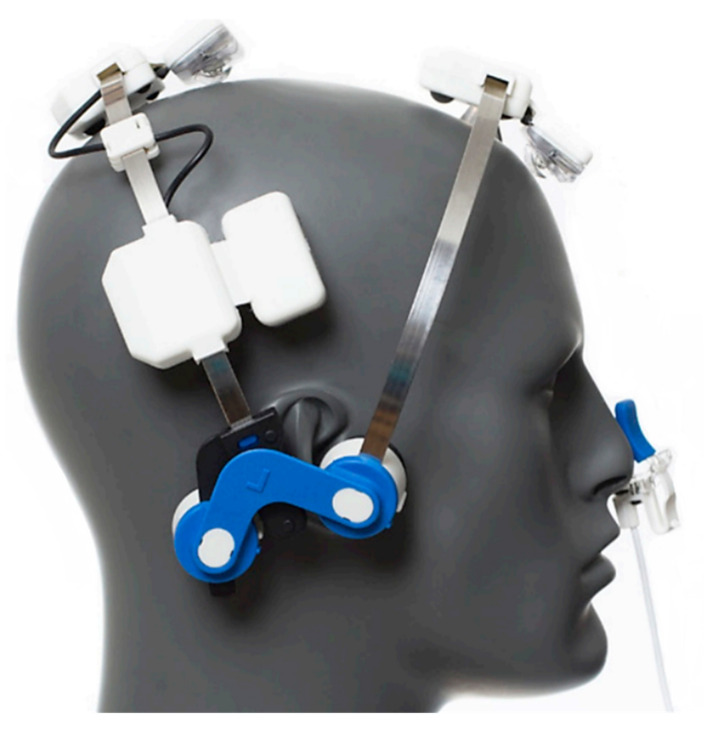
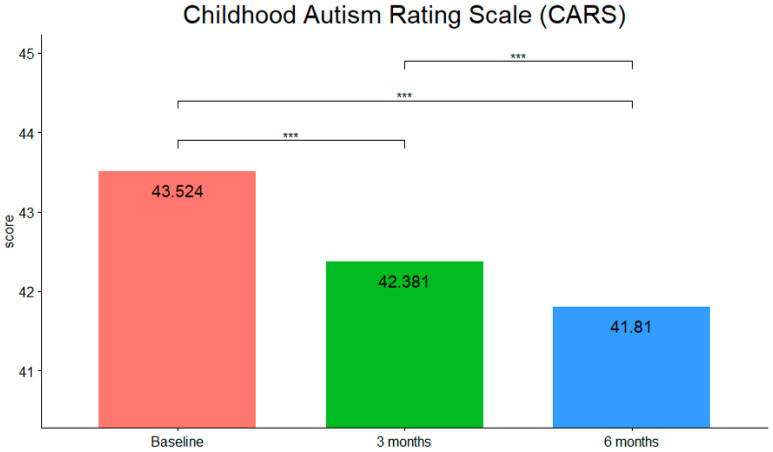
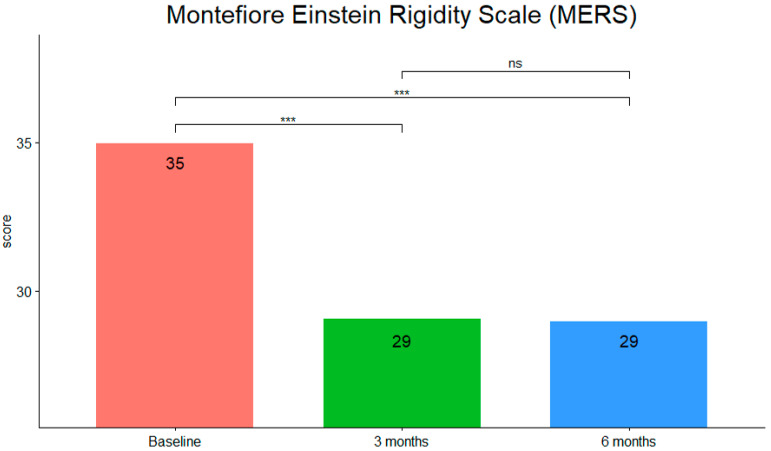
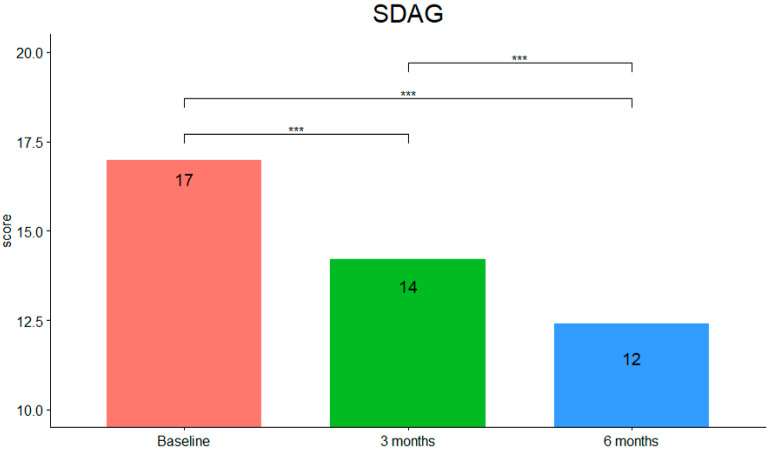
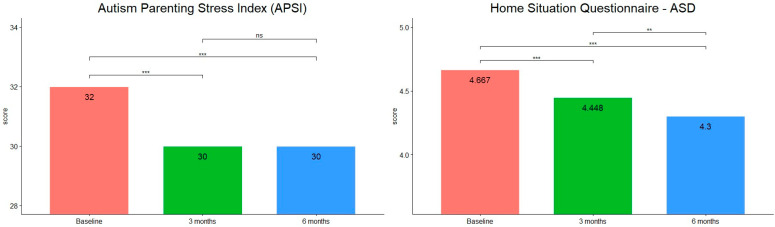
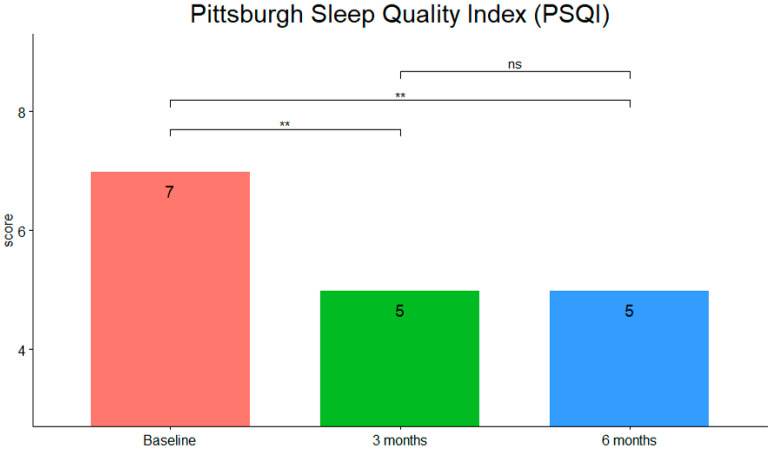
Children with Autism Spectrum Disorder (ASD) face several challenges due to deficits in social function and communication along with restricted patterns of behaviors. Often, they also have difficult-to-manage and disruptive behaviors. At the moment, there are no pharmacological treatments for ASD core features. Recently, there has been a growing interest in non-pharmacological interventions for ASD, such as neuromodulation. In this retrospective study, data are reported and analyzed from 21 patients (13 males, 8 females) with ASD, with an average age of 9.1 (range 5−15), who received six months of transcranial photobiomodulation (tPBM) at home using two protocols (alpha and gamma), which, respectively, modulates the alpha and gamma bands. They were evaluated at baseline, after three and six months of treatment using the Childhood Autism Rating Scale (CARS), the Home Situation Questionnaire-ASD (HSQ-ASD), the Autism Parenting Stress Index (APSI), the Montefiore Einstein Rigidity Scale−Revised (MERS−R), the Pittsburgh Sleep Quality Index (PSQI) and the SDAG, to evaluate attention. Findings show that tPBM was associated with a reduction in ASD severity, as shown by a decrease in CARS scores during the intervention (p < 0.001). A relevant reduction in noncompliant behavior and in parental stress have been found. Moreover, a reduction in behavioral and cognitive rigidity was reported as well as an improvement in attentional functions and in sleep quality. Limitations were discussed as well as future directions for research.
Keywords: ASD; LED; NIR; autism spectrum disorders; near-infrared; neuromodulation; photobiomodulation.
Conflict of interest statement
The authors declare no conflicts of interest with respect to the research, authorship, and/or publication of this article.
Figures
References
-
- American Psychiatric Association . Diagnostic and Statistical Manual of Mental Disorders. 5th ed. American Psychiatric Publishing; Arlington, VA, USA: 2013.
-
- Hill A.P., Zuckerman K.E., Hagen A.D., Kriz D.J., Duvall S.W., van Santen J., Nigg J., Fair D., Fombonne E. Aggressive Behavior Problems in Children with Autism Spectrum Disorders: Prevalence and Correlates in a Large Clinical Sample. Res. Autism Spectr. Disord. 2014;8:1121–1133. doi: 10.1016/j.rasd.2014.05.006. - DOI - PMC - PubMed
-
- Soke G.N., Rosenberg S.A., Hamman R.F., Fingerlin T., Robinson C., Carpenter L., Giarelli E., Lee L.C., Wiggins L.D., Durkin M.S., et al. Brief Report: Prevalence of Self-injurious Behaviors among Children with Autism Spectrum Disorder-A Population-Based Study. J. Autism Dev. Disord. 2016;46:3607–3614. doi: 10.1007/s10803-016-2879-1. - DOI - PMC - PubMed
LinkOut - more resources
Full Text Sources
Miscellaneous
