Meta-Analysis
. 2022 May 10;13(5):851.
doi: 10.3390/genes13050851.

A Novel Cuproptosis-Related Prognostic Gene Signature and Validation of Differential Expression in Clear Cell Renal Cell Carcinoma

Affiliations
Meta-Analysis

A Novel Cuproptosis-Related Prognostic Gene Signature and Validation of Differential Expression in Clear Cell Renal Cell Carcinoma

Zilong Bian et al. Genes (Basel). .

Abstract

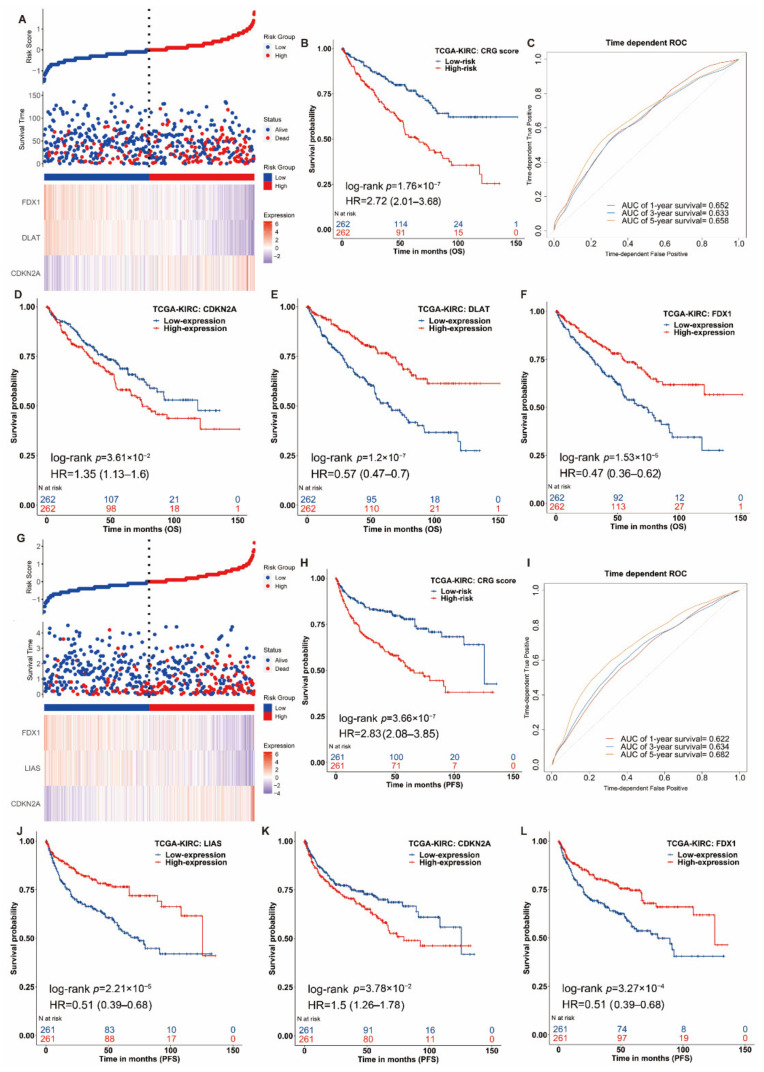
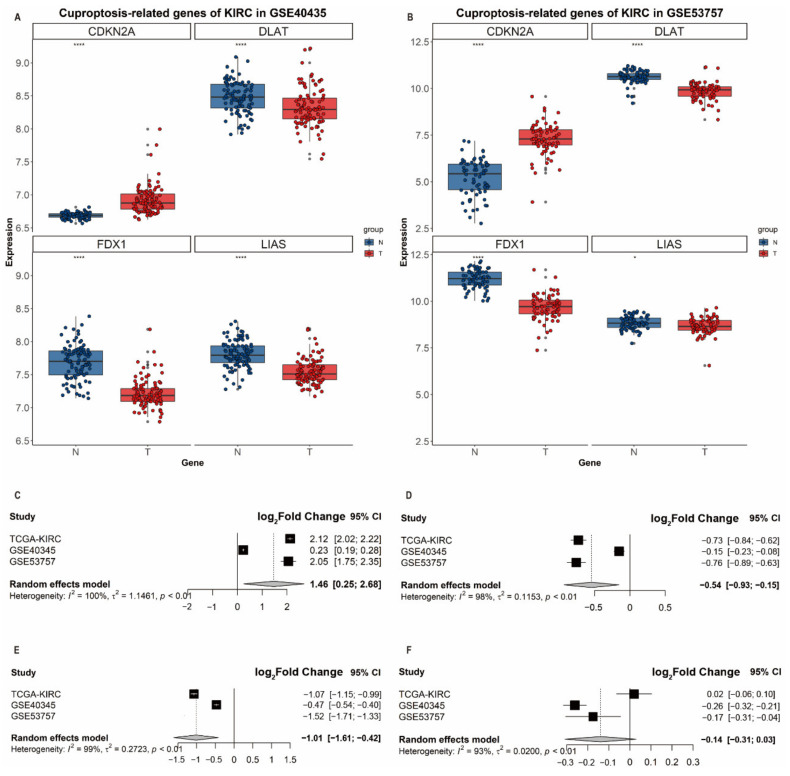
Clear cell renal cell carcinoma (ccRCC) is the most prevalent subtype of renal cell carcinoma, which is characterized by metabolic reprogramming. Cuproptosis, a novel form of cell death, is highly linked to mitochondrial metabolism and mediated by protein lipoylation. However, the clinical impacts of cuproptosis-related genes (CRGs) in ccRCC largely remain unclear. In the current study, we systematically evaluated the genetic alterations of cuproptosis-related genes in ccRCC. Our results revealed that CDKN2A, DLAT, DLD, FDX1, GLS, PDHA1 and PDHB exhibited differential expression between ccRCC and normal tissues (|log2(fold change)| > 2/3 and p < 0.05). Utilizing an iterative sure independence screening (SIS) method, we separately constructed the prognostic signature of CRGs for predicting the overall survival (OS) and progression-free survival (PFS) in ccRCC patients. The prognostic score of CRGs yielded an area under the curve (AUC) of 0.658 and 0.682 for the prediction of 5-year OS and PFS, respectively. In the Kaplan−Meier survival analysis of OS, a higher risk score of cuproptosis-related gene signature was significantly correlated with worse overall survival (HR = 2.72 (2.01−3.68), log-rank p = 1.76 × 10⁻⁷). Patients with a higher risk had a significantly shorter PFS (HR = 2.83 (2.08−3.85), log-rank p = 3.66 × 10⁻⁷). Two independent validation datasets (GSE40435 (N = 101), GSE53757 (N = 72)) were collected for meta-analysis, suggesting that CDKN2A (log2(fold change) = 1.46, 95%CI: 1.75−2.35) showed significantly higher expression in ccRCC tissues while DLAT (log2(fold change) = −0.54, 95%CI: −0.93−−0.15) and FDX1 (log2(fold change) = −1.01, 95%CI: −1.61−−0.42) were lowly expressed. The expression of CDKN2A and FDX1 in ccRCC was also significantly associated with immune infiltration levels and programmed cell death protein 1 (PD-1) expression (CDKN2A: r = 0.24, p = 2.14 × 10⁻⁸; FDX1: r = −0.17, p = 1.37 × 10⁻⁴). In conclusion, the cuproptosis-related gene signature could serve as a potential prognostic predictor for ccRCC patients and may offer novel insights into the cancer treatment.

Keywords: ccRCC; cell death; cuproptosis; overall survival; progression-free survival.


Conflict of interest statement

The authors declare no conflict of interest.

Figures
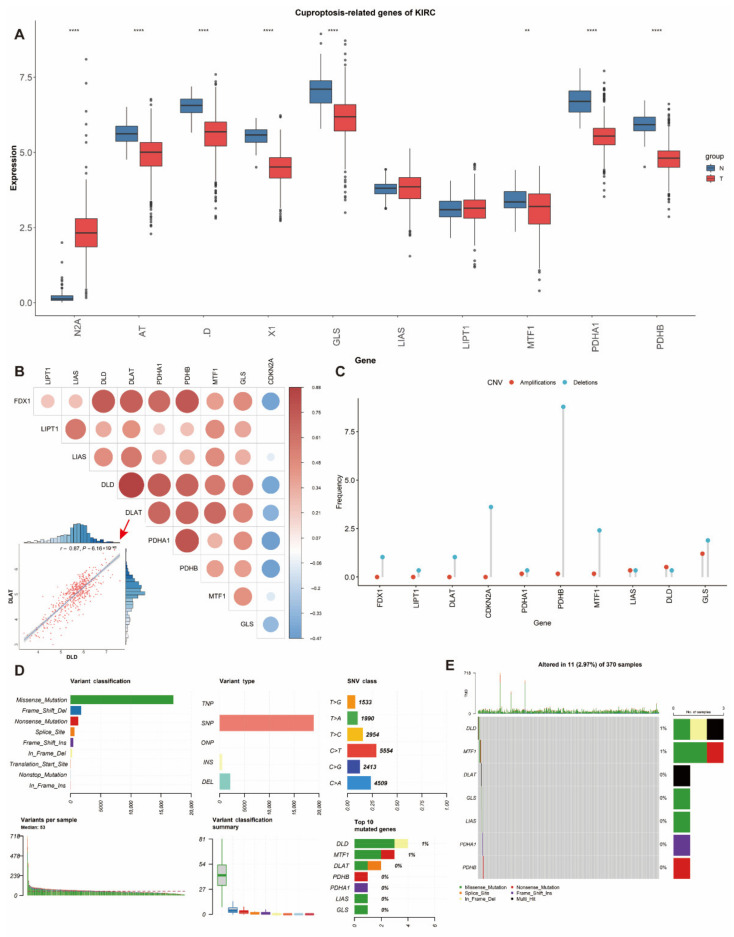
Figure 1
Figure 1
Expression and genetic alteration of CRGs in ccRCC: (A) the expression of 10 CRGs in ccRCC and normal tissues (tumor in red and normal in blue). The upper and lower ends of the boxes represent the interquartile range of values. The lines in the boxes represent the median value; (B) correlations between the expression of cuproptosis regulators; (CE) the CNV and mutation frequency and classification of 10 CRGs in ccRCC. * p < 0.01, *** p < 0.001; CRG: cuproptosis-related gene, ccRCC: clear cell renal cell carcinoma, SNP: single nucleotide polymorphism, INS: insertion and DEL: deletion.
Figure 2
Figure 2
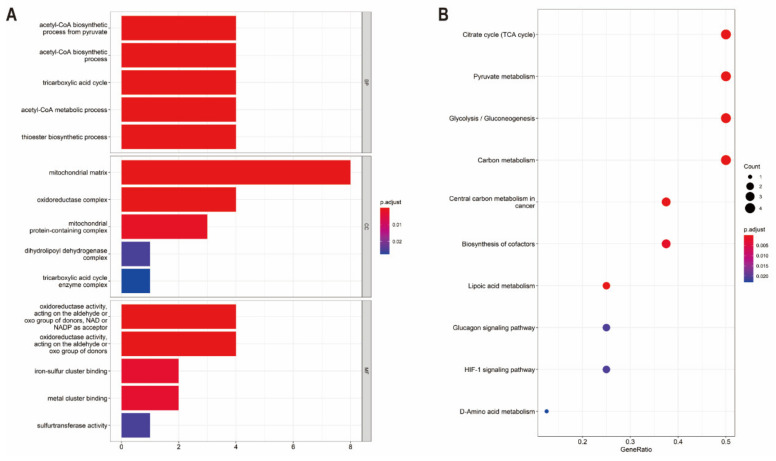
Pathway enrichment analysis of CRGs in ccRCC patients of TCGA: (A) the enriched item in the gene ontology analysis; (B) the enriched item in the Kyoto Encyclopedia of Genes and Genomes analysis. The size of circles represents the number of enriched genes. BP: biological process, CC: cellular component, MF: molecular function and CRG: cuproptosis-related gene.
Figure 3
Figure 3
Clinical relevance of CRGs in the ccRCC patients of TCGA. For OS outcome, (A) distribution of risk score, survival status and the expression of prognostic CRGs, (B) Kaplan−Meier plot of the CRG signature and overall survival, (C) ROCs for one-year, three-year and five-year survival prediction. Kaplan−Meier plot for the expression of (D) CDKN2A (E) DLAT and (F) FDX1 and overall survival. For PFS outcome, (G) distribution of risk score, status and the expression of prognostic CRGs, (H) Kaplan−Meier plot of the CRG signature and progression-free survival. (I) ROCs for one-year, three-year and five-year progression-free survival prediction. Kaplan−Meier plots of the expression of (J) LIAS, (K) CDKN2A and (L) FDX1 and progression-free survival. The hazard ratios (HRs) are evaluated by Cox proportional hazard models. OS: overall survival, PFS: progression-free survival and ROC: receiver operating characteristic curve.
Figure 4
Figure 4
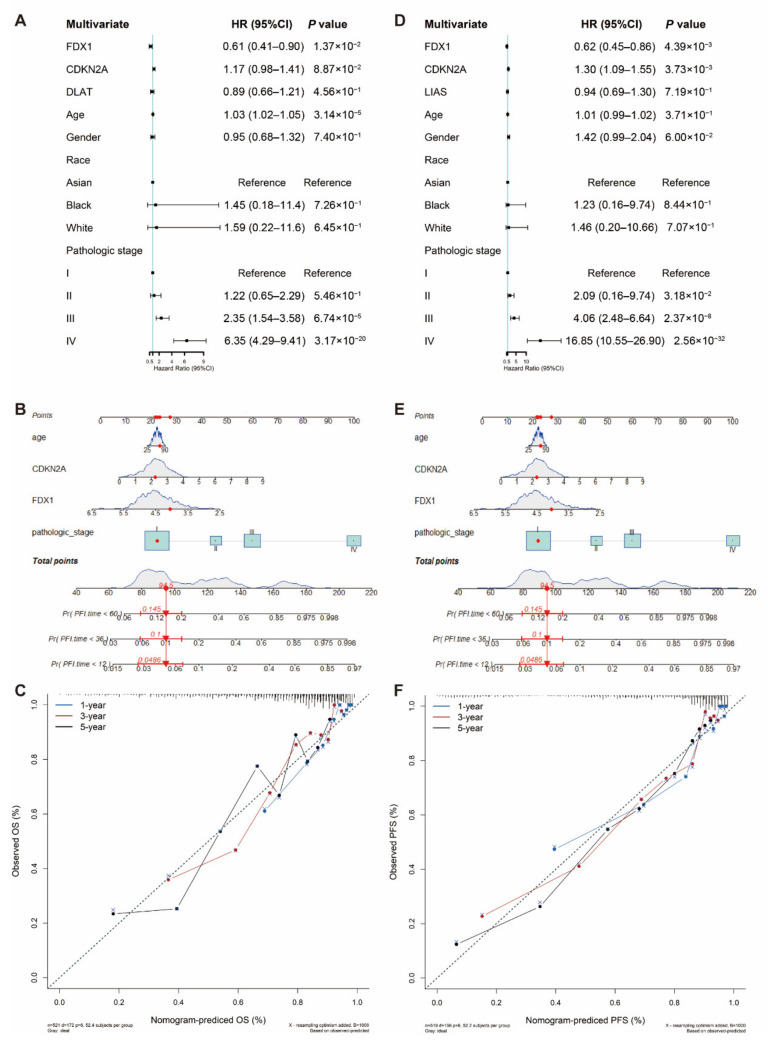
Nomogram development and validation. For (A) OS and (D) PFS, hazard ratios and p-value of the constituents involved in multivariate Cox regression considering clinical information and prognostic CRGs in ccRCC. Nomogram to predict the 1-year, 3-year and 5-year (B) OS and (E) PFS rate of LUAD patients. Calibration curve for the (C) OS and (F) PFS nomogram model in ccRCC. A dashed diagonal line represents the ideal nomogram. CRG: cuproptosis-related gene, ccRCC: clear cell renal cell carcinoma, OS: overall survival and PFS: progression-free survival.
Figure 5
Figure 5
Differential expression analysis and validation in three datasets. Boxplots of the expression of CDKN2A, DLAT, FDX1 and LIAS in (A) GSE40435 and (B) GSE53757. Forest plots of the meta-analysis of the differential expression of (C) CDKN2A, (D) DLAT, (E) FDX1 and (F) LIAS in GSE40435, GSE53757 and TCGA.
Figure 6
Figure 6
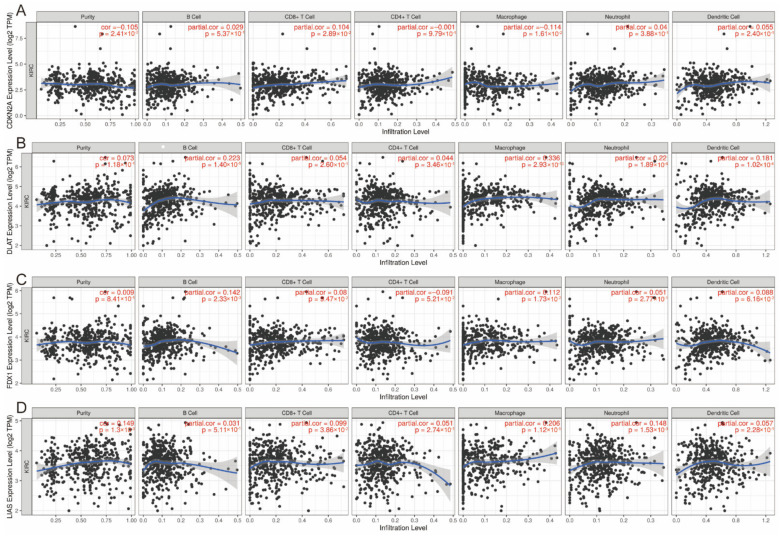
Correlation between (A) CDKN2A, (B) DLAT, (C) FDX1 and (D) LIAS expression and immune infiltration in ccRCC in the TIMER database. ccRCC: clear cell renal cell carcinoma.
Figure 7
Figure 7
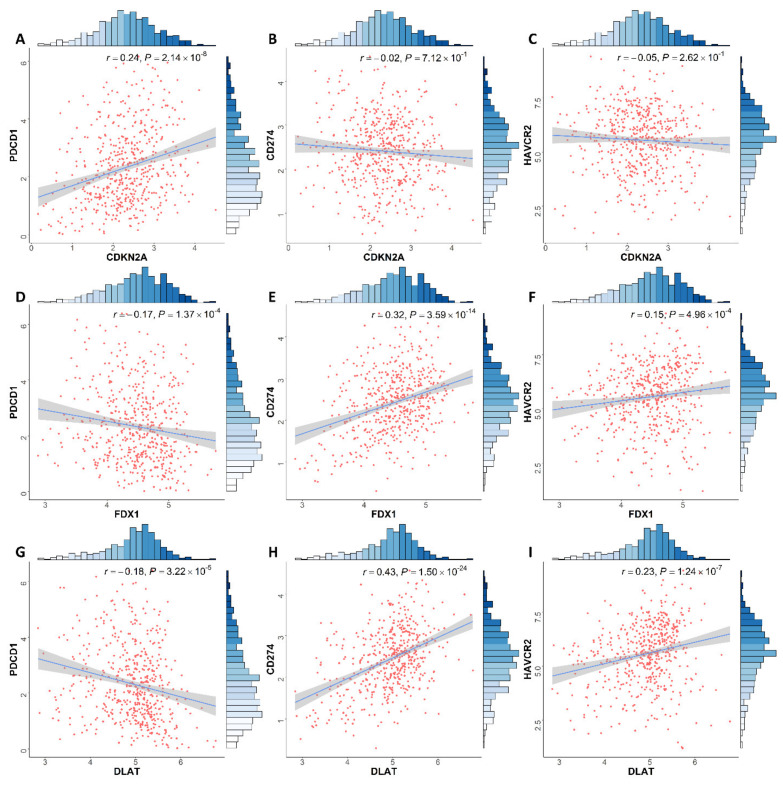
Association between (AC) CDKN2A, (DF) FDX1 and (GI) DLAT and PDCD1, CD274 and HAVCR2 expression in ccRCC patients, respectively. ccRCC: clear cell renal cell carcinoma.
Figure 8
Figure 8
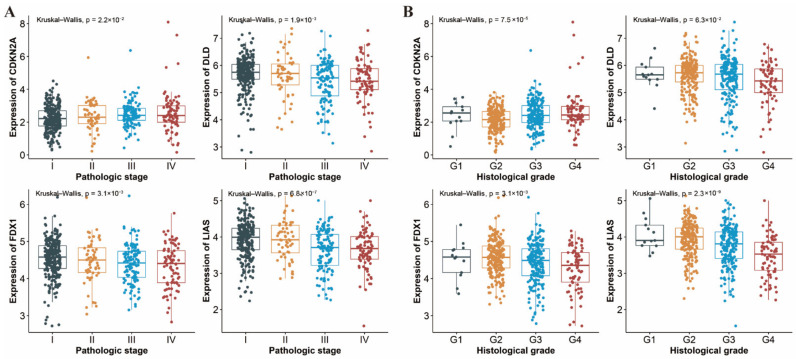
Expression of CDKN2A, DLAT, FDX1 and LIAS in a different (A) pathologic stage and (B) histological grade of ccRCC patients, respectively. ccRCC: clear cell renal cell carcinoma.

References

    1. Sung H., Ferlay J., Siegel R.L., Laversanne M., Soerjomataram I., Jemal A., Bray F. Global Cancer Statistics 2020: GLOBOCAN Estimates of Incidence and Mortality Worldwide for 36 Cancers in 185 Countries. CA Cancer J. Clin. 2021;71:209–249. doi: 10.3322/caac.21660. - DOI - PubMed
    1. Jonasch E., Gao J., Rathmell W.K. Renal cell carcinoma. BMJ. 2014;349:g4797. doi: 10.1136/bmj.g4797. - DOI - PMC - PubMed
    1. Lalani A.-K.A., McGregor B.A., Albiges L., Choueiri T.K., Motzer R., Powles T., Wood C., Bex A. Systemic Treatment of Metastatic Clear Cell Renal Cell Carcinoma in 2018: Current Paradigms, Use of Immunotherapy, and Future Directions. Eur. Urol. 2019;75:100–110. doi: 10.1016/j.eururo.2018.10.010. - DOI - PubMed
    1. Jonasch E., Walker C.L., Rathmell W.K. Clear cell renal cell carcinoma ontogeny and mechanisms of lethality. Nat. Rev. Nephrol. 2021;17:245–261. doi: 10.1038/s41581-020-00359-2. - DOI - PMC - PubMed
    1. Blockhuys S., Celauro E., Hildesjö C., Feizi A., Stål O., Fierro-González J.C., Wittung-Stafshede P. Defining the human copper proteome and analysis of its expression variation in cancers. Metallomics. 2017;9:112–123. doi: 10.1039/C6MT00202A. - DOI - PubMed

Publication types