Review
. 2022 May 15;23(10):5523.
doi: 10.3390/ijms23105523.

Therapeutic Strategies of Biologics in Chronic Rhinosinusitis: Current Options and Future Targets

Affiliations
Review

Therapeutic Strategies of Biologics in Chronic Rhinosinusitis: Current Options and Future Targets

Junhu Tai et al. Int J Mol Sci. .

Abstract

Chronic rhinosinusitis is a chronic inflammatory disease of the upper airways, for which treatment options include medical or surgical therapy. However, there are limitations to conservative treatment strategies, such as the relapse of nasal polyps. In this review, we discuss the rising role of biomolecular mechanisms associated with various biologics that have been approved or are undergoing clinical trials to treat chronic rhinosinusitis. We also highlight the potential molecular therapeutic targets for managing and treating chronic rhinosinusitis.

Keywords: biologics; chronic rhinosinusitis; immunity; monoclonal antibody; therapeutic strategy.


Conflict of interest statement

The authors declare no conflict of interest.

Figures
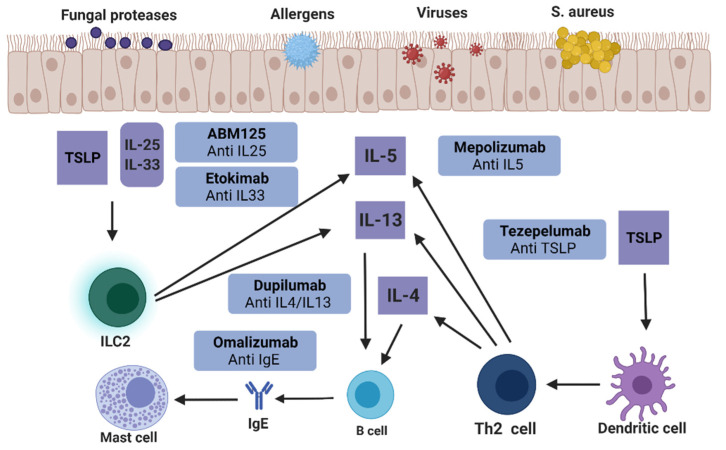
Figure 1
Figure 1
Biologics for treating CRSwNP.
Figure 2
Figure 2
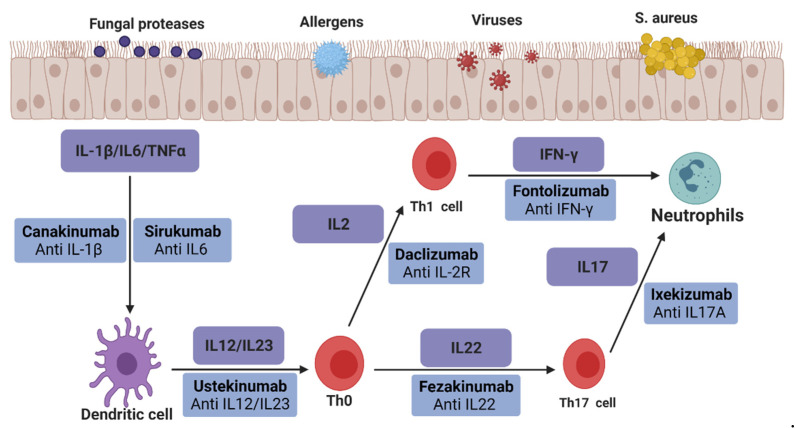
Possible biologics for treating CRSsNP.

References

    1. Fokkens W.J., Lund V.J., Hopkins C., Hellings P.W., Kern R., Reitsma S., Toppila-Salmi S., Bernal-Sprekelsen M., Mullol J., Alobid I., et al. European Position Paper on Rhinosinusitis and Nasal Polyps 2020. Rhinology. 2020;58:1–464. doi: 10.4193/Rhin20.401. - DOI - PubMed
    1. Lee K., Tai J., Lee S.H., Kim T.H. Advances in the Knowledge of the Underlying Airway Remodeling Mechanisms in Chronic Rhinosinusitis Based on the Endotypes: A Review. Int. J. Mol. Sci. 2021;22:910. doi: 10.3390/ijms22020910. - DOI - PMC - PubMed
    1. Kim Y.S., Kim N.H., Seong S.Y., Kim K.R., Lee G.B., Kim K.S. Prevalence and risk factors of chronic rhinosinusitis in Korea. Am. J. Rhinol. Allergy. 2011;25:117–121. doi: 10.2500/ajra.2011.25.3630. - DOI - PubMed
    1. Shi J.B., Fu Q.L., Zhang H., Cheng L., Wang Y.J., Zhu D.D., Lv W., Liu S.X., Li P.Z., Ou C.Q., et al. Epidemiology of chronic rhinosinusitis: Results from a cross-sectional survey in seven Chinese cities. Allergy. 2015;70:533–539. doi: 10.1111/all.12577. - DOI - PMC - PubMed
    1. Bhattacharyya N., Gilani S. Prevalence of Potential Adult Chronic Rhinosinusitis Symptoms in the United States. Otolaryngol. Head Neck Surg. 2018;159:522–525. doi: 10.1177/0194599818774006. - DOI - PubMed

Substances