


Mechanical Properties of the Modified Denture Base Materials and Polymerization Methods: A Systematic Review
- PMID: 35628546
- PMCID: PMC9143457
- DOI: 10.3390/ijms23105737
Mechanical Properties of the Modified Denture Base Materials and Polymerization Methods: A Systematic Review
Abstract
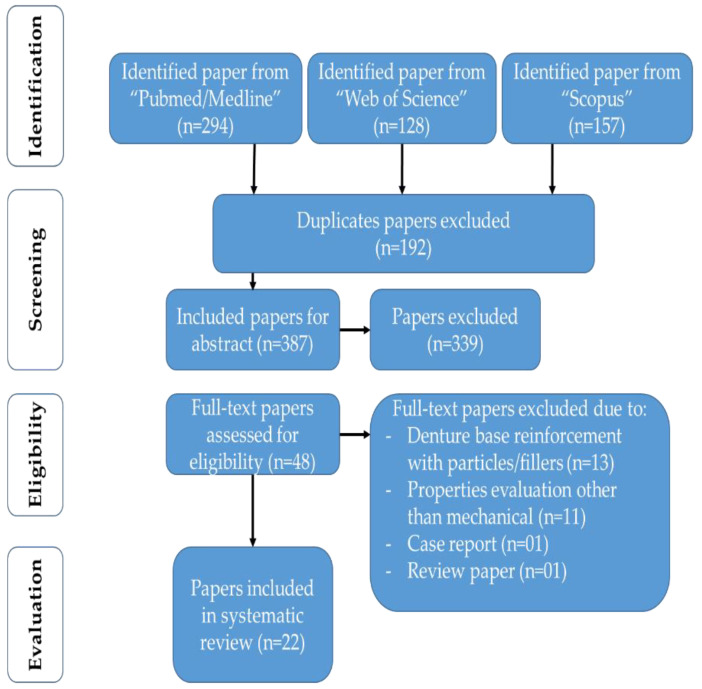
Amidst growing technological advancements, newer denture base materials and polymerization methods have been introduced. During fabrication, certain mechanical properties are vital for the clinical longevity of the denture base. This systematic review aimed to explore the effect of newer denture base materials and/or polymerization methods on the mechanical properties of the denture base. An electronic database search of English peer-reviewed published papers was conducted using related keywords from 1 January 2011, up until 31 December 2021. This systematic review was based on guidelines proposed by the Preferred Reporting Items for Systematic Reviews and Meta-Analyses (PRISMA). The search identified 579 papers. However, the inclusion criteria recognized 22 papers for eligibility. The risk of bias was moderate in all studies except in two where it was observed as low. Heat cure polymethyl methacrylate (PMMA) and compression moulding using a water bath is still a widely used base material and polymerization technique, respectively. However, chemically modified PMMA using monomers, oligomers, copolymers and cross-linking agents may have a promising result. Although chemically modified PMMA resin might enhance the mechanical properties of denture base material, no clear inferences can be drawn about the superiority of any polymerization method other than the conventional compression moulding technique.
Keywords: chemical modification; denture base; mechanical properties; polymerization; systematic review.
Conflict of interest statement
The authors declare no conflict of interest.
Figures
References
-
- Khan A.A., Mirza E.H., Syed J., Al-Khureif A., Mehmood A., Vallittu P.K., Alfotawi R. Single and multi-walled carbon nanotube fillers in poly(methyl methacrylate)-based implant material. J. Biomater. Tissue Eng. 2017;7:798–806. doi: 10.1166/jbt.2017.1638. - DOI
Publication types
MeSH terms
Substances
Grants and funding
LinkOut - more resources
Full Text Sources
