Review
. 2022 May 22;23(10):5815.
doi: 10.3390/ijms23105815.

Recent Advances of m6A Demethylases Inhibitors and Their Biological Functions in Human Diseases

Affiliations
Review

Recent Advances of m6A Demethylases Inhibitors and Their Biological Functions in Human Diseases

Yazhen You et al. Int J Mol Sci. .

Abstract

N6-methyladenosine (m6A) is a post-transcriptional RNA modification and one of the most abundant types of RNA chemical modifications. m6A functions as a molecular switch and is involved in a range of biomedical aspects, including cardiovascular diseases, the central nervous system, and cancers. Conceptually, m6A methylation can be dynamically and reversibly modulated by RNA methylation regulatory proteins, resulting in diverse fates of mRNAs. This review focuses on m6A demethylases fat-mass- and obesity-associated protein (FTO) and alkB homolog 5 (ALKBH5), which especially erase m6A modification from target mRNAs. Recent advances have highlighted that FTO and ALKBH5 play an oncogenic role in various cancers, such as acute myeloid leukemias (AML), glioblastoma, and breast cancer. Moreover, studies in vitro and in mouse models confirmed that FTO-specific inhibitors exhibited anti-tumor effects in several cancers. Accumulating evidence has suggested the possibility of FTO and ALKBH5 as therapeutic targets for specific diseases. In this review, we aim to illustrate the structural properties of these two m6A demethylases and the development of their specific inhibitors. Additionally, this review will summarize the biological functions of these two m6A demethylases in various types of cancers and other human diseases.

Keywords: AKBH5; FTO; human diseases; inhibitors; m6A demethylases.


Conflict of interest statement

The authors declare no conflict of interest.

Figures
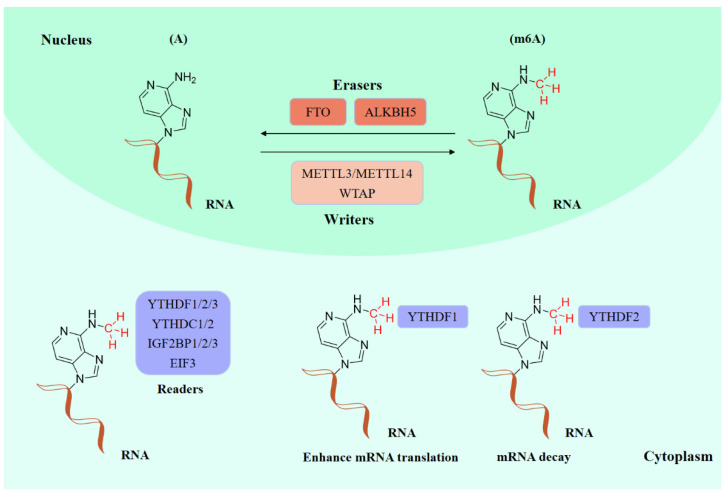
Figure 1
Figure 1
The molecular mechanism of m6A modifications.
Figure 2
Figure 2
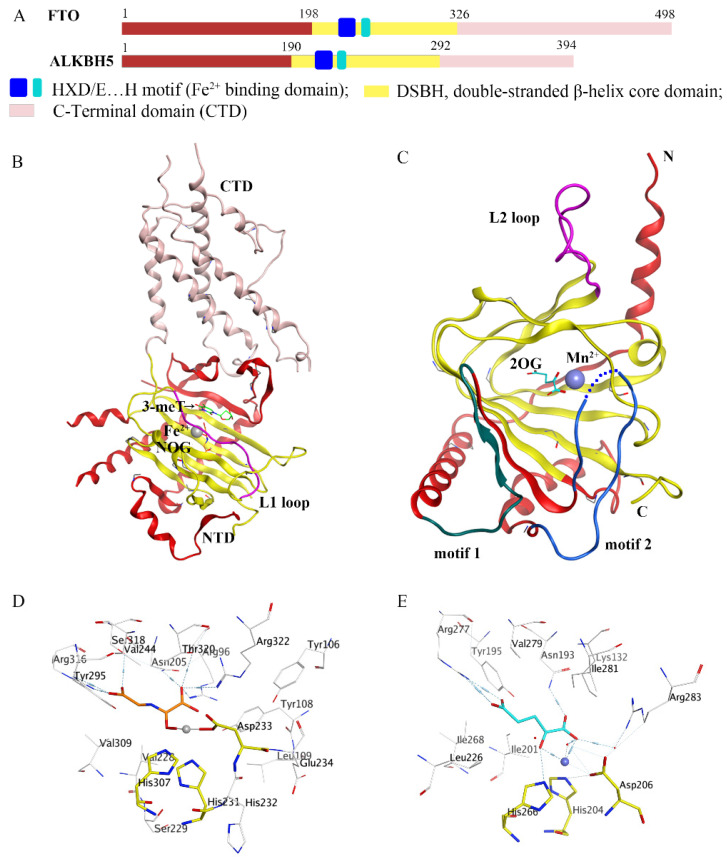
Comparison of fat-mass- and obesity-associated protein (FTO) and alkB homolog 5 (ALKBH5). (A) Structural domain representation of FTO and ALKBH5. (B) Crystal structure of FTOΔ31-3-meT (PDB ID: 3LFM) generated by MOE software. C-terminal domain (CTD) is colored in pink; N-terminal domain (NTD) is colored in red; the L1 loop is colored in purple; 3-meT is colored in green; N-oxalylglycine (NOG) is colored in orange; Fe2+ is colored in grey. (C) Crystal structure of ALKBH566-292-2OG (PDB ID: 4NRO) generated by MOE software; the motif 1 region is colored in dark green; the motif 2 region is colored in dark green; the L2 loop is colored in purple; 2-oxoglutarate (2OG) is colored in cyan, Mn2+ is colored in light blue; N: N-terminus, C: C-terminus. (D,E) The detailed interactions of the active center of FTO (PDB ID: 3LFM) and ALKBH5 (PDB ID: 4NRO) generated by MOE software. NOG and 2OG are colored in orange and cyan, respectively; Fe2+ and Mn2+ are drawn as grey and blue balls, respectively.
Figure 3
Figure 3
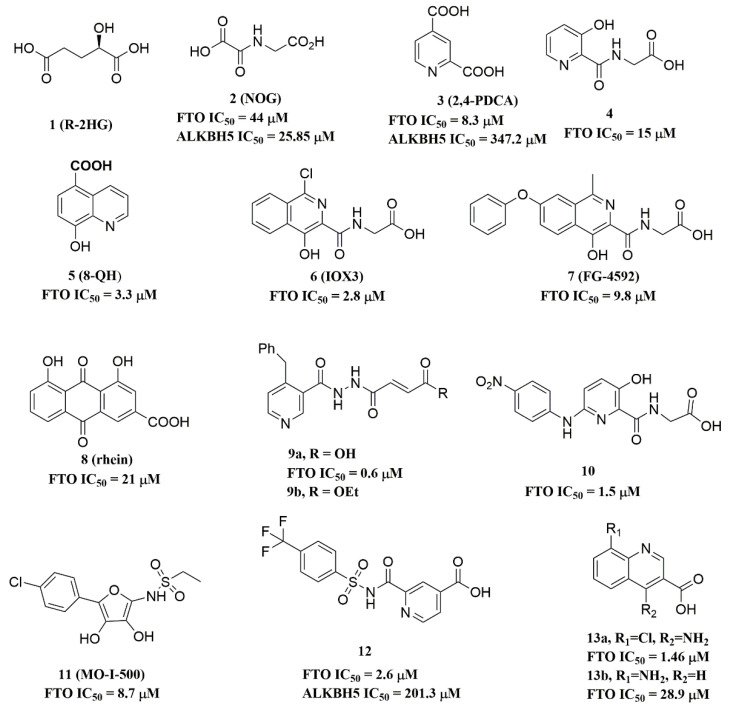
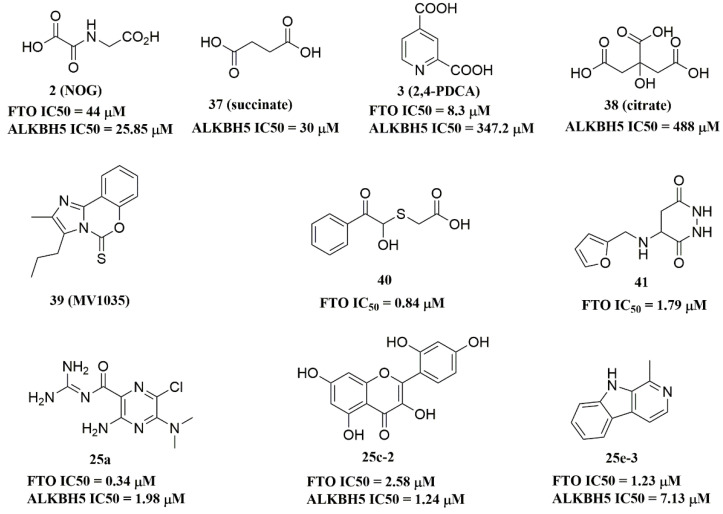
Metal-chelating inhibitors of FTO.
Figure 4
Figure 4
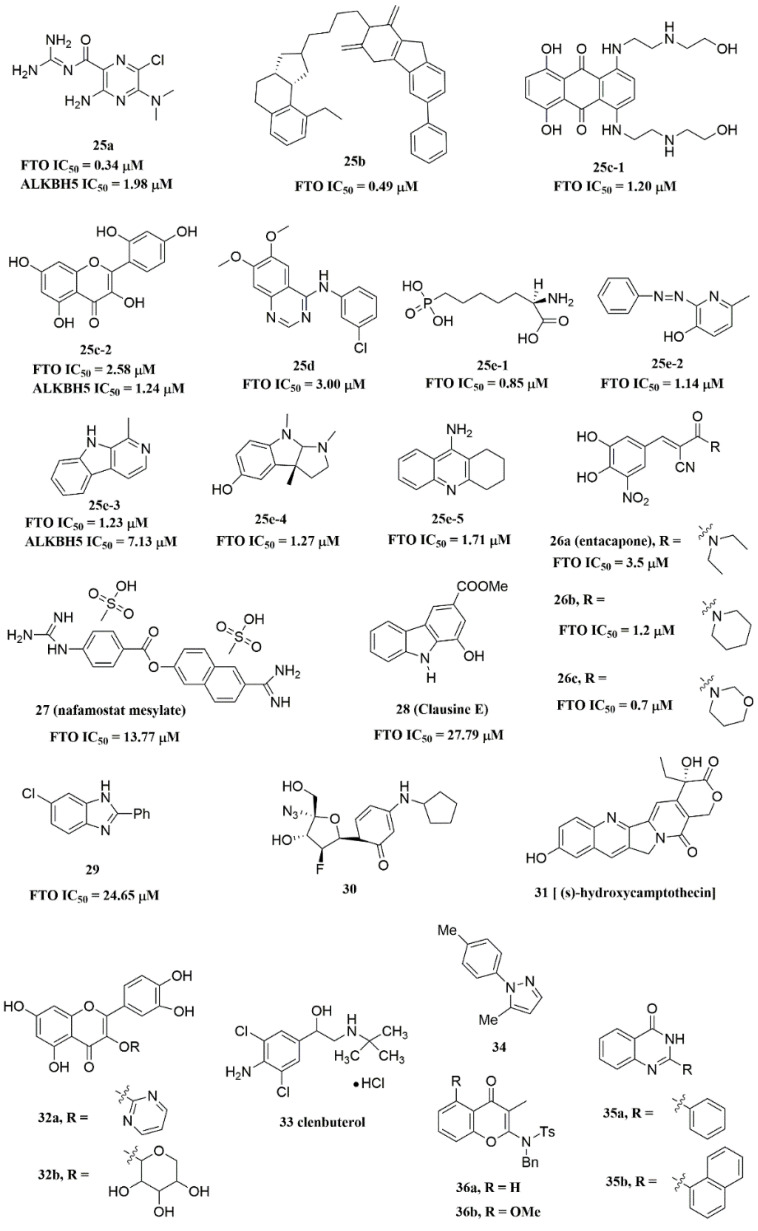
Substrate competitive inhibitors of FTO.
Figure 5
Figure 5
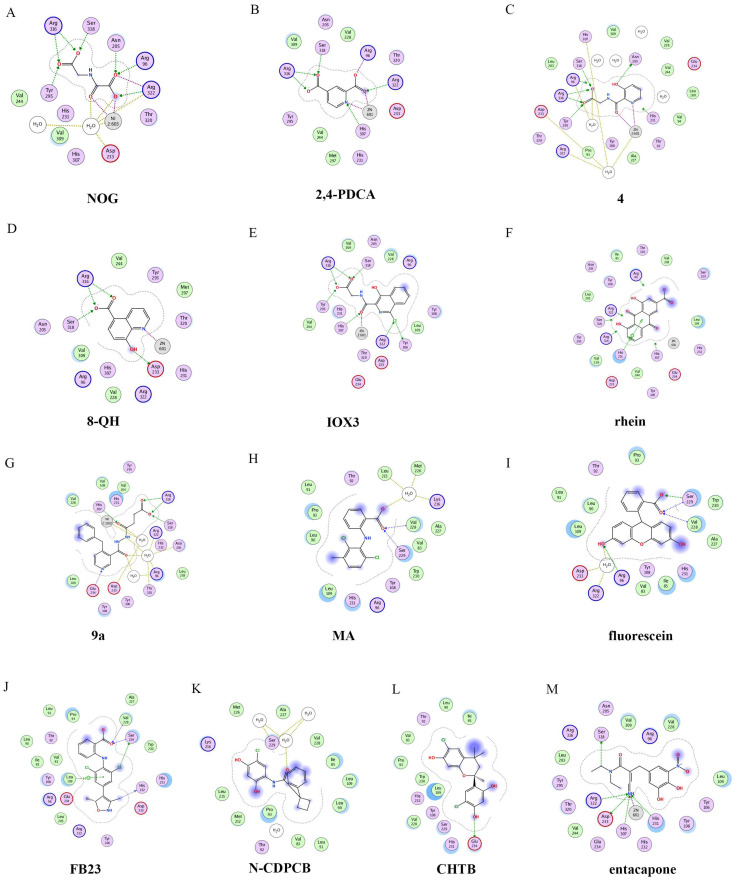
Two-dimensional representation of ligand–protein interactions of FTO inhibitors with FTO protein using MOE software. In MOE, the polar and non-polar residues are shown in pink and green disks; the water molecules are drawn as white circles; the metal ions are shown in grey circles; the hydrogen bonds are indicated by green dotted lines. (AM) Ligand interactions of FTO with distinct compounds: (A) NOG (PDB ID: 4IDZ); (B) pyridine-2,4-dicarboxylate (2,4-PDCA, PDB ID: 4IE0); (C) 4 (PDB ID: 4IE5); (D) 8-QH (PDB ID: 4IE4); (E) IOX3 (PDB ID: 4IE6); (F) rhein (PDB ID: 4IE7); (G) 9a (PDB ID: 4CXW); (H) Meclofenamic acid (MA) (PDB ID: 4QKN); (I) fluorescein (PDB ID: 4ZS2); (J) FB23 (PDB ID: 6AKW); (K) N-CDPCB (PDB ID: 5DAB); (L) CHTB (PDB ID: 5F8P); and (M) entacapone (PDB ID: 6AK4).
Figure 6
Figure 6
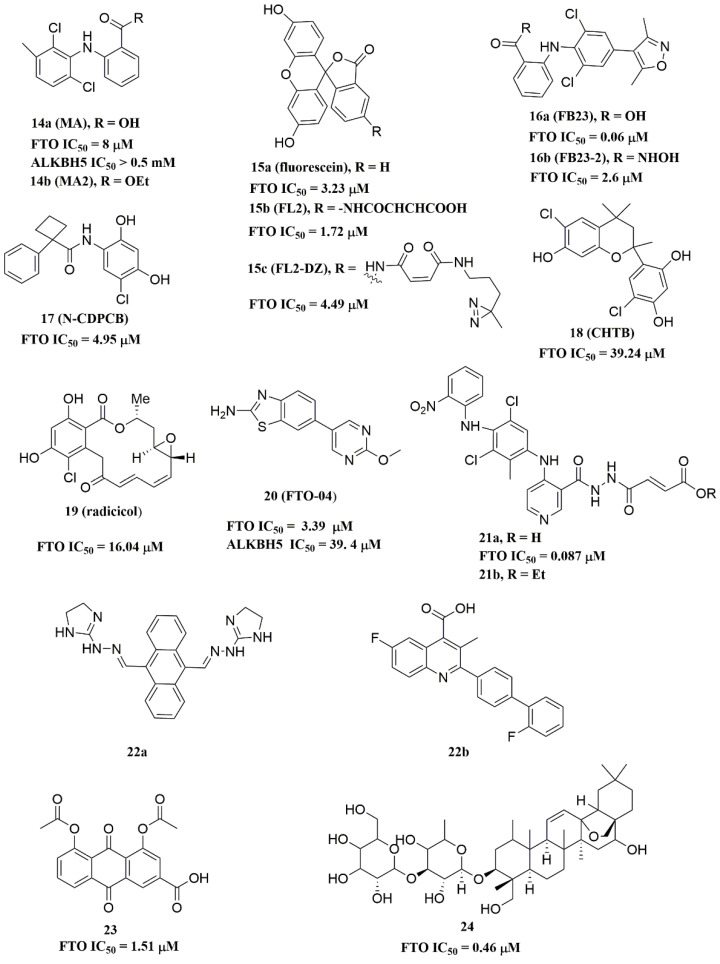
FTO inhibitors with different scaffolds.
Figure 7
Figure 7
ALKBH5 inhibitors.
Figure 8
Figure 8
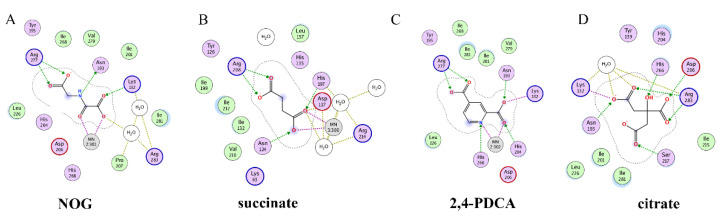
Two-dimensional representation of ligand–protein interactions of ALKBH5 inhibitors with ALKBH5 protein using MOE software. (AD) Crystal structures of ALKBH5 with different compounds: (A) NOG (PDB ID: 4NRP); (B) succinate (PDB ID: 4NPM); (C) 2,4-PDCA (PDB ID: 4NRQ); (D) citrate (PDB ID: 4O61).

References

    1. Boccaletto P., Machnicka M.A., Purta E., Piatkowski P., Baginski B., Wirecki T.K., de Crécy-Lagard V., Ross R., Limbach P.A., Kotter A., et al. MODOMICS: A database of RNA modification pathways. 2017 update. Nucleic Acids Res. 2018;46:D303–D307. doi: 10.1093/nar/gkx1030. - DOI - PMC - PubMed
    1. Zhao B.S., Roundtree I.A., He C. Post-transcriptional gene regulation by mRNA modifications. Nat. Rev. Mol. Cell Biol. 2017;18:31–42. doi: 10.1038/nrm.2016.132. - DOI - PMC - PubMed
    1. Niu Y., Zhao X., Wu Y.S., Li M.M., Wang X.J., Yang Y.G. N6-methyl-adenosine (m6A) in RNA: An old modification with a novel epigenetic function. Genom. Proteom. Bioinform. 2013;11:8–17. doi: 10.1016/j.gpb.2012.12.002. - DOI - PMC - PubMed
    1. Desrosiers R., Friderici K., Rottman F. Identification of methylated nucleosides in messenger RNA from Novikoff hepatoma cells. Proc. Natl. Acad. Sci. USA. 1974;71:3971–3975. doi: 10.1073/pnas.71.10.3971. - DOI - PMC - PubMed
    1. Quinn J.J., Chang H.Y. Unique features of long non-coding RNA biogenesis and function. Nat. Rev. Genet. 2016;17:47–62. doi: 10.1038/nrg.2015.10. - DOI - PubMed