. 2022 May 12;11(10):2750.
doi: 10.3390/jcm11102750.

Rapid Molecular Diagnosis of Genetically Inherited Neuromuscular Disorders Using Next-Generation Sequencing Technologies

Affiliations

Rapid Molecular Diagnosis of Genetically Inherited Neuromuscular Disorders Using Next-Generation Sequencing Technologies

Sofia Barbosa-Gouveia et al. J Clin Med. .

Abstract

Neuromuscular diseases are genetically highly heterogeneous, and differential diagnosis can be challenging. Over a 3-year period, we prospectively analyzed 268 pediatric and adult patients with a suspected diagnosis of inherited neuromuscular disorder (INMD) using comprehensive gene-panel analysis and next-generation sequencing. The rate of diagnosis increased exponentially with the addition of genes to successive versions of the INMD panel, from 31% for the first iteration (278 genes) to 40% for the last (324 genes). The global mean diagnostic rate was 36% (97/268 patients), with a diagnostic turnaround time of 4-6 weeks. Most diagnoses corresponded to muscular dystrophies/myopathies (68.37%) and peripheral nerve diseases (22.45%). The most common causative genes, TTN, RYR1, and ANO5, accounted for almost 30% of the diagnosed cases. Finally, we evaluated the utility of the differential diagnosis tool Phenomizer, which established a correlation between the phenotype and molecular findings in 21% of the diagnosed patients. In summary, comprehensive gene-panel analysis of all genes implicated in neuromuscular diseases facilitates a rapid diagnosis and provides a high diagnostic yield.

Keywords: Phenomizer; myopathy; neuromuscular disorders; next-generation sequencing.


Conflict of interest statement

The authors declare no conflict of interest.

Figures
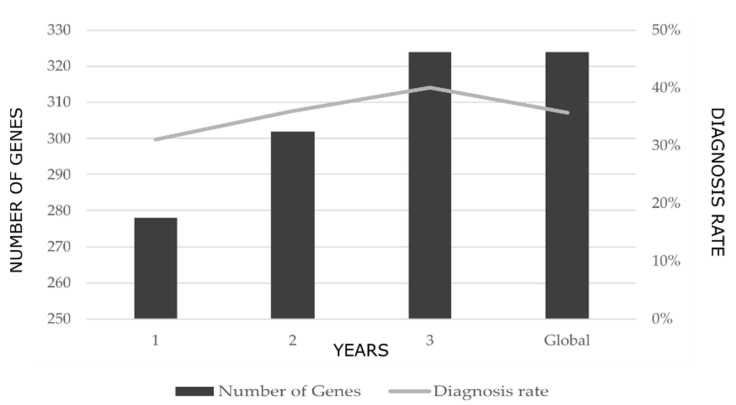
Figure 1
Figure 1
Change in the rate of diagnosis with the successive addition of genes to the multi-gene panel over the 3-year study period. The global value represents the mean rate of diagnosis over the entire study period.
Figure 2
Figure 2
(A) Genes detected with high frequency in diagnosed patients analyzed with the INMD panel. Graph depicts the proportion of clinical cases for which a pathogenic/likely pathogenic variant was identified in the causative gene. (B) INMDs identified in our cohort.
Figure 3
Figure 3
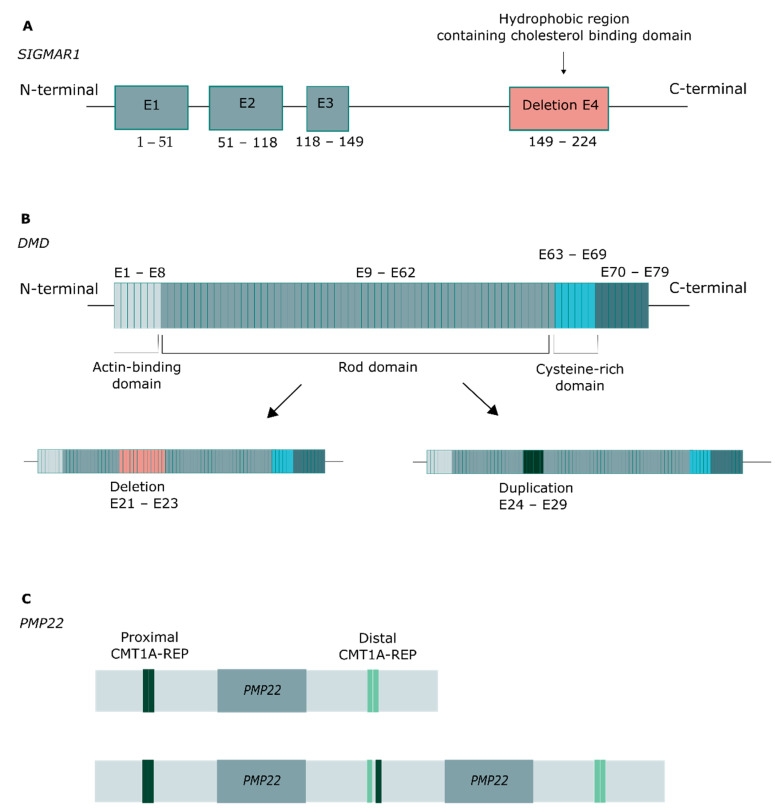
CNVs identified in the study population. (A) Exon 4 deletion in SIMGAR1, affecting the hydrophobic region. (B) Deletion and duplication in DMD, affecting the rod domain. (C) Duplication of the entire PMP22 gene, associated with Charcot–Marie–Tooth disease.
Figure 4
Figure 4
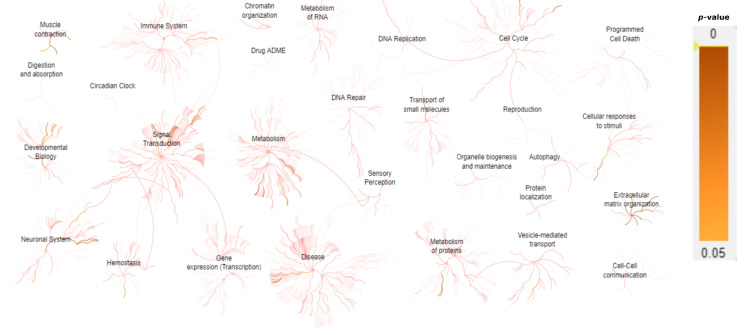
Representation of the predicted biological pathways associated with INMD genes included in the gene-panel design. Gene expression values (p-value < 0.05) are represented using Reactome pathway enrichment analysis. The majority of the genes included in the INMD gene panel are predicted to be highly expressed in muscle contraction, neuronal system, signal transduction, metabolism, cell cycle, ECM, vesicle-mediated transport, and cellular responses to stimuli.

References

    1. Volk A.E., Kubisch C. The Rapid Evolution of Molecular Genetic Diagnostics in Neuromuscular Diseases. Curr. Opin. Neurol. 2017;30:523–528. doi: 10.1097/WCO.0000000000000478. - DOI - PubMed
    1. Efthymiou S., Manole A., Houlden H. Next-Generation Sequencing in Neuromuscular Diseases. Curr. Opin. Neurol. 2016;29:527–536. doi: 10.1097/WCO.0000000000000374. - DOI - PMC - PubMed
    1. Kolb S.J., Coffey C.S., Yankey J.W., Krosschell K., Arnold W.D., Rutkove S.B., Swoboda K.J., Reyna S.P., Sakonju A., Darras B.T., et al. Natural History of Infantile-Onset Spinal Muscular Atrophy. Ann. Neurol. 2017;82:883–891. doi: 10.1002/ana.25101. - DOI - PMC - PubMed
    1. Laing N.G. Genetics of Neuromuscular Disorders. Crit. Rev. Clin. Lab. Sci. 2012;49:33–48. doi: 10.3109/10408363.2012.658906. - DOI - PubMed
    1. Kong X., Zhong X., Liu L., Cui S., Yang Y., Kong L. Genetic Analysis of 1051 Chinese Families with Duchenne/Becker Muscular Dystrophy. BMC Med. Genet. 2019;20:139. doi: 10.1186/s12881-019-0873-0. - DOI - PMC - PubMed

LinkOut - more resources