


Consumption of Ultra-Processed Foods Is Inversely Associated with Adherence to the Mediterranean Diet: A Cross-Sectional Study
- PMID: 35631214
- PMCID: PMC9147239
- DOI: 10.3390/nu14102073
Consumption of Ultra-Processed Foods Is Inversely Associated with Adherence to the Mediterranean Diet: A Cross-Sectional Study
Abstract
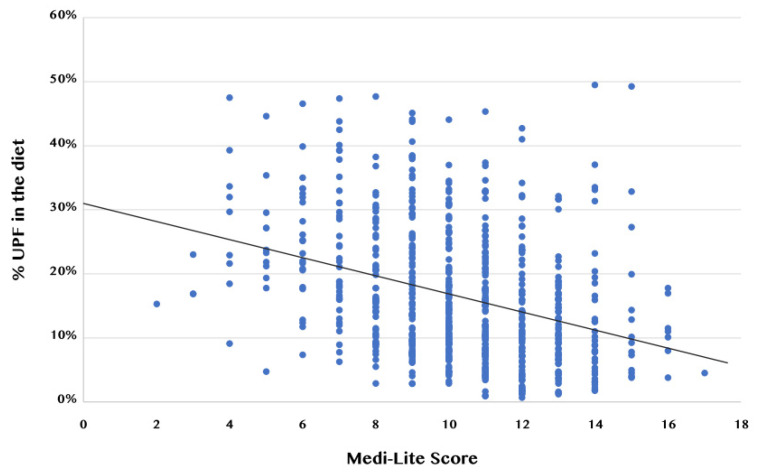
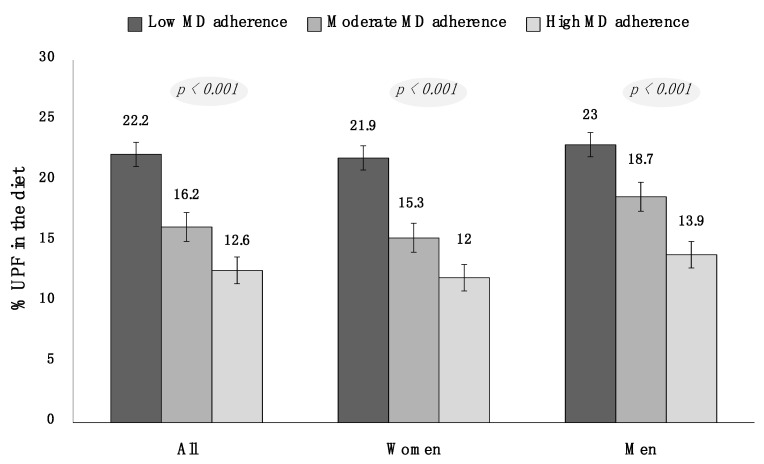
Information on the consumption of ultra-processed foods (UPF) in relation to an adherence to the Mediterranean diet (MD) is limited. Our aim was to assess UPF consumption in a group of Italian adults and to evaluate the relationship with the MD adherence. A total of 670 participants (median age: 30 years) were included in the analysis. The consumption of UPF was assessed through the NOVA Food Frequency Questionnaire (NFFQ). Adherence to the MD was assessed through the Medi-Lite score. The percentage of UPF in the diet was 16.4% corresponding to 299 g of UPF per day. These amounts were significantly (p < 0.05) higher in men than in women and came mainly from ready-to-eat meals or pre-packaged bread, bread alternatives, pizza, frozen potato chips (24.5% of total UPF intake), pre-packaged biscuits and sweets (20.7%), soft drinks (15.8%), and dairy products such as flavored yogurt (12%). As to the MD adherence, a significant inverse association between the Medi-Lite score and the percentage of UPF in the diet (R = −0.35; p < 0.001) was observed. Participants with a low adherence to the MD had a significantly higher contribution of UPF in the diet (22.2%) compared to those with a moderate (16.2%) and high (12.6%) adherence. In terms of individual UPF, the largest difference between low and high MD adherents was observed for pre-packaged biscuits and sweets, soft and energy drinks, sausages and other reconstituted meat products, and pre-packaged bread and bread alternatives. These results suggest that public health strategies are needed to implement more effective actions to promote healthy eating habits in the population.
Keywords: Medi-Lite; Mediterranean diet; NFFQ; NOVA classification; ultra-processed foods.
Conflict of interest statement
The authors declare no conflict of interest.
Figures
References
MeSH terms
LinkOut - more resources
Full Text Sources
Research Materials
