


Phenotypic Variation and Peel Contribution to Fruit Antioxidant Contents in European and Japanese Plums
- PMID: 35631763
- PMCID: PMC9143520
- DOI: 10.3390/plants11101338
Phenotypic Variation and Peel Contribution to Fruit Antioxidant Contents in European and Japanese Plums
Abstract
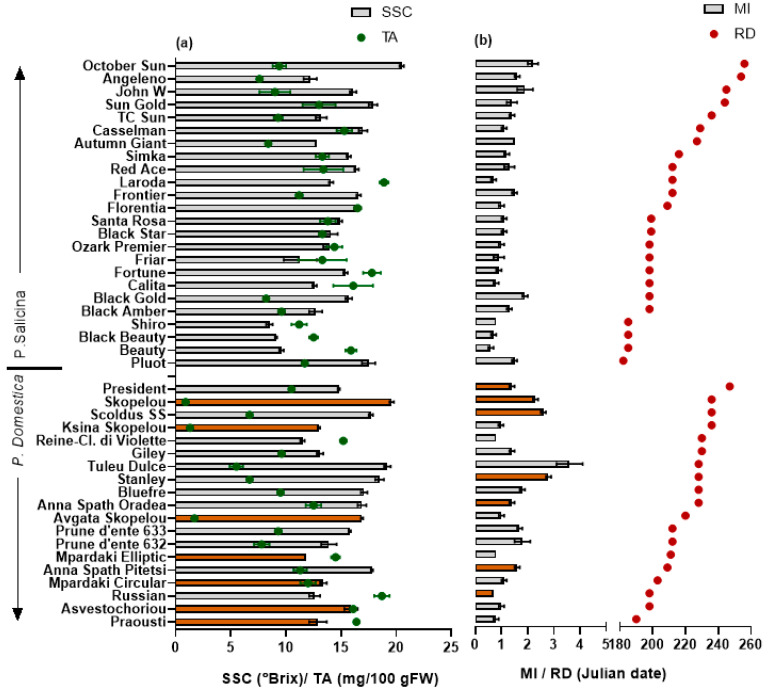
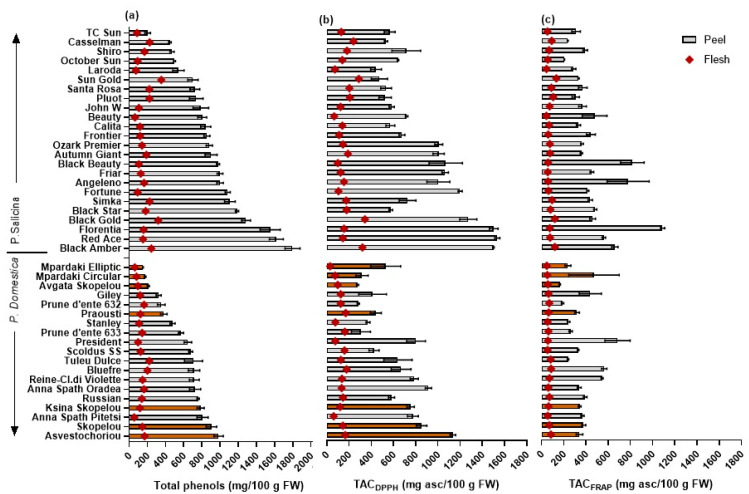
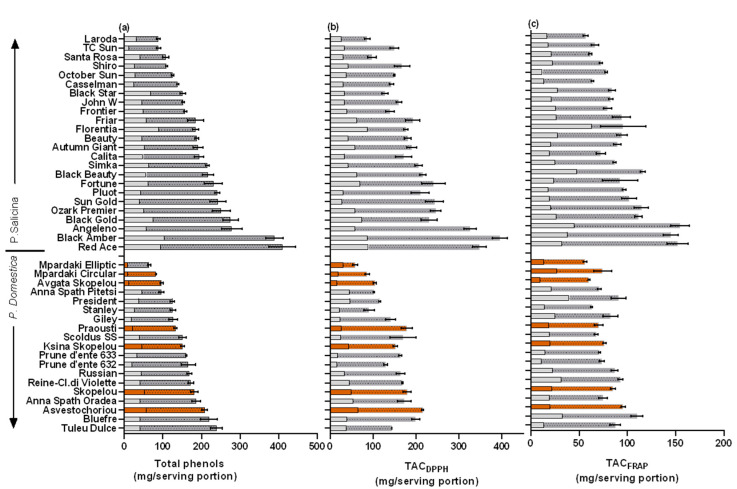
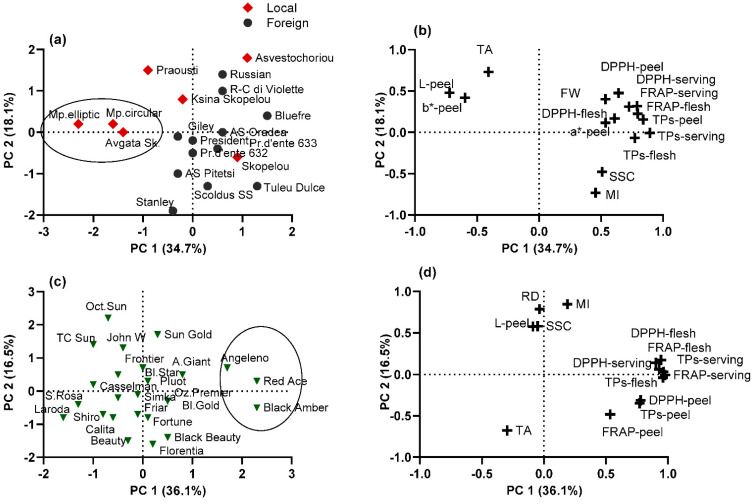
Herein, we studied the variation in leaf and fruit morphological traits and antioxidant contents in 43 local and foreign cultivars (cvs) grown under the same experimental conditions in the widely cultivated plum species Prunus domestica and Prunus salicina. The peel contribution of fruit bioactive compounds in a serving portion, correlations among the examined parameters, and group patterns in each plum species were also studied. The species and cvs were sufficiently separated. Compared to Japanese cvs, European cvs had less elongated leaves and smaller and sweeter fruit with less total phenol and antioxidant capacities. The Japanese cvs 'Red ace' and the widely grown 'Black Amber', together with the European 'Tuleu Dulce', 'BlueFre', and the landrace 'Asvestochoriou' make up groups with rich dietary sources of phytochemicals. The peel tissue contained higher total phenols and antioxidant capacities compared to the flesh, while the peel/flesh ratios varied widely among the cvs (6.6-fold). The variation in the antioxidant contents was lower among the cvs calculated per serving portion (3.7-fold); yet the peel tissue contribution was equal to that of the flesh (48.6%), signifying its high nutritive value. We observed increased sweetness in the fruit in the later-harvested cultivars, while cvs with more blue- and red-colored peel generally contained higher antioxidant contents mainly in the European plums. Moreover, larger fruit sizes were positively correlated with larger and more elliptic leaf shapes. In conclusion, the significant role of the genotype and the peel tissue as a source of bioactive compounds in plums were outlined with prospects of utilization in future breeding programs.
Keywords: Prunus domestica; Prunus salicina; antioxidants; fruit color; fruit fresh weight; fruit shape; leaf characters; total soluble content.
Conflict of interest statement
The authors declare no conflict of interest.
Figures
References
-
- Liu W., Nan G., Nisar M.F., Wan C. Chemical Constituents and Health Benefits of Four Chinese Plum Species. J. Food Qual. 2020;2020:8842506. doi: 10.1155/2020/8842506. - DOI
-
- Kim D.-O., Jeong S.W., Lee C.Y. Antioxidant capacity of phenolic phytochemicals from various cultivars of plums. Food Chem. 2003;81:321–326. doi: 10.1016/S0308-8146(02)00423-5. - DOI
-
- Cevallos-Casals B.A., Byrne D., Okie W.R., Cisneros-Zevallos L. Selecting new peach and plum genotypes rich in phenolic compounds and enhanced functional properties. Food Chem. 2006;96:273–280. doi: 10.1016/j.foodchem.2005.02.032. - DOI
-
- Usenik V., Kastelec D., Veberic R., Štampar F. Quality changes during ripening of plums (Prunus domestica L.) Food Chem. 2008;111:830–836. doi: 10.1016/j.foodchem.2008.04.057. - DOI
Grants and funding
LinkOut - more resources
Full Text Sources
Miscellaneous
