


Immunogenicity and Safety of Homologous and Heterologous Prime-Boost Immunization with COVID-19 Vaccine: Systematic Review and Meta-Analysis
- PMID: 35632554
- PMCID: PMC9142990
- DOI: 10.3390/vaccines10050798
Immunogenicity and Safety of Homologous and Heterologous Prime-Boost Immunization with COVID-19 Vaccine: Systematic Review and Meta-Analysis
Abstract
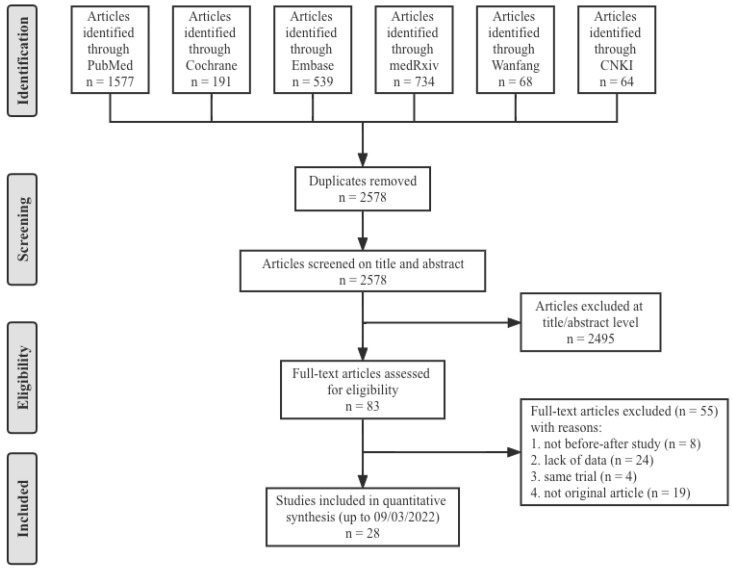
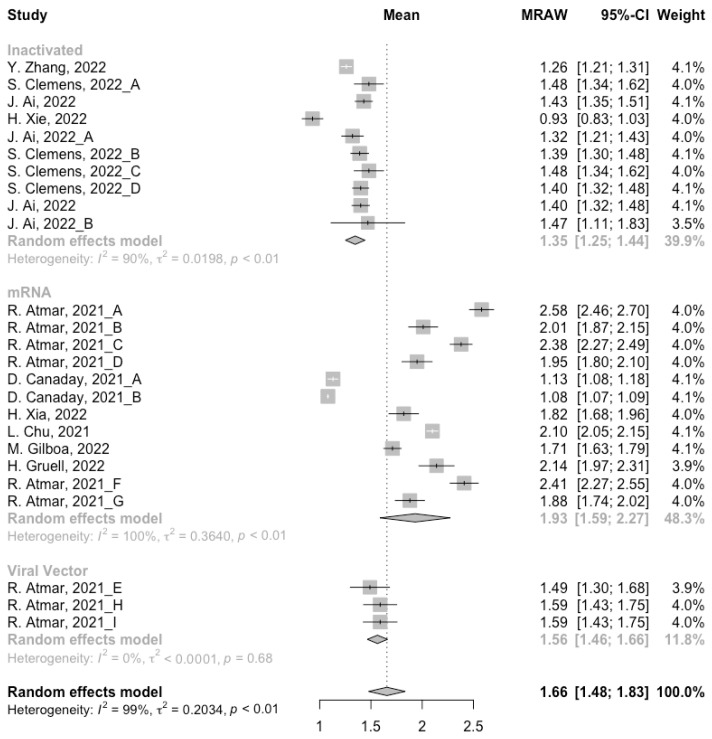
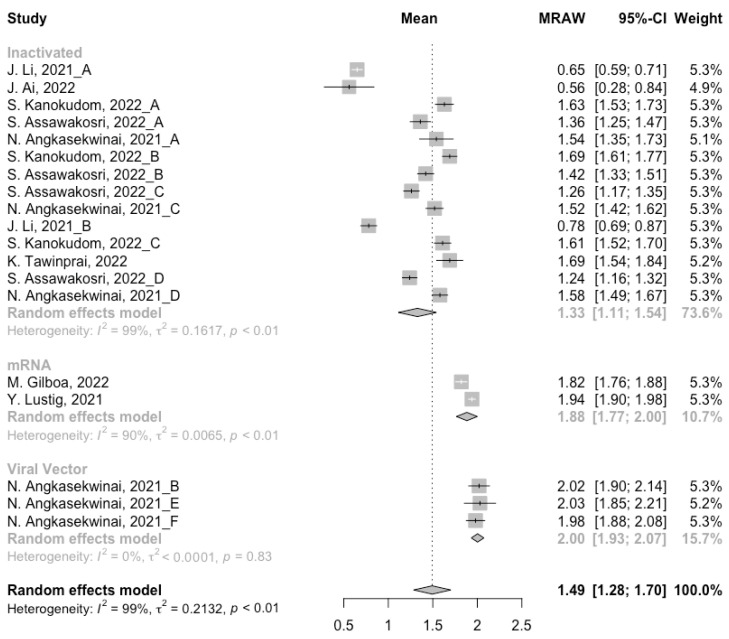
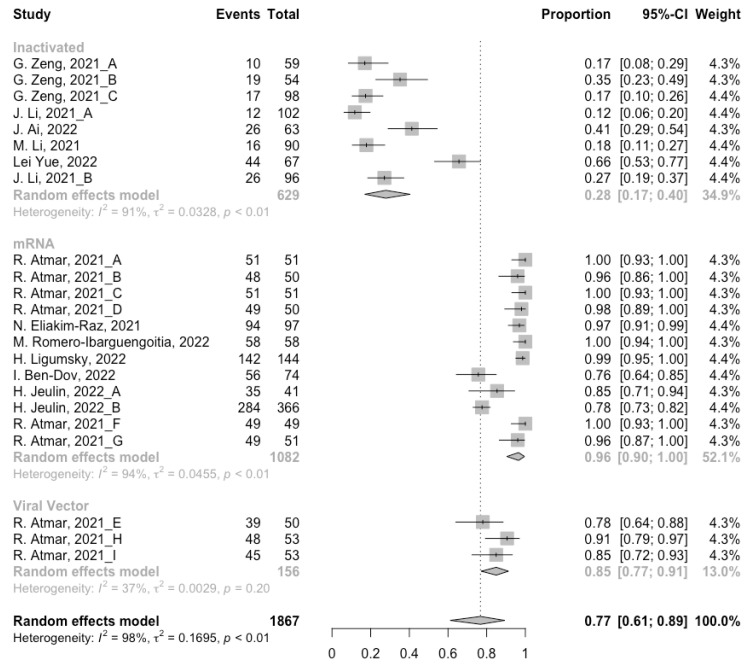
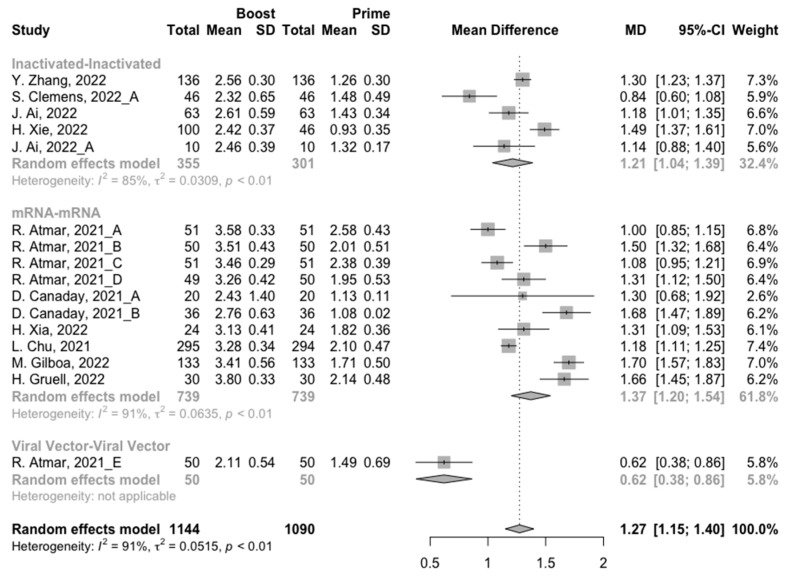
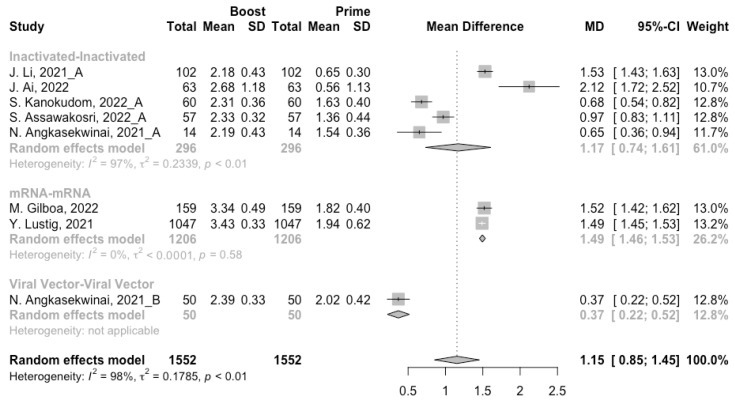
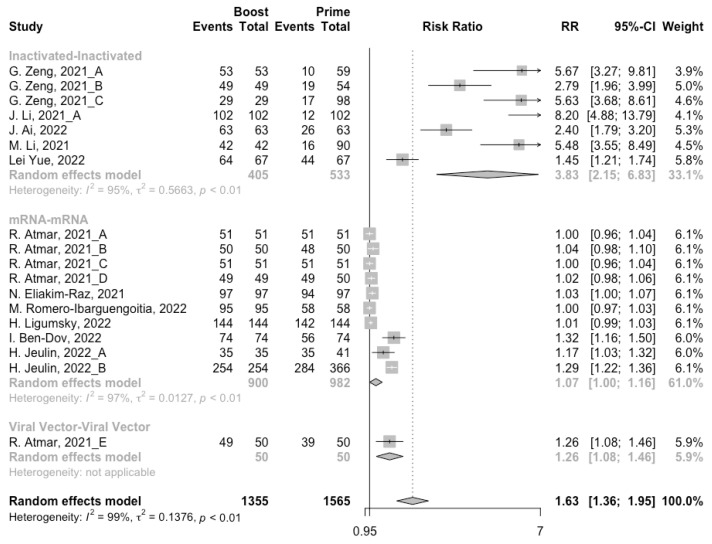
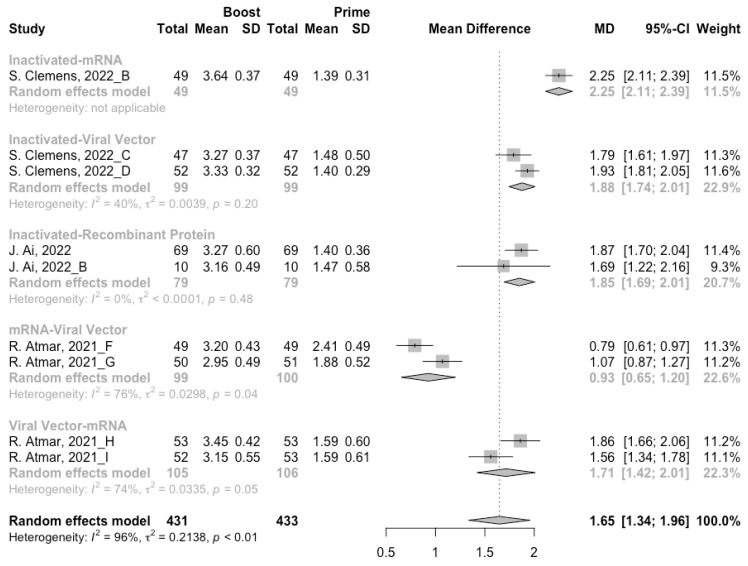
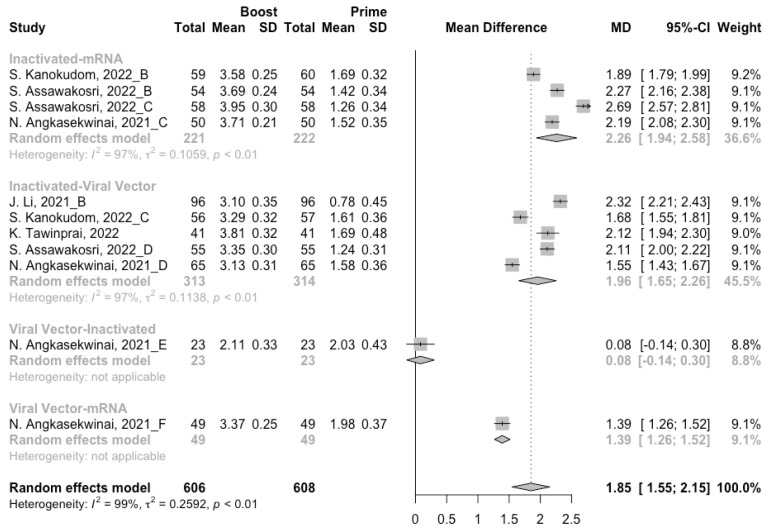
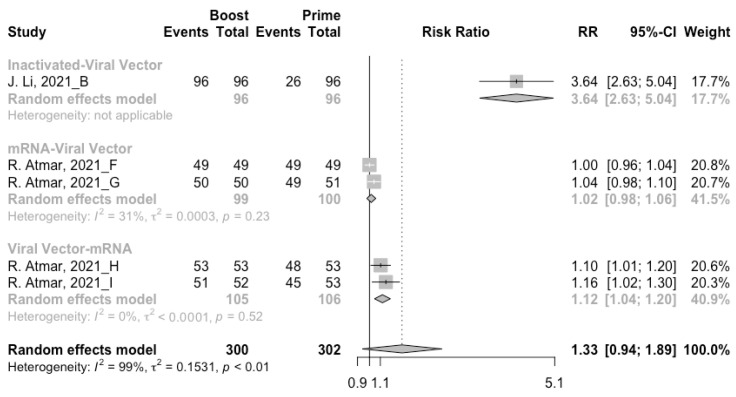
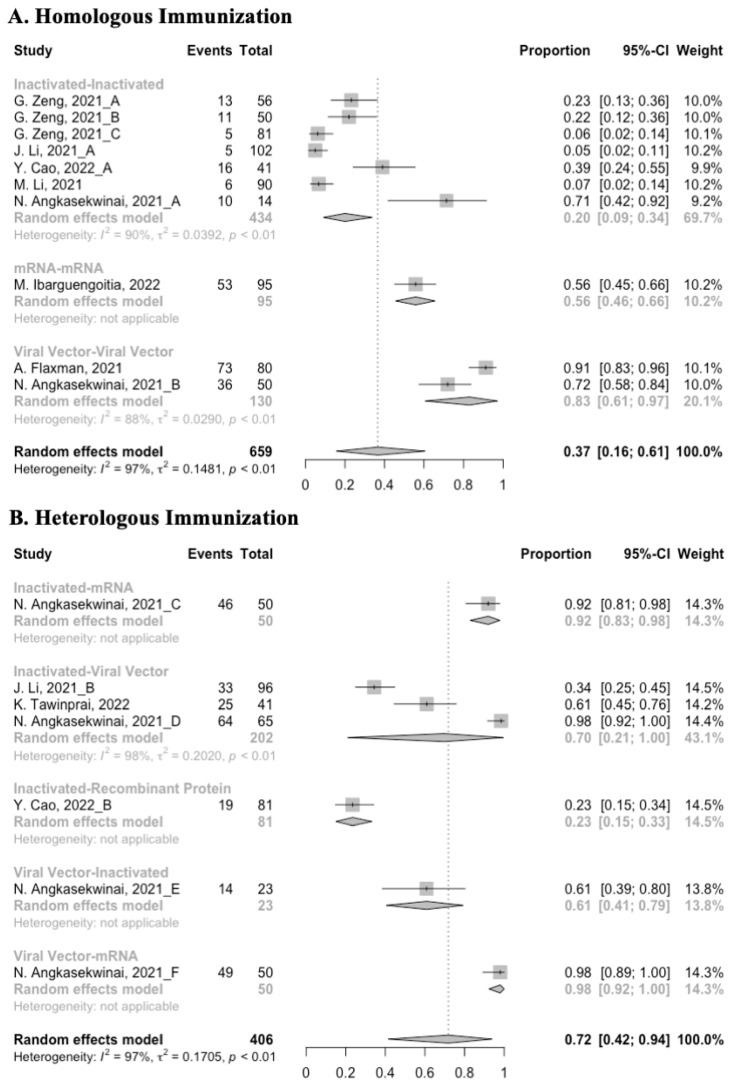
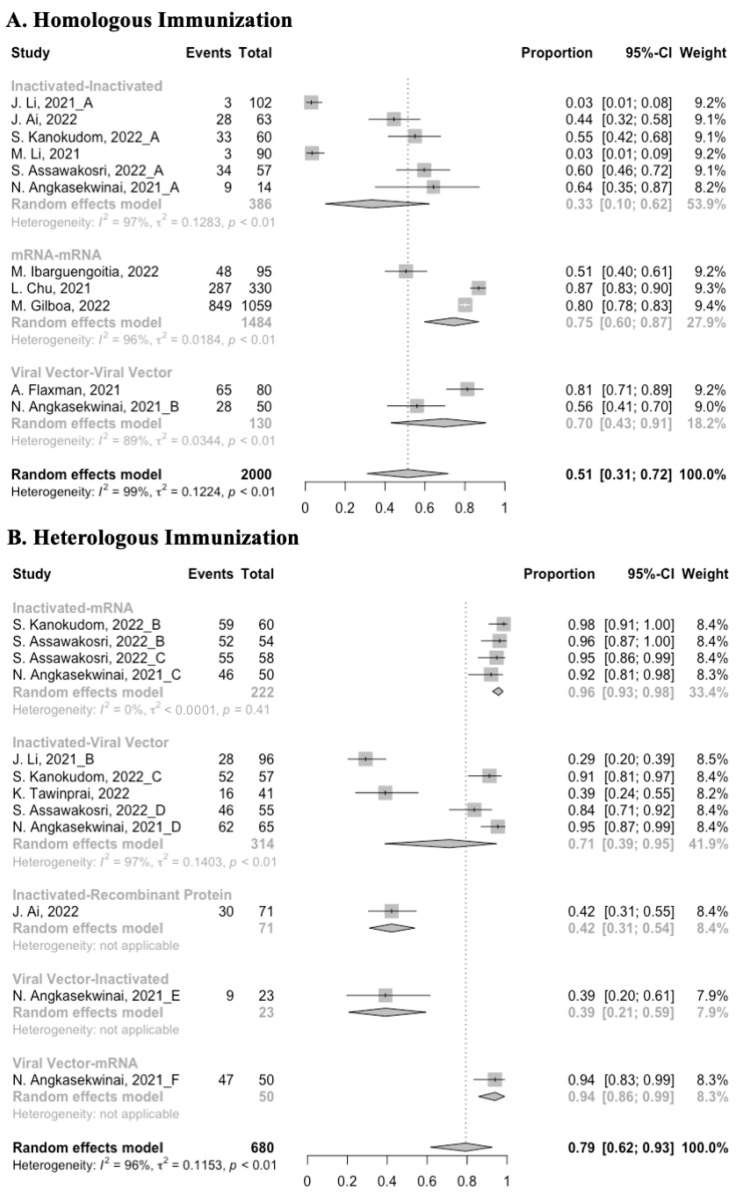
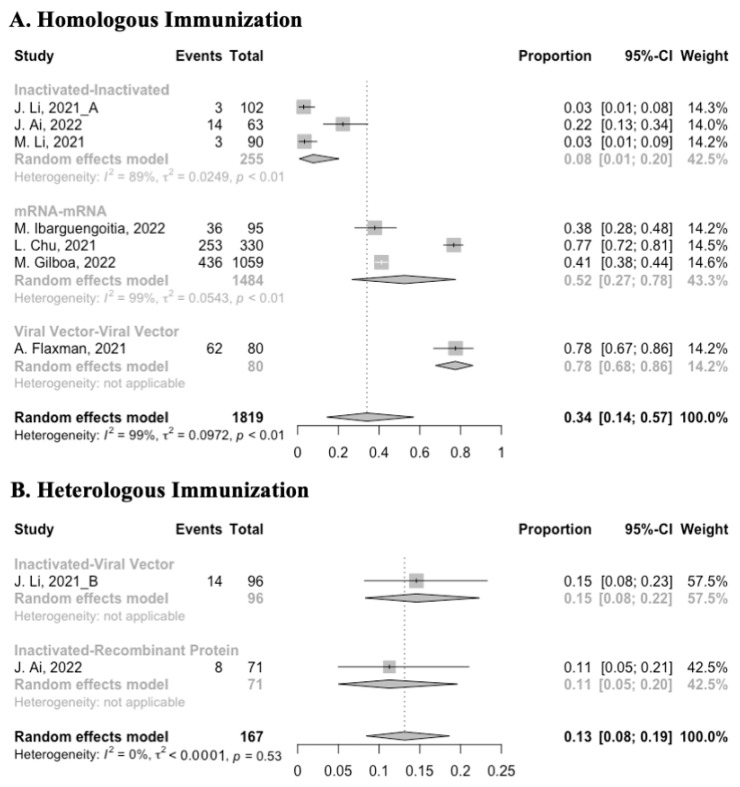
A prime-boost strategy of COVID-19 vaccines brings hope to limit the spread of SARS-CoV-2, while the immunogenicity of the vaccines is waning over time. Whether a booster dose of vaccine is needed has become a widely controversial issue. However, no published meta-analysis has focused on the issue. Therefore, this study assessed the immunogenicity and safety of the different combinations of prime-boost vaccinations. Electronic databases including PubMed, the Cochrane Library, Embase, medRxiv, Wanfang and CNKI were used to retrieve the original studies. A total of 28 studies, 9 combinations of prime-boost vaccinations and 5870 subjects were included in the meta-analysis, and random effect models were used to estimate pooled immunogenicity and safety. The immunity against COVID-19 after the prime vaccination waned over time, especially in the populations primed with inactivated vaccines, in which the seropositive rate of antibodies was only 28% (95% CI: 17-40%). Booster vaccination could significantly increase the antibody responses, and heterologous immunization was more effective than homologous immunization (neutralization titers: 1.65 vs. 1.27; anti-RBD IgG: 1.85 vs. 1.15); in particular, the combination of inactivated-mRNA vaccines had the highest antibody responses (neutralization titers: MRAW = 3.64, 95% CI: 3.54-3.74; anti-RBD IgG: 3.73, 95% CI: 3.59-3.87). Moreover, compared with the initial two doses of vaccines, a booster dose did not induce additional or severe adverse events. The administration of the booster dose effectively recalled specific immune responses to SARS-CoV-2 and increased antibody levels, especially in heterologous immunization. Considering the long-term immunogenicity and vaccine equity, we suggest that now, only individuals primed with inactivated vaccines require a booster dose.
Keywords: COVID-19 vaccine; booster; heterologous; homologous; immunogenicity; safety.
Conflict of interest statement
The authors declare no conflict of interest.
Figures
References
-
- World Health Organization Impact of COVID-19 on People’s Livelihoods, Their Health and Our Food Systems. [(accessed on 30 March 2022)]; Available online: https://www.who.int/news/item/13-10-2020-impact-of-covid-19-on-people%27....
-
- Liu X., Shaw R.H., Stuart A.S.V., Greenland M., Aley P.K., Andrews N.J., Cameron J.C., Charlton S., Clutterbuck E.A., Collins A.M., et al. Safety and immunogenicity of heterologous versus homologous prime-boost schedules with an adenoviral vectored and mRNA COVID-19 vaccine (Com-COV): A single-blind, randomised, non-inferiority trial. Lancet. 2021;398:856–869. doi: 10.1016/S0140-6736(21)01694-9. - DOI - PMC - PubMed
Grants and funding
- 81973055/Chinese National Natural Science Foundation
- 2018C03010/Major research and development projects of Zhejiang science and Technology Department
- 2020E10004/Key Laboratory of Intelligent Preventive Medicine of Zhejiang Province
- 2019R01007/Leading Innovative and Entrepreneur Team Introduction Program of Zhejiang
LinkOut - more resources
Full Text Sources
Miscellaneous
