Review
. 2022 May 4;14(5):961.
doi: 10.3390/v14050961.

Antiviral Drug Discovery for the Treatment of COVID-19 Infections

Affiliations
Review

Antiviral Drug Discovery for the Treatment of COVID-19 Infections

Teresa I Ng et al. Viruses. .

Abstract

The coronavirus disease 2019 (COVID-19) pandemic is caused by the severe acute respiratory syndrome coronavirus 2 (SARS-CoV-2), a recently emerged human coronavirus. COVID-19 vaccines have proven to be successful in protecting the vaccinated from infection, reducing the severity of disease, and deterring the transmission of infection. However, COVID-19 vaccination faces many challenges, such as the decline in vaccine-induced immunity over time, and the decrease in potency against some SARS-CoV-2 variants including the recently emerged Omicron variant, resulting in breakthrough infections. The challenges that COVID-19 vaccination is facing highlight the importance of the discovery of antivirals to serve as another means to tackle the pandemic. To date, neutralizing antibodies that block viral entry by targeting the viral spike protein make up the largest class of antivirals that has received US FDA emergency use authorization (EUA) for COVID-19 treatment. In addition to the spike protein, other key targets for the discovery of direct-acting antivirals include viral enzymes that are essential for SARS-CoV-2 replication, such as RNA-dependent RNA polymerase and proteases, as judged by US FDA approval for remdesivir, and EUA for Paxlovid (nirmatrelvir + ritonavir) for treating COVID-19 infections. This review presents an overview of the current status and future direction of antiviral drug discovery for treating SARS-CoV-2 infections, covering important antiviral targets such as the viral spike protein, non-structural protein (nsp) 3 papain-like protease, nsp5 main protease, and the nsp12/nsp7/nsp8 RNA-dependent RNA polymerase complex.

Keywords: COVID-19; Mpro; PLpro; RdRp; SARS-CoV-2; antiviral; coronavirus; drug discovery; spike protein.


Conflict of interest statement

The authors declare no conflict of interest.

Figures
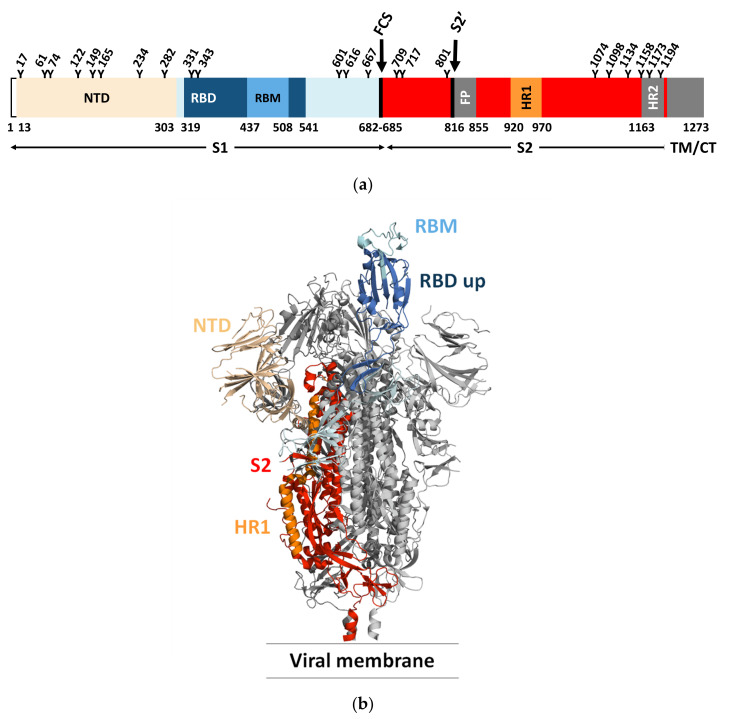
Figure 1
Figure 1
(a) Domain architecture of the SARS-CoV-2 spike protein, comprising the N-terminal domain (NTD), the receptor-binding domain (RBD), the receptor-binding motif (RBM), the furin cleavage site (FCS), the S2′ cleavage site, the fusion peptide (FP), and heptad repeats 1 and 2 (HR1 and HR2), as they relate to the S1 and S2 subunits, as well as the transmembrane domain (TM) and the cytoplasmic tail (CT). Glycosylation sites are marked at the top of the figure. (b) Side view of the pre-fusion structure of the SARS-CoV-2 spike protein (PDB ID 6VYB [39]) with a single RBD in the “up” state and exposing the RBM. The two RBD “down” protomers are shown in gray and the RBD “up” protomer is shown in color corresponding to the schematic in (a).
Figure 2
Figure 2
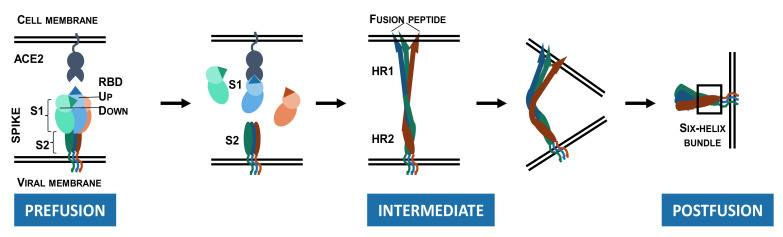
Conformational changes in the SARS-CoV-2 spike ectodomain during membrane fusion. Pre-fusion conformation: Spike protein with two RBDs in the “down” state and one RBD in the “up” state with the RBM exposed and available for binding to the ACE2 receptor. The spike protein/ACE2 interactions induce shedding of the S1 subunits. Intermediate conformation: The S2 subunits become elongated and reach out to the host cell membrane, enabling insertion of the fusion peptide. Post-fusion conformation: HR2 forms a six-helix bundle with HR1 inducing fusion of the viral membrane with the host cell membrane.
Figure 3
Figure 3
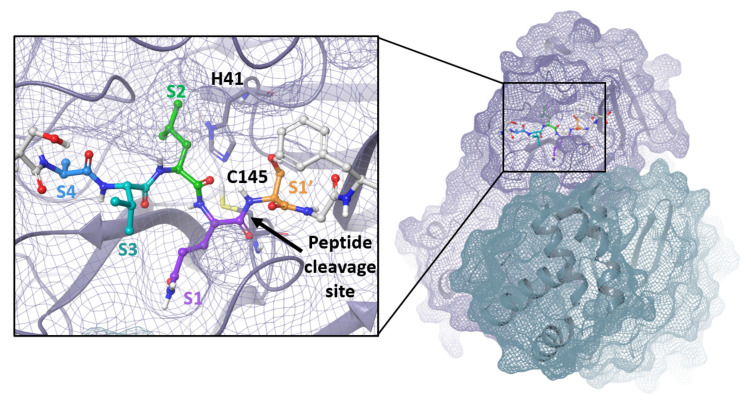
Mpro dimer and active site with peptide substrate bound. Image produced from PDB ID 7N89 with C145A mutant modeled back to cysteine [73].
Figure 4
Figure 4
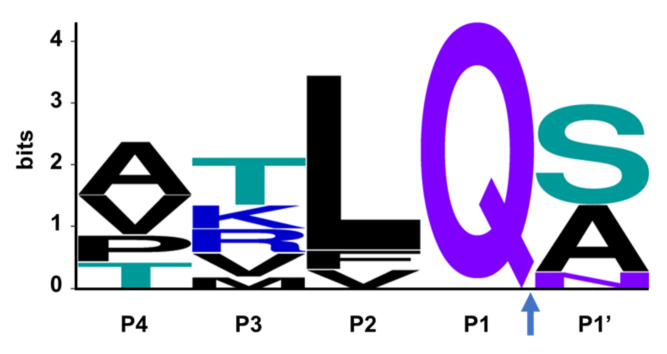
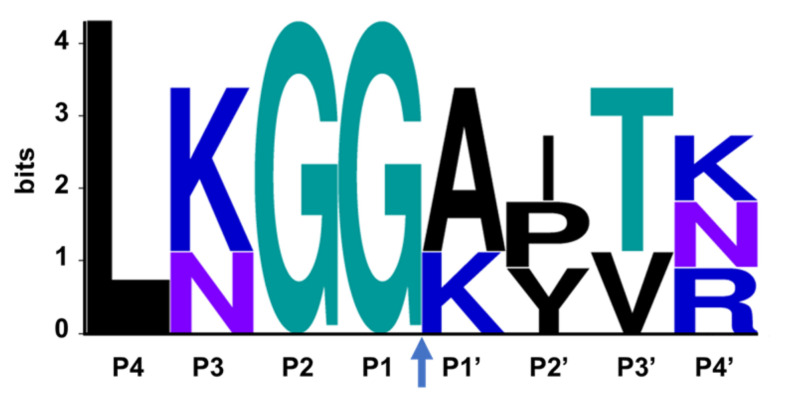
The consensus recognition sequence cleaved by SARS-CoV-2 (Uniprot code P0DTD1) Mpro. The cleavage site is marked by the blue arrow. Image generated by WebLogo [74].
Figure 5
Figure 5
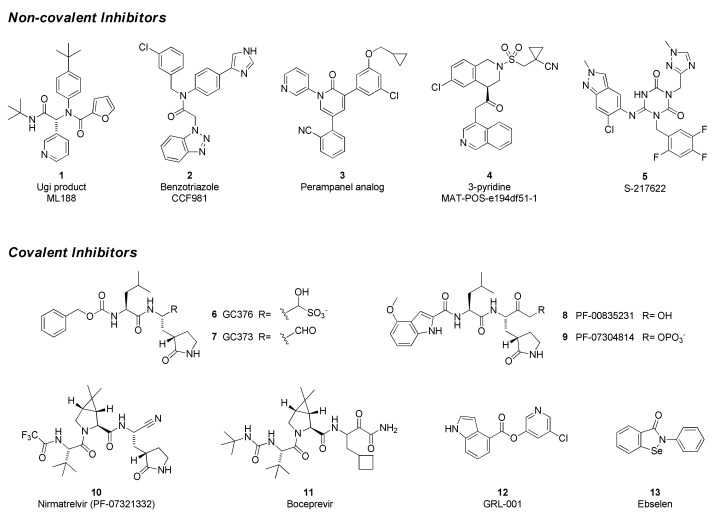
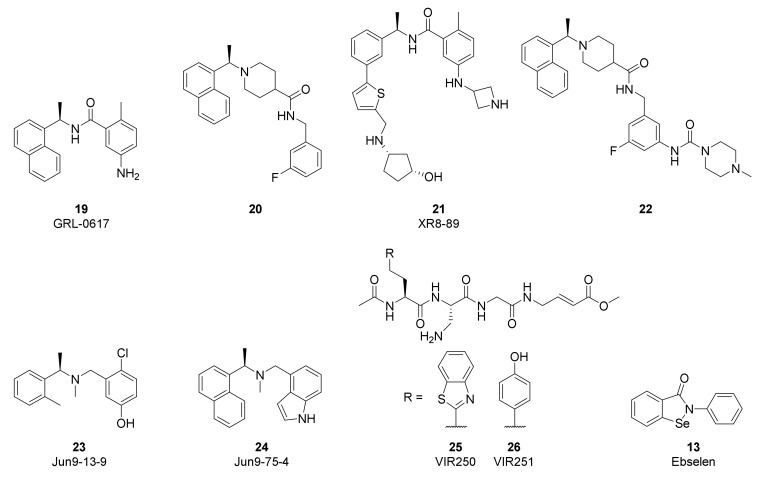
Chemical structures of representative SARS-CoV-2 Mpro inhibitors.
Figure 6
Figure 6
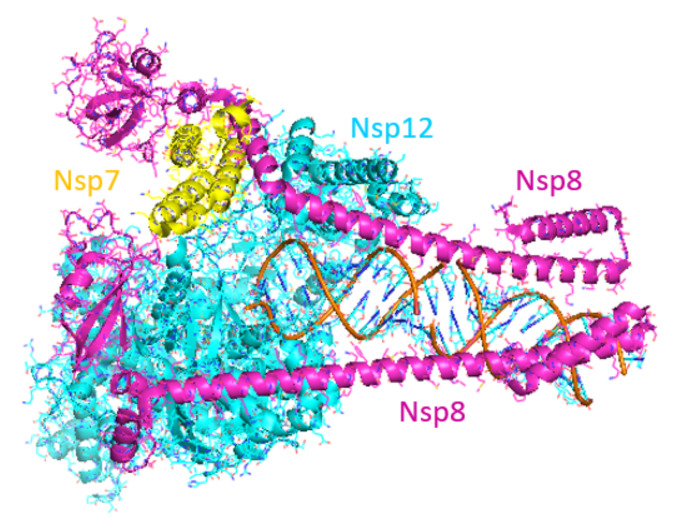
Structure of SARS-CoV-2 RdRp complex. Image produced from PDB ID 6YYT. (Nsp7: yellow; nsp8: magenta; nsp12: cyan.)
Figure 7
Figure 7
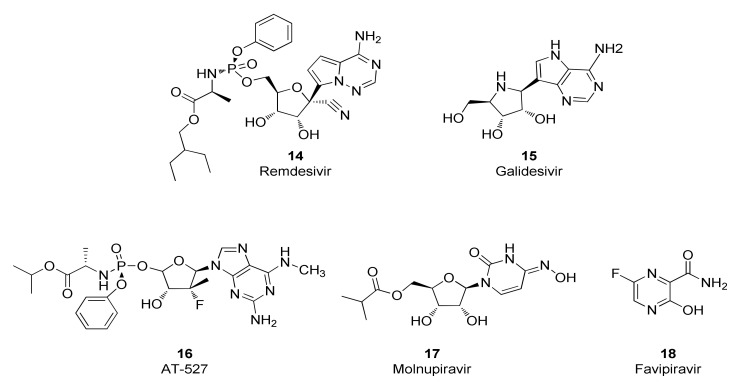
Chemical structures of representative SARS-CoV-2 RdRp inhibitors.
Figure 8
Figure 8
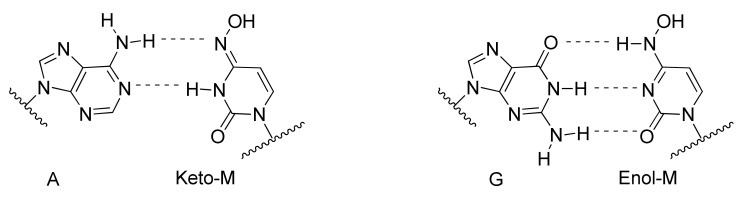
Keto-enol tautomeric equilibrium provides opportunities for molnupiravir (M) in the RNA template to form Watson–Crick hydrogen bonds with incoming ATP or GTP.
Figure 9
Figure 9
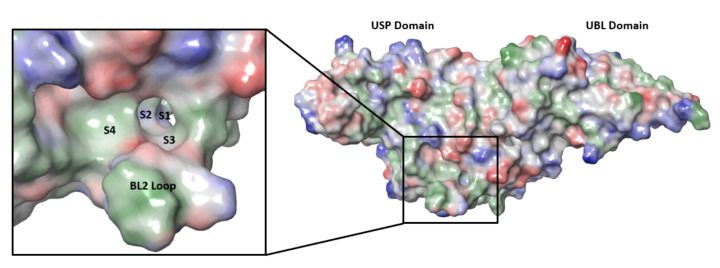
SARS-CoV-2 PLpro structure and substrate-binding site, with substrate-binding subsites of S1–S4 and the BL2 loop enlarged in the box. Image produced from PDB ID 6WUU. (UBL: ubiquitin-like domain; USP: ubiquitin-specific protease fold.)
Figure 10
Figure 10
The consensus recognition sequence cleaved by SARS-CoV-2 (Uniprot code P0DTD1) PLpro. The cleavage site is marked by the blue arrow. Image generated by WebLogo.
Figure 11
Figure 11
Chemical structures of representative SARS-CoV-2 PLpro inhibitors.

References

    1. Wu F., Zhao S., Yu B., Chen Y.-M., Wang W., Song Z.-G., Hu Y., Tao Z.-W., Tian J.-H., Pei Y.-Y., et al. A new coronavirus associated with human respiratory disease in China. Nature. 2020;579:265–269. doi: 10.1038/s41586-020-2008-3. - DOI - PMC - PubMed
    1. Zhu N., Zhang D., Wang W., Li X., Yang B., Song J., Zhao X., Huang B., Shi W., Lu R., et al. A Novel Coronavirus from Patients with Pneumonia in China, 2019. N. Engl. J. Med. 2020;382:727–733. doi: 10.1056/NEJMoa2001017. - DOI - PMC - PubMed
    1. COVID-19 Dashboard by the Center for Systems Science and Engineering at Johns Hopkins University. [(accessed on 21 March 2022)]. Available online: https://coronavirus.jhu.edu/map.html.
    1. Lee N., Hui D., Wu A., Chan P., Cameron P., Joynt G.M., Ahuja A., Yung M.Y., Leung C., To K., et al. A Major Outbreak of Severe Acute Respiratory Syndrome in Hong Kong. N. Engl. J. Med. 2003;348:1986–1994. doi: 10.1056/NEJMoa030685. - DOI - PubMed
    1. Zaki A.M., Van Boheemen S., Bestebroer T.M., Osterhaus A.D.M.E., Fouchier R.A.M. Isolation of a Novel Coronavirus from a Man with Pneumonia in Saudi Arabia. N. Engl. J. Med. 2012;367:1814–1820. doi: 10.1056/NEJMoa1211721. - DOI - PubMed

Publication types

MeSH terms

Supplementary concepts