


Prediction of fluid responsiveness. What's new?
- PMID: 35633423
- PMCID: PMC9148319
- DOI: 10.1186/s13613-022-01022-8
Prediction of fluid responsiveness. What's new?
Abstract
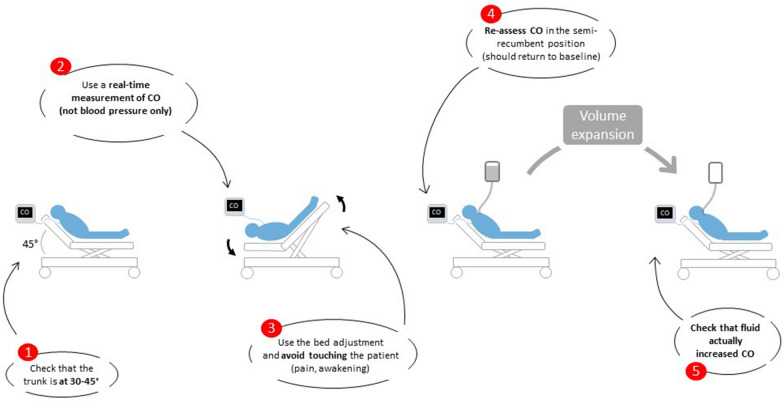
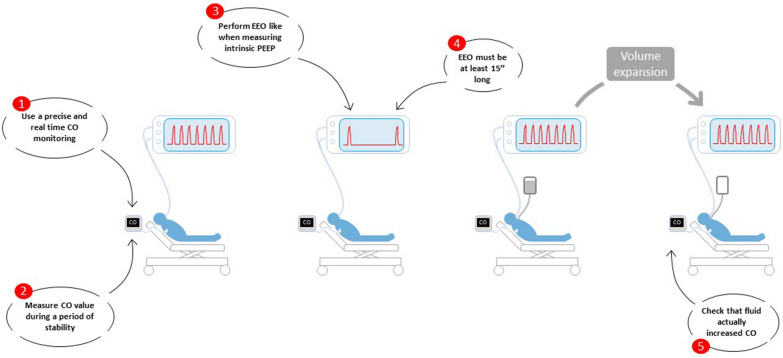
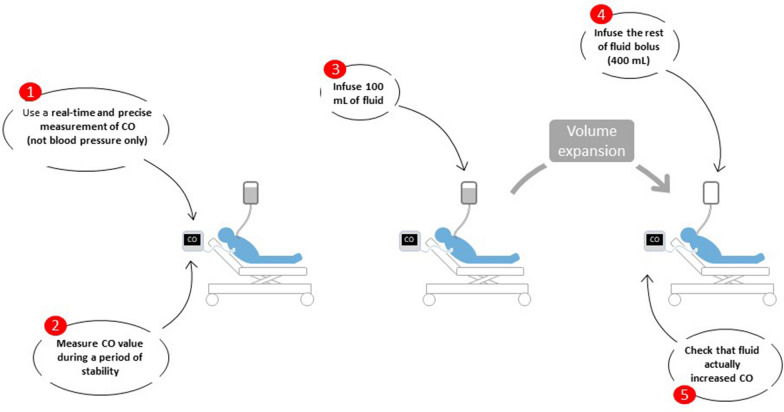
Although the administration of fluid is the first treatment considered in almost all cases of circulatory failure, this therapeutic option poses two essential problems: the increase in cardiac output induced by a bolus of fluid is inconstant, and the deleterious effects of fluid overload are now clearly demonstrated. This is why many tests and indices have been developed to detect preload dependence and predict fluid responsiveness. In this review, we take stock of the data published in the field over the past three years. Regarding the passive leg raising test, we detail the different stroke volume surrogates that have recently been described to measure its effects using minimally invasive and easily accessible methods. We review the limits of the test, especially in patients with intra-abdominal hypertension. Regarding the end-expiratory occlusion test, we also present recent investigations that have sought to measure its effects without an invasive measurement of cardiac output. Although the limits of interpretation of the respiratory variation of pulse pressure and of the diameter of the vena cava during mechanical ventilation are now well known, several recent studies have shown how changes in pulse pressure variation itself during other tests reflect simultaneous changes in cardiac output, allowing these tests to be carried out without its direct measurement. This is particularly the case during the tidal volume challenge, a relatively recent test whose reliability is increasingly well established. The mini-fluid challenge has the advantage of being easy to perform, but it requires direct measurement of cardiac output, like the classic fluid challenge. Initially described with echocardiography, recent studies have investigated other means of judging its effects. We highlight the problem of their precision, which is necessary to evidence small changes in cardiac output. Finally, we point out other tests that have appeared more recently, such as the Trendelenburg manoeuvre, a potentially interesting alternative for patients in the prone position.
Keywords: Cardiac output; Fluid balance; Fluid challenge; Passive leg raising; Tidal volume; Volume expansion.
© 2022. The Author(s).
Conflict of interest statement
Xavier MONNET and Jean-Louis TEBOUL are members of the medical advisory board of Pulsion Medical Systems. Xavier MONNET and Jean-Louis TEBOUL have given lectures for Baxter. Xavier MONNET has given lectures for Philips Healthcare. Rui SHI declares that she has no conflict of interest.
Figures
References
-
- Malbrain M, Van Regenmortel N, Saugel B, De Tavernier B, Van Gaal PJ, Joannes-Boyau O, et al. Principles of fluid management and stewardship in septic shock: it is time to consider the four D's and the four phases of fluid therapy. Ann Intensive Care. 2018;8:66. doi: 10.1186/s13613-018-0402-x. - DOI - PMC - PubMed
-
- Messina A, Robba C, Calabro L, Zambelli D, Iannuzzi F, Molinari E, et al. Perioperative liberal versus restrictive fluid strategies and postoperative outcomes: a systematic review and metanalysis on randomised-controlled trials in major abdominal elective surgery. Crit Care. 2021;25:205. doi: 10.1186/s13054-021-03629-y. - DOI - PMC - PubMed
Publication types
LinkOut - more resources
Full Text Sources
Medical
Miscellaneous
