. 2022 Jul;34(7):1551-1561.
doi: 10.1007/s40520-022-02110-2. Epub 2022 May 28.

Capturing the value of vaccination: impact of vaccine-preventable disease on hospitalization

Affiliations

Capturing the value of vaccination: impact of vaccine-preventable disease on hospitalization

Mark T Doherty et al. Aging Clin Exp Res. 2022 Jul.

Abstract

Evidence from epidemiological studies suggests that vaccine-preventable disease (VPD) such as influenza or herpes zoster contribute significantly to the increased risk of older adults for cardiovascular, cerebrovascular, neurological, and renal complications in the period after illnesses. However, since the period of elevated risk can persist well beyond the duration of the acute illness, the connection is not always recognized. To obtain insights into the relationship between diagnoses for vaccine-preventable disease and for other conditions, we analyzed principal and secondary diagnoses for 3,127,768 inpatient admissions of adults 50 years and older in the United States, using medical insurance claims drawn from the IBM® MarketScan® Research Databases (Marketscan). The Marketscan data indicated that overall, 3.1% of these hospitalizations had a principal diagnosis of VPD with variation by month of admission, and age. However, hospitalizations with a principal non-VPD diagnosis but secondary VPD diagnoses were 2.8 times more frequent, with particularly high rates in those whose principal diagnoses were non-VPD respiratory or circulatory disease. Hospitalized patients with a secondary VPD diagnosis tended to have poorer discharge outcomes, and longer length of stay in comparison to hospitalized patients without a secondary VPD diagnosis. In total, these data are consistent with suggestions that VPDs play a significant and potentially under-estimated role in hospitalization and outcomes, which may be potentially preventable by improved vaccination coverage.

Keywords: Burden of disease; Complications; Hospitalization; Vaccination.


Conflict of interest statement

Ekkehard Beck, Mark Doherty, Nathalie Servotte, and Emmanuel Aris are employed by and hold shares in the GSK group of companies.

Figures
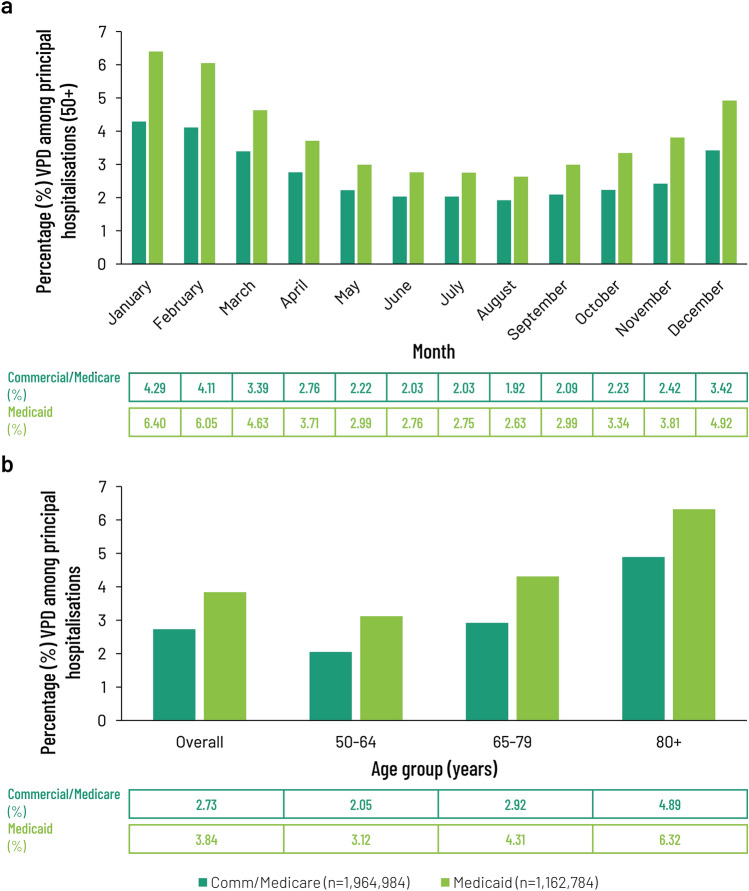
Fig. 1
Fig. 1
Distribution of patients with a principal diagnosis of VPD at admission, stratified according to the month that the claim was registered (a) or the age of the patient at the time of admission (b) and expressed as a percentage of all claims registered with the MarketScan Commercial Claims and Encounters (Commercial), Medicare Supplemental (Medicare) and Multistate Medicaid (Medicaid) databases registered by month or age from July 1, 2016 to June 30, 2019. Data from Commercial/Medicare were pooled (n = 1,964,984) according to standard practice and presented alongside Medicaid claims (n = 1,162,784). VPD vaccine-preventable diseases
Fig. 2
Fig. 2
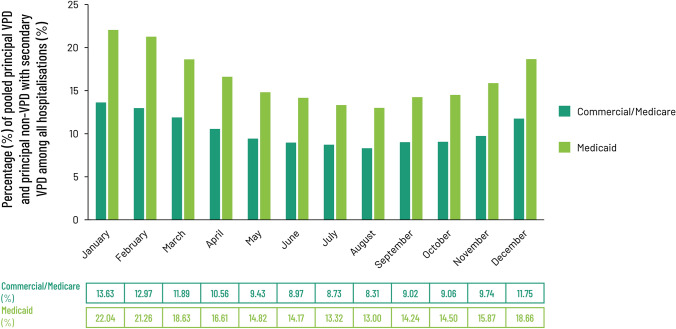
Distribution of all patients with a diagnosis of VPD, either as a principal or secondary diagnosis, stratified according to the month that the claim was registered and expressed as a percentage of all claims registered with the MarketScan Commercial Claims and Encounters (Commercial), Medicare Supplemental (Medicare) and Multistate Medicaid (Medicaid) databases registered by month or age from July 1, 2016 to June 30, 2019. Data from Commercial/Medicare were pooled (n = 1,964,984) according to standard practice and presented alongside Medicaid claims (n = 1,162,784). VPD vaccine-preventable diseases
Fig. 3
Fig. 3
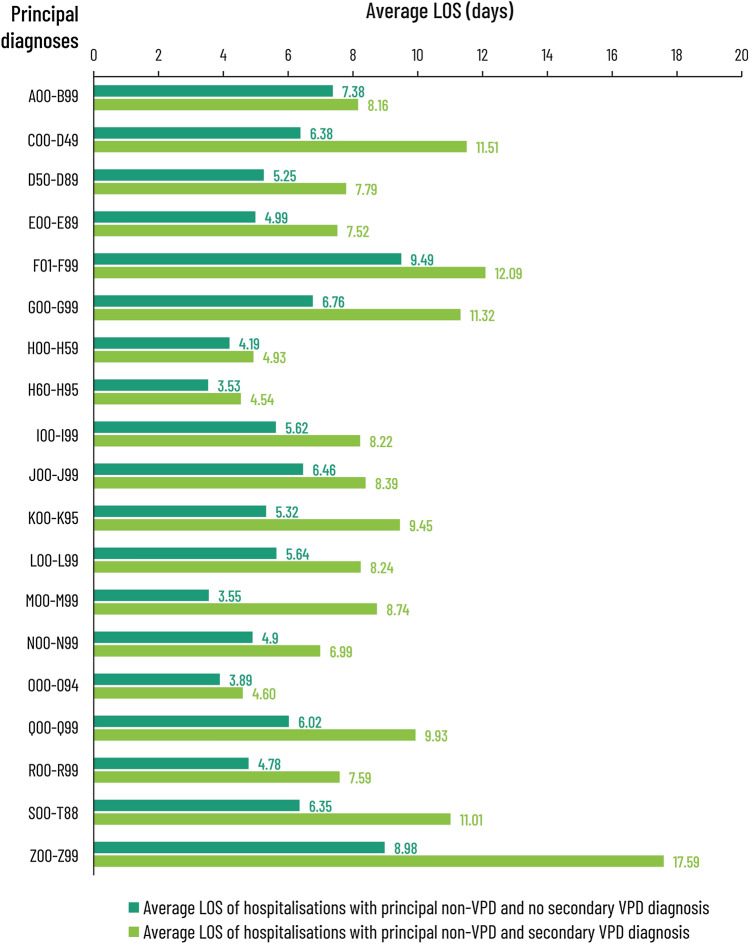
Length of stay in the initial facility where they were admitted (expressed as days, based on day of admission and discharge), for patients with a principal non-VPD diagnosis without secondary VPD compared to a principal non-VPD with secondary VPD. The data are drawn from all claims registered with the MarketScan Commercial Claims and Encounters (Commercial), Medicare Supplemental (Medicare) and Multistate Medicaid (Medicaid) databases from July 1, 2016 to June 30, 2019. Data from Commercial/Medicare were pooled (n = 1,964,984) according to standard practice and presented alongside Medicaid claims (n = 1,162,784). VPD vaccine-preventable diseases, A00-B99 Certain infections and parasitic diseases, C00-D49 Neoplasma, D50–D89 diseases of the blood and blood-forming organs and certain disorders involving the immune mechanism, E00–E89 endocrine, nutritional and metabolic diseases, F01–F99 mental, behavioural and neurodevelopment disorders, G00–G99 diseases of the nervous system, H00–H59 diseases of the eye and adnexa, H60–H95 diseases of the ear and mastoid process, I00–J99 diseases of the circulatory system, J00–J99 diseases of the respiratory system, K00–K95 diseases of the digestive system, L00–L99 diseases of the skin and subcutaneous tissue, M00–M99 diseases of the musculoskeletal system and connective tissue, N00–N99 diseases of the genitourinary system, O00–O94 pregnancy, childbirth and puerperium, Q00–Q99 congenital malformation, deformations and chromosomal abnormalities, R00–R99 symptoms, signs and abnormal clinical and laboratory findings, not elsewhere classified, S00–T88 injury, poisoning and certain other consequences of external causes, Z00–Z99 factors influencing health status and contact with health services
Fig. 4
Fig. 4
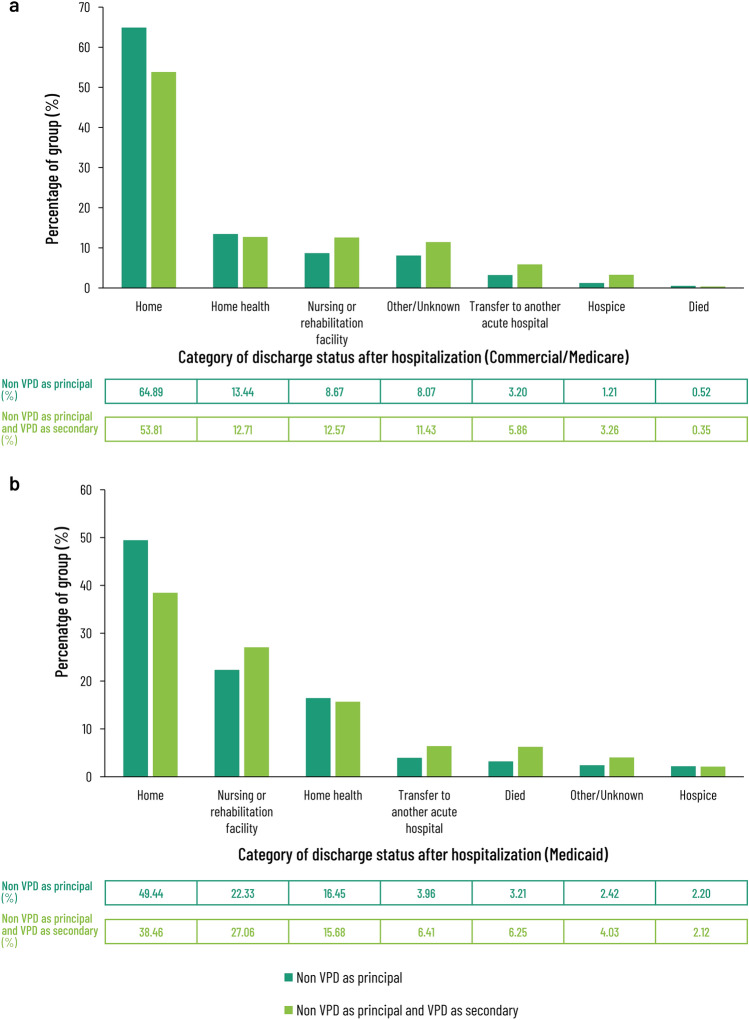
Category of recorded discharge status after hospitalization for patients with either a principal non-VPD diagnosis without secondary VPD compared to a principal non-VPD with secondary VPD for data drawn from all claims registered with the MarketScan Commercial Claims and Encounters (Commercial), Medicare Supplemental (Medicare) database: a (pooled n = 1,162,784), and the Multistate Medicaid (Medicaid) database: b (n = 1,162,784) from July 1, 2016 to June 30, 2019. VPD vaccine-preventable diseases

References

    1. Katzenschlager S, Zimmer AJ, Gottschalk C, et al. Can we predict the severe course of COVID-19—a systematic review and meta-analysis of indicators of clinical outcome? PLoS One. 2021;16:e0255154. doi: 10.1371/journal.pone.0255154. - DOI - PMC - PubMed
    1. Bartsch SM, Ferguson MC, McKinnell JA, et al. The potential health care costs and resource use associated with COVID-19 in The United States. Health Aff. 2020;39:927–935. doi: 10.1377/hlthaff.2020.00426. - DOI - PMC - PubMed
    1. Doherty TM, Connolly MP, Del Giudice G, et al. Vaccination programs for older adults in an era of demographic change. Eur Geriatr Med. 2018;9:289–300. doi: 10.1007/s41999-018-0040-8. - DOI - PMC - PubMed
    1. Steventon A, Deeny S, Friebel R et al (2018) The Health Foundation. Briefing: Emergency hospital admissions in England: which may be avoidable and how? https://www.health.org.uk/sites/default/files/Briefing_Emergency%2520adm.... Accessed 22 Oct 2021
    1. Orlando G, Gubertini G, Negri C, Coen M, Ricci E, Galli M, et al. Trends in hospital admissions at a Department for Infectious Diseases in Italy from 1995 to 2011 and implications for health policies. BMC Public Health. 2014;14:980. doi: 10.1186/1471-2458-14-980. - DOI - PMC - PubMed