


Benefit and risk assessment of replacing of sodium chloride by other salt/substances in industrial seafood products
- PMID: 35634562
- PMCID: PMC9131575
- DOI: 10.2903/j.efsa.2022.e200420
Benefit and risk assessment of replacing of sodium chloride by other salt/substances in industrial seafood products
Abstract
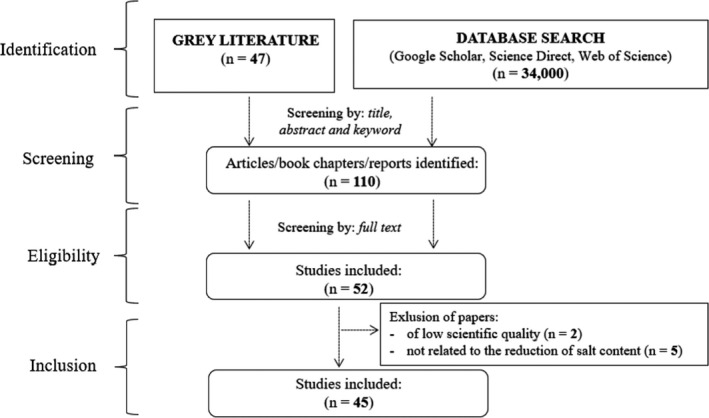
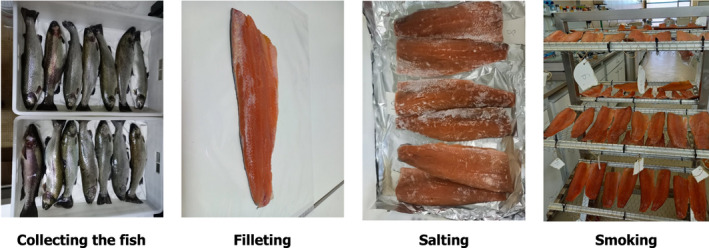
Sodium (Na) is primarily consumed as salt (sodium chloride, NaCl), which is a critical food ingredient that contributes to improve preservation, shelf-life and sensory attributes (e.g. texture and taste). On the other hand, the excessive Na intake is a risk factor for cardiovascular diseases including stroke and heart diseases. The actual NaCl intake in most countries is far above recommended level of 5 g NaCl/day. Therefore, the reduction of NaCl is among top priorities for health authorities around the globe and the World Health Organization (WHO) adopted a strategy to reduce NaCl intake by 30% until 2025. Integral part of the reduction strategy is to limit NaCl intake from seafood, which is especially relevant for regions with a significant fish and shellfish consumption. The purpose of the project was to (i) review the current situation of relevant strategies to reducing NaCl content in seafood (literature review), (ii) assess benefit/risk of NaCl replacement with other substances/ingredients in seafood and (iii) disseminate results obtained. In the first phase of the project, the literature review was performed and the review paper was prepared. The second part of the project was focused on the experimental studies on smoked trout which commercially available products can deliver up to 4 g NaCl in 100 g. The aim of this study was to optimise the development process of smoked trout with reduced NaCl content without compromising quality and safety attributes. Another part of the project was related to the dissemination of results which resulted in the preparation of three conference abstracts and two experimental papers.
Keywords: fish; potassium chloride (KCl); salt reduction; seafood; sodium chloride (NaCl); trout.
© 2022 Wiley‐VCH Verlag GmbH & Co. KgaA on behalf of the European Food Safety Authority.
Figures
References
-
- EFSA NDA Panel (EFSA Panel on Dietetic Products) , Turck D, Bresson J‐L, Burlingame B, Dean T, Fairweather‐Tait S, Heinonen M, Hirsch‐Ernst KI, Mangelsdorf I, McArdle H, Neuhäuser‐Berthold M, Nowicka G, Pentieva K, Sanz Y, Siani A, Sjödin A, Stern M, Tomé D, Van Loveren H, Vinceti M, Willatts P, Aggett P, Martin A, Przyrembel H, Brönstrup A, Ciok J, Gómez Ruiz JÁ, de Sesmaisons‐Lecarré A and Naska A, 2016. Dietary reference values for potassium. EFSA Journal 2016;14(10):e04592, 55 pp. 10.2903/j.efsa.2016.e04592 - DOI
-
- EFSA NDA Panel (EFSA Panel on Nutrition, Novel Foods and Food Allergens) , Turck D, Castenmiller J, de Henauw S, Hirsch‐Ernst K‐I, Kearney J, Knutsen HK, Maciuk A, Mangelsdorf I, McArdle HJ, Pelaez C, Pentieva K, Siani A, Thies F, Tsabouri S, Vinceti M, Aggett P, Fairweather‐Tait S, Martin A, Przyrembel H, Ciccolallo L, de Sesmaisons‐Lecarre A, Martinez SV, Martino L and Naska A, 2019; 17(9):5778, 191 pp. 10.2903/j.efsa.2019.5778 - DOI
-
- European Commission , 2011. Regulation of the European Parliament and of the Council of 25 October 2011 on the provision of food information to consumers, amending Regulations (EC) No 1924/2006 and (EC) No 1925/2006 of the European Parliament and of the Council, and repealing Commission Directive 87/250/EEC, Council Directive 90/496/EEC. Commission Directive 1999/10/EC, Directive 2000/13/EC of the European Parliament and of the Council, Commission Directives 2002/67/EC and 2008/5/EC and Commission Regulation (EC) No 608/2004, 1169/2011/EU. In: Official Journal L 304/18, 22 November 2011.
-
- European Commission , 2012. EU Salt Reduction Framework. European Commission.
LinkOut - more resources
Full Text Sources