. 2022 May 30;13(1):3029.
doi: 10.1038/s41467-022-30419-z.

Switches, stability and reversals in the evolutionary history of sexual systems in fish

Affiliations

Switches, stability and reversals in the evolutionary history of sexual systems in fish

Susanna Pla et al. Nat Commun. .

Abstract

Sexual systems are highly diverse and have profound consequences for population dynamics and resilience. Yet, little is known about how they evolved. Using phylogenetic Bayesian modelling and a sample of 4614 species, we show that gonochorism is the likely ancestral condition in teleost fish. While all hermaphroditic forms revert quickly to gonochorism, protogyny and simultaneous hermaphroditism are evolutionarily more stable than protandry. In line with theoretical expectations, simultaneous hermaphroditism does not evolve directly from gonochorism but can evolve slowly from sequential hermaphroditism, particularly protandry. We find support for the predictions from life history theory that protogynous, but not protandrous, species live longer than gonochoristic species and invest the least in male gonad mass. The distribution of teleosts' sexual systems on the tree of life does not seem to reflect just adaptive predictions, suggesting that adaptations alone may not fully explain why some sexual forms evolve in some taxa but not others (Williams' paradox). We propose that future studies should incorporate mating systems, spawning behaviours, and the diversity of sex determining mechanisms. Some of the latter might constrain the evolution of hermaphroditism, while the non-duality of the embryological origin of teleost gonads might explain why protogyny predominates over protandry in teleosts.


Conflict of interest statement

The authors declare no competing interests.

Figures
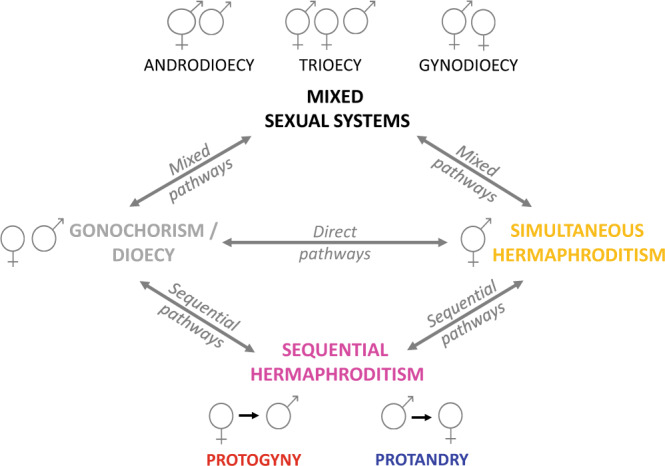
Fig. 1
Fig. 1. Theoretical framework for the evolution of sexual systems.
Illustration of potential evolutionary transitions between gonochorism (in grey) and simultaneous hermaphroditism (in yellow) via mixed systems (mixed pathways) as described in plants and some animals; via sequential hermaphroditism (sequential pathways: protogyny in red and protandry in blue) as recently suggested; or without intermediate states (direct pathways) as proposed for plants. Double-headed arrows indicate theoretical pathways.
Fig. 2
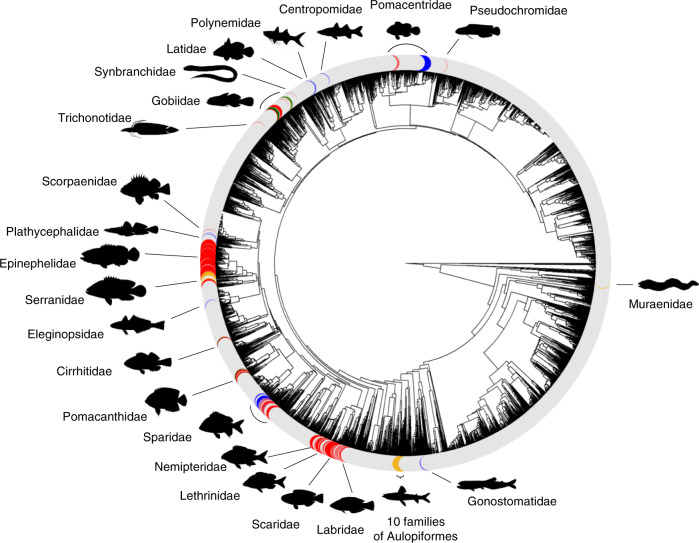
Fig. 2. Sexual systems of extant species of teleosts.
Sexual systems are colour coded for gonochorism (n = 4320; grey), protogyny (n = 196; red), protandry (n = 36; blue), bidirectional sex change (n = 16; green) and simultaneous hermaphroditism (n = 46; yellow). Families (n = 32) with hermaphroditic species are labelled. Silhouettes have been obtained from fishualize or drawn by one of the authors (C.B.).
Fig. 3
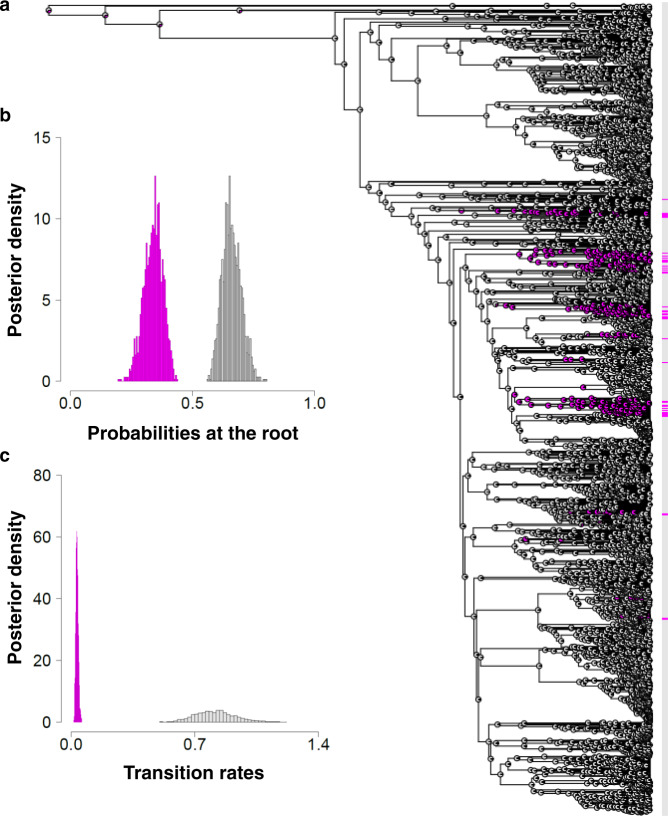
Fig. 3. The evolutionary history of the sexual system in teleosts.
a Visual summary of maximum likelihood ancestral state reconstruction as a two-character state (gonochorism or hermaphroditism) that best approximates results of our RJ-MCMC Multistate model. The sexual systems of extant species and their ancestors are colour coded for gonochorism (n = 4320; grey) and hermaphroditism (n = 294; magenta). b Density plots from RJ-MCMC Multistate models for the estimated probability of character state at the root of the phylogeny colour coded for gonochorism (mean = 66%; grey) and hermaphroditism (mean: 34%; magenta). c RJ-MCMC multistate posterior distributions of the transition rates from gonochorism to hermaphroditism (magenta) and from hermaphroditism to gonochorism (grey).
Fig. 4
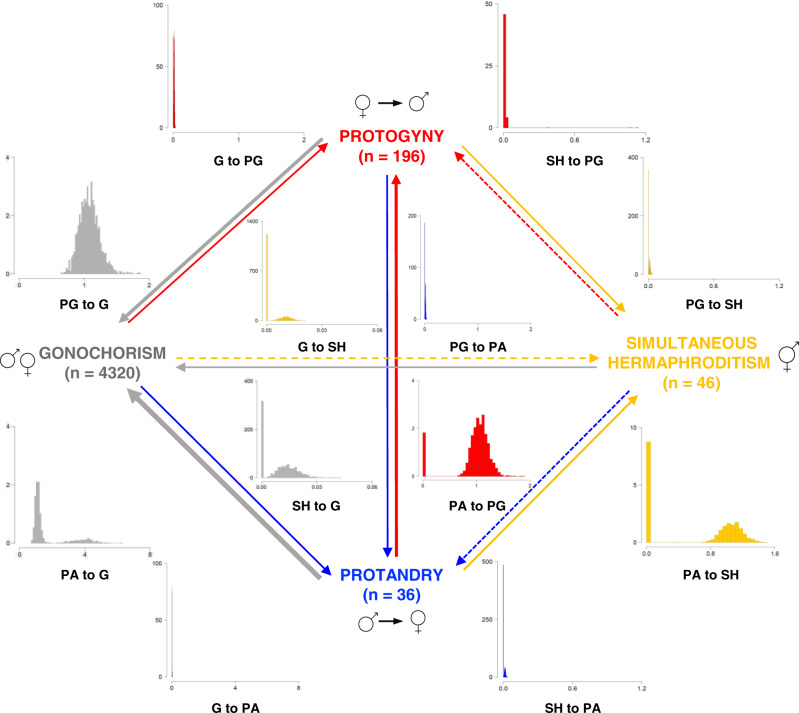
Fig. 4. Transitions rates between sexual systems in teleosts.
Summary of RJ-MCMC Multistate analysis with density plots of the posterior distributions of the transition rates to gonochorism (grey), protogyny (red), protandry (blue), and simultaneous hermaphroditism (yellow). Gonochorism is the estimated likely ancestral condition. Note, only x axis, but not y axis, are the same for each pair of gain and loss between two-character states. The thickness of the arrows is roughly proportional to the mean magnitude of the transition rates from the posterior distribution. Dashed arrows indicate transition rates estimated to be equal to 0 in over 40% of the models in the posterior distributions. Sample sizes of extant species included in our analysis for each sexual system category are indicated between parentheses.
Fig. 5
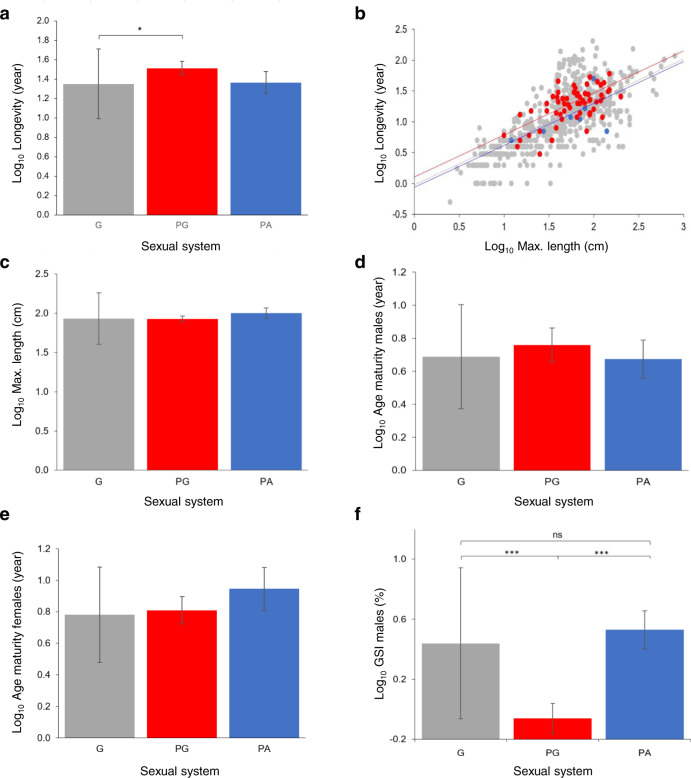
Fig. 5. Life history traits by sexual system in teleosts.
Phylogenetic estimated mean and phylogenetic standard error from the PGLS results of: a longevity (year, log10 -transformed; G: n = 758; PG: n = 69; PA: n = 17); b longevity while controlling for maximum length (G: n = 575; PG: n = 61; PA: n = 8); c maximum length (cm, log10 -transformed; G: n = 2612; PG: n = 167; PA: n = 20); d male age at first maturity (year, log10 -transformed; G: n = 259; PG: n = 15; PA: n = 9); e female age at first maturity (year, log10 -transformed; G: n = 282; PG: n = 30; PA: n = 5); f male gonadosomatic index, GSI (log10 -transformed; G: n = 44; PG: n = 38; PA: n = 15). In all panels gonochorism (G) is depicted in grey, protogyny (PG) in red and protandry (PA) in blue. *P < 0.05; ***P < 0.001 (please refer to Table 3 for details). Source data are provided as a Source Data file.
Fig. 6
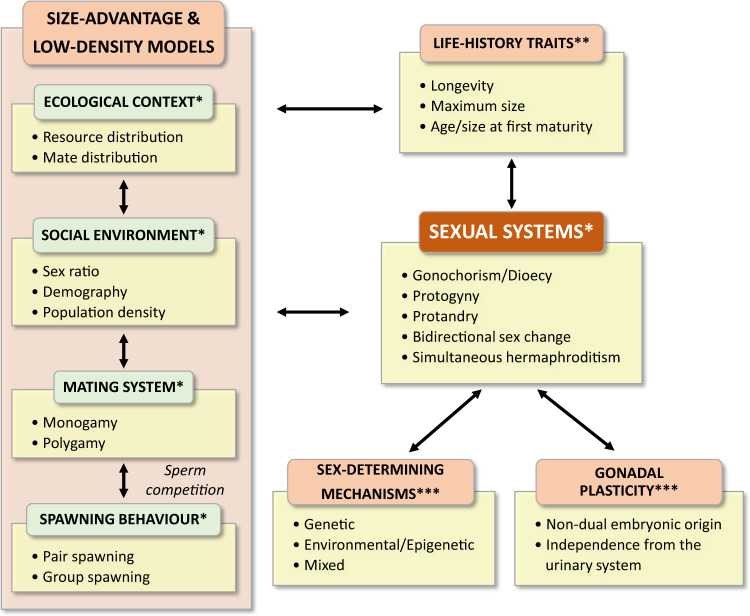
Fig. 6. Theoretical framework for the study of the evolution of sexual systems in teleosts.
Overview of parameters (with some examples) considered in the low density and the size advantage models (*), used in our analyses (**) and proposed in the present study (***).

References

    1. Speijer D, Lukeš J, Eliáš M. Sex is a ubiquitous, ancient, and inherent attribute of eukaryotic life. Proc. Natl Acad. Sci. 2015;112:8827–8834. doi: 10.1073/pnas.1501725112. - DOI - PMC - PubMed
    1. Bachtrog D, et al. Sex determination: why so many ways of doing it? PLoS Biol. 2014;12:e1001899. doi: 10.1371/journal.pbio.1001899. - DOI - PMC - PubMed
    1. Ah-King M, Nylin S. Sex in an evolutionary perspective: just another reaction norm. Evolut. Biol. 2010;37:234–246. doi: 10.1007/s11692-010-9101-8. - DOI - PMC - PubMed
    1. Leonard, J. L. The evolution of sexual systems in animals. In: Leonard, J.L. (ed.). Transitions between sexual systems: understanding the mechanisms of, and pathways between, dioecy, hermaphroditism and other sexual systems, 1–58 Springer (2019).
    1. Weeks SC, Benvenuto C, Reed SK. When males and hermaphrodites coexist: a review of androdioecy in animals. Integr. Comp. Biol. 2006;46:449–464. doi: 10.1093/icb/icj048. - DOI - PubMed

Publication types