


Socioeconomic Barriers to CRS HIPEC for Appendiceal Cancer within a Regional Academic Hospital System
- PMID: 35639293
- PMCID: PMC9547669
- DOI: 10.1245/s10434-022-11949-8
Socioeconomic Barriers to CRS HIPEC for Appendiceal Cancer within a Regional Academic Hospital System
Abstract
Background: Appendiceal cancer with peritoneal metastases (ACPM) is a complex disease requiring multidisciplinary care. Cytoreductive surgery and hyperthermic intraperitoneal chemoperfusion (CRS HIPEC) can significantly improve survival but requires evaluation by a surgical oncologist and significant treatment endurance. The impacts of socioeconomic status (SES) and other social determinants of health on rates of surgical evaluation and treatment have not been examined.
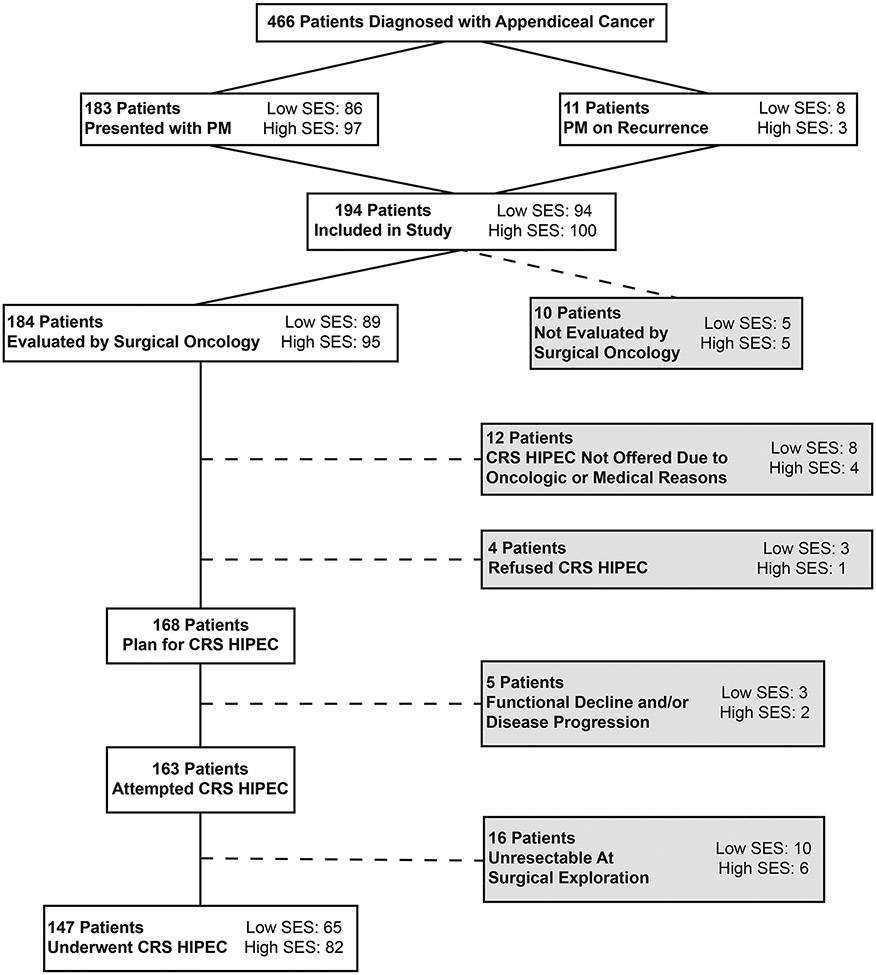
Methods: We conducted a retrospective cohort study examining all patients with ACPM from 2010 to 2018 in a regional healthcare system. Patient characteristics, oncologic details, treatment strategies, and survival were examined. The primary outcomes of interest were referral to Surgical Oncology, receipt of CRS HIPEC, and survival.
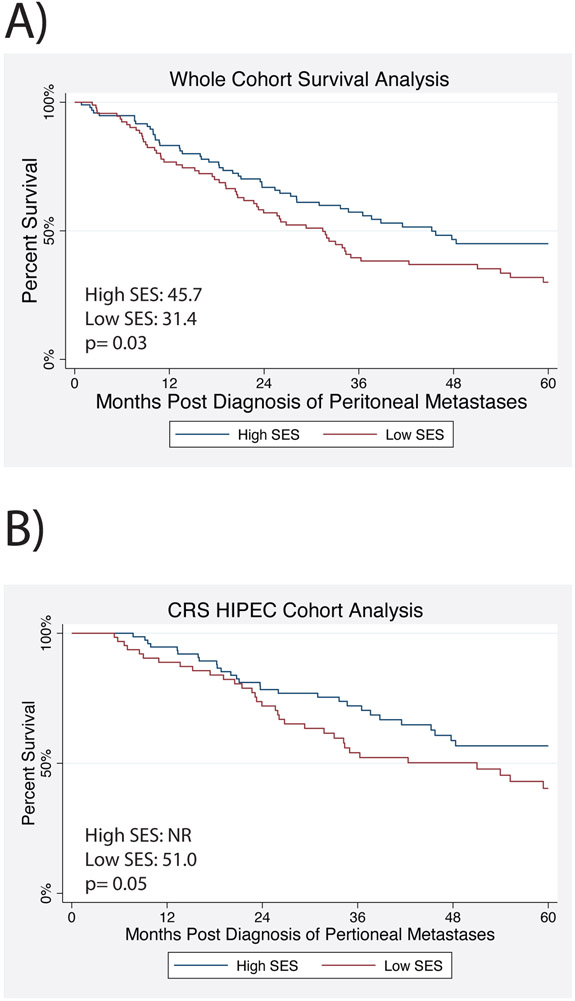
Results: Of 194 patients identified, 94% had synchronous ACPM. The majority of patients (95%) were referred to surgical oncology. Advanced age was the only predictor of nonreferral (p < 0.001). A total of 147 patients (76%) ultimately underwent CRS HIPEC. After adjusting for medical and tumor characteristics, CRS HIPEC was less likely for patients who were unmarried [odds ratio (OR) 0.253, p = 0.004] or of low SES (OR 0.372, p = 0.03). On subanalysis of patients undergoing CRS HIPEC, median overall survival was worse for patients of low SES [51 months versus not reached (NR), p = 0.05], and this disparity persisted on multivariate analysis [hazard ratio (HR) = 2.278, p = 0.001].
Conclusions: This analysis is the first to evaluate barriers to CRS HIPEC for ACPM. While most patients were evaluated by a multidisciplinary team, nonmedical factors may play a role in the treatment received and ultimate outcomes. Addressing these disparities is crucial for ensuring equitable outcomes and improving patient care.
© 2022. Society of Surgical Oncology.
Conflict of interest statement
Figures
Comment in
-
ASO Author Reflections: Understanding Barriers to Complex Cancer Surgery.Ann Surg Oncol. 2022 Oct;29(11):6603. doi: 10.1245/s10434-022-12014-0. Epub 2022 Jun 21. Ann Surg Oncol. 2022. PMID: 35729290 No abstract available.
References
MeSH terms
Grants and funding
LinkOut - more resources
Full Text Sources
