. 2022 Dec;37(1):1610-1619.
doi: 10.1080/14756366.2022.2081846.

GC/MS analysis and potential synergistic effect of mandarin and marjoram oils on Helicobacter pylori

Affiliations

GC/MS analysis and potential synergistic effect of mandarin and marjoram oils on Helicobacter pylori

Rawah H Elkousy et al. J Enzyme Inhib Med Chem. 2022 Dec.

Abstract

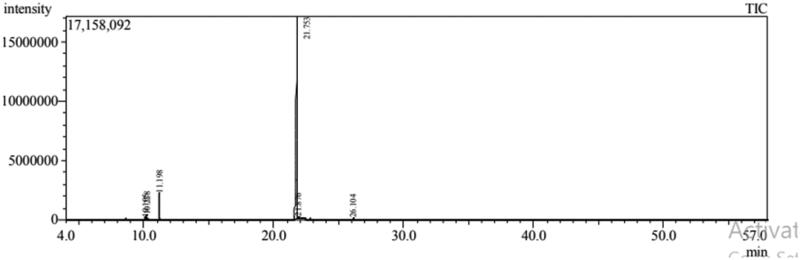
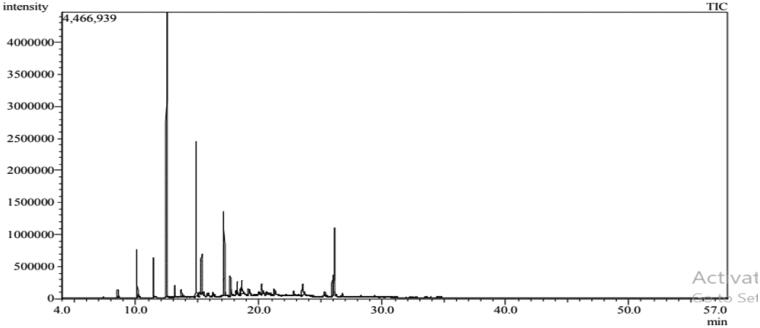
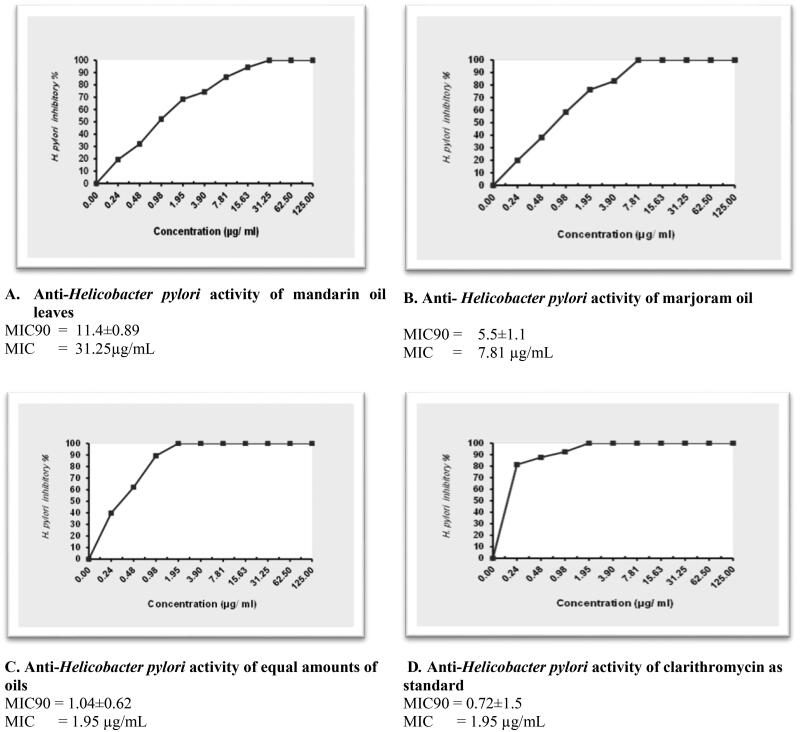
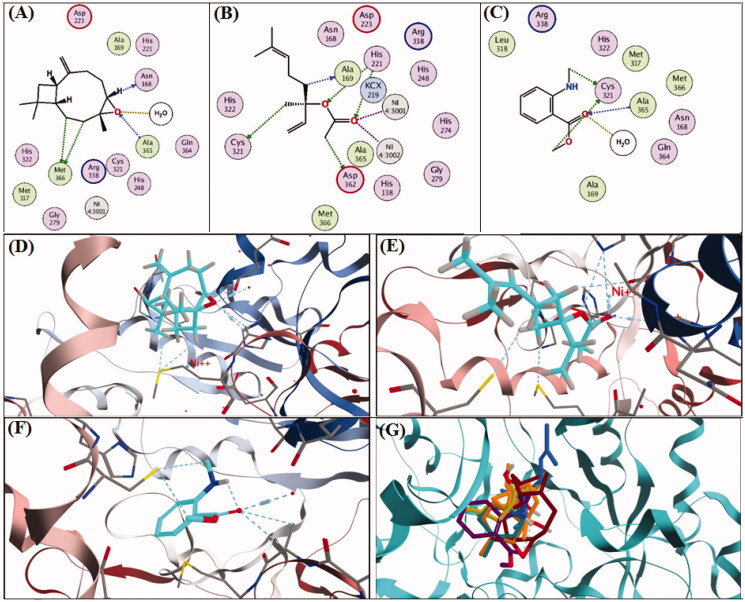
Helicobacter pylori can cause chronic gastritis, peptic ulcer, and gastric carcinoma. This study compares chemical composition and anti-H. pylori activity of mandarin leaves and marjoram herb essential oils, and their combined oil. GC/MS analysis of mandarin oil revealed six compounds (100% identified), mainly methyl-N-methyl anthranilate (89.93%), and 13 compounds (93.52% identified) of marjoram oil, mainly trans-sabinene hydrate (36.11%), terpinen-4-ol (17.97%), linalyl acetate (9.18%), and caryophyllene oxide (8.25%)). Marjoram oil (MIC = 11.40 µg/mL) demonstrated higher activity than mandarin oil (MIC = 31.25 µg/mL). The combined oil showed a synergistic effect at MIC of 1.95 µg/mL (same as clarithromycin). In-silico molecular docking on H. pylori urease, CagA, pharmacokinetic and toxicity studies were performed on major compounds from both oils. The best scores were for caryophyllene oxide then linalyl acetate and methyl-N-methyl anthranilate. Compounds revealed high safety and desirable properties. The combined oil can be an excellent candidate to manage H. pylori.

Keywords: Helicobacter pylori; Marjoram oil; clarithromycin; essential oils; petitgrain mandarin oil.


Conflict of interest statement

The authors declare that they do not have any conflict of financial interests or personal relationships that could influence the reported work.

Figures
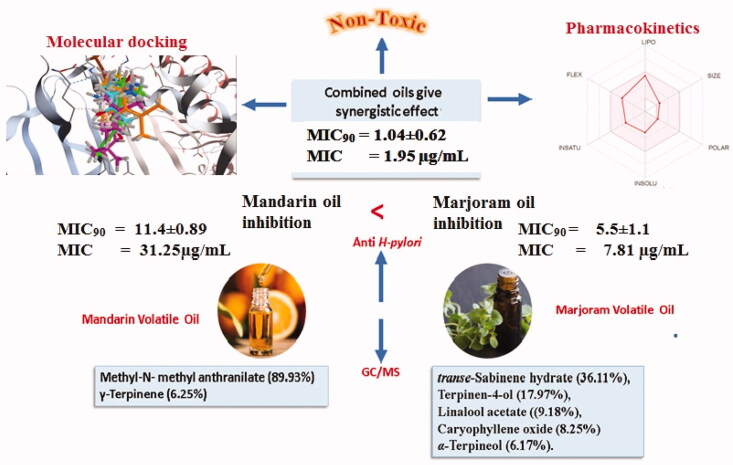
None
Graphical abstract
Figure 1.
Figure 1.
GC-MS Chromatogram of mandarin oil.
Figure 2.
Figure 2.
GC-MS Chromatogram of marjoram oil.
Figure 3.
Figure 3.
The MIC90 & MIC graphs of Anti-Helicobacter pylori activity of mandarin oil leaves (A), marjoram oil (B), equal amounts of both oils(C), and Clarithromycin (D) as standard. All determinations were carried out in a triplicate manner and values are expressed as the mean ± SD.
Figure 4.
Figure 4.
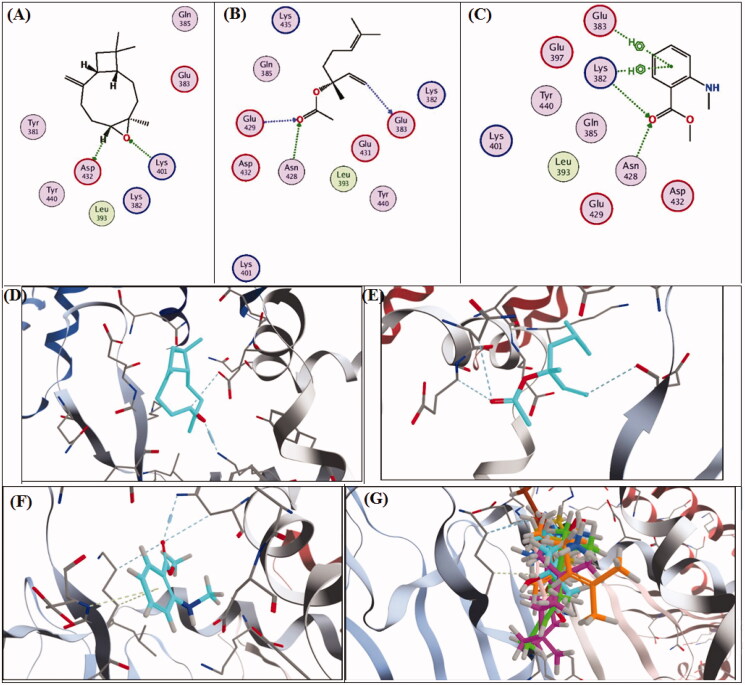
2D and 3D-binding affinities of caryophyllene oxide (A,D), linalyl acetate (B,E), methyl-N-methyl anthranilate (C,F) and concomitant interactions of seven major compounds identified in marjoram and mandarin oils with the active sites of H. pylori urease domain.
Figure 5.
Figure 5.
2D and 3D-binding affinities of caryophyllene oxide (A,D), linalyl acetate (B,E), methyl-N-methyl anthranilate (C,F) and concomitant interactions of seven major compounds identified in marjoram and mandarin oils with the active sites of H. pylori CagA domain.
Figure 6.
Figure 6.
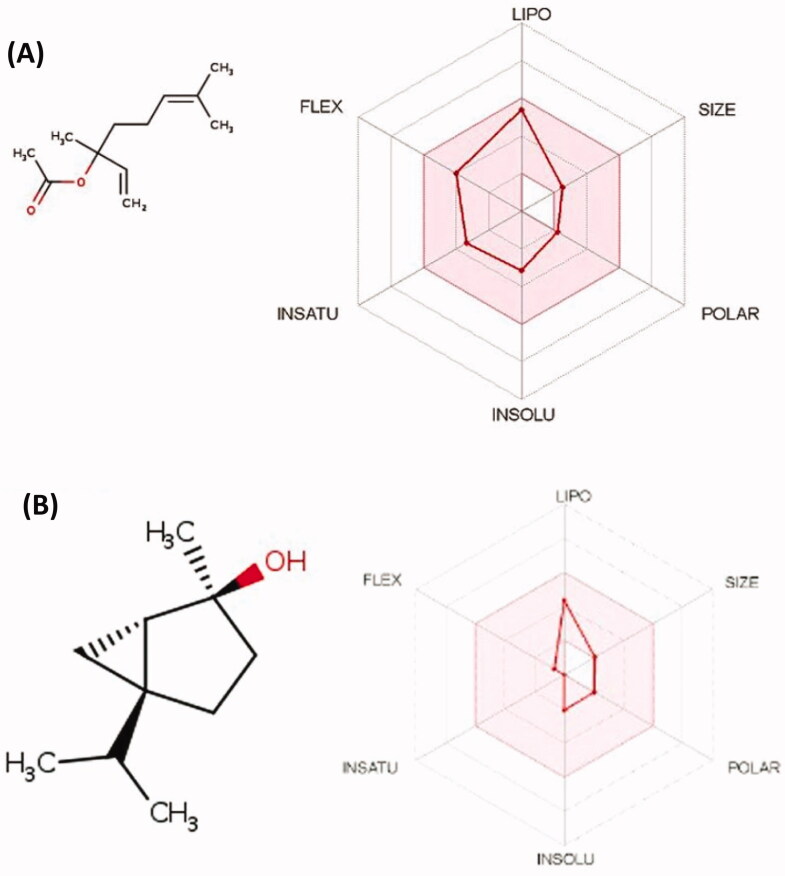
The predicted physicochemical properties for selected compounds, such as linalyl acetate (A) and trans-sabinene hydrate (B).

References

    1. Miethke M, Pieroni M, Weber T, et al. Towards the sustainable discovery and development of new antibiotics. Nature Rev Chem 2021;5:1610–49. - PMC - PubMed
    1. Peek RJ, Blaser MJ. Helicobacter pylori and gastrointestinal tract adenocarcinomas. Nat Rev Cancer 2002;2:28–37. - PubMed
    1. Piscione M, Mazzone M, Di Marcantonio MC, et al. Eradication of Helicobacter pylori and gastric cancer: a controversial relationship. Front Microbiol 2021;12:630852. - PMC - PubMed
    1. Esmaeili D, Mohabati AM, Tohidpour A.. Anti-helicobacter pylori activities of Shoya powder and essential oils of Thymus vulgaris and Eucalyptus globulus. Open Microbiol J 2012;6:65–9. - PMC - PubMed
    1. Grande R, Carradori S, Puca V, et al. Selective inhibition of Helicobacter pylori carbonic anhydrases by carvacrol and thymol could impair biofilm production and the release of outer membrane vesicles. Int J Mol Sci 2021;22:11583. - PMC - PubMed

MeSH terms

LinkOut - more resources