


Radiation Oncology AcaDemic Mentorship Program (ROADMAP) for Junior Faculty: One-Year Results of a Prospective Single Institution Initiative
- PMID: 35644504
- PMCID: PMC9396442
- DOI: 10.1016/j.ijrobp.2022.05.012
Radiation Oncology AcaDemic Mentorship Program (ROADMAP) for Junior Faculty: One-Year Results of a Prospective Single Institution Initiative
Abstract
Purpose: Although mentorship has been associated with promotion, job satisfaction, and retention, data are limited on the mentorship experience of clinical- versus research-track physicians as well as feasibility and relative priority of formal program components.
Methods and materials: Within a single-institution, multi-site, academic network, we implemented a Radiation Oncology AcaDemic Mentorship Program (ROADMAP) for junior faculty. Validated surveys assessing mentee satisfaction were distributed at baseline and 1 year. The statistical analysis included Wilcoxon rank sum and signed tests. Mentees assessed the likelihood to recommend each program component (10-point Likert-type scale), and means with standard error (SE) are reported.
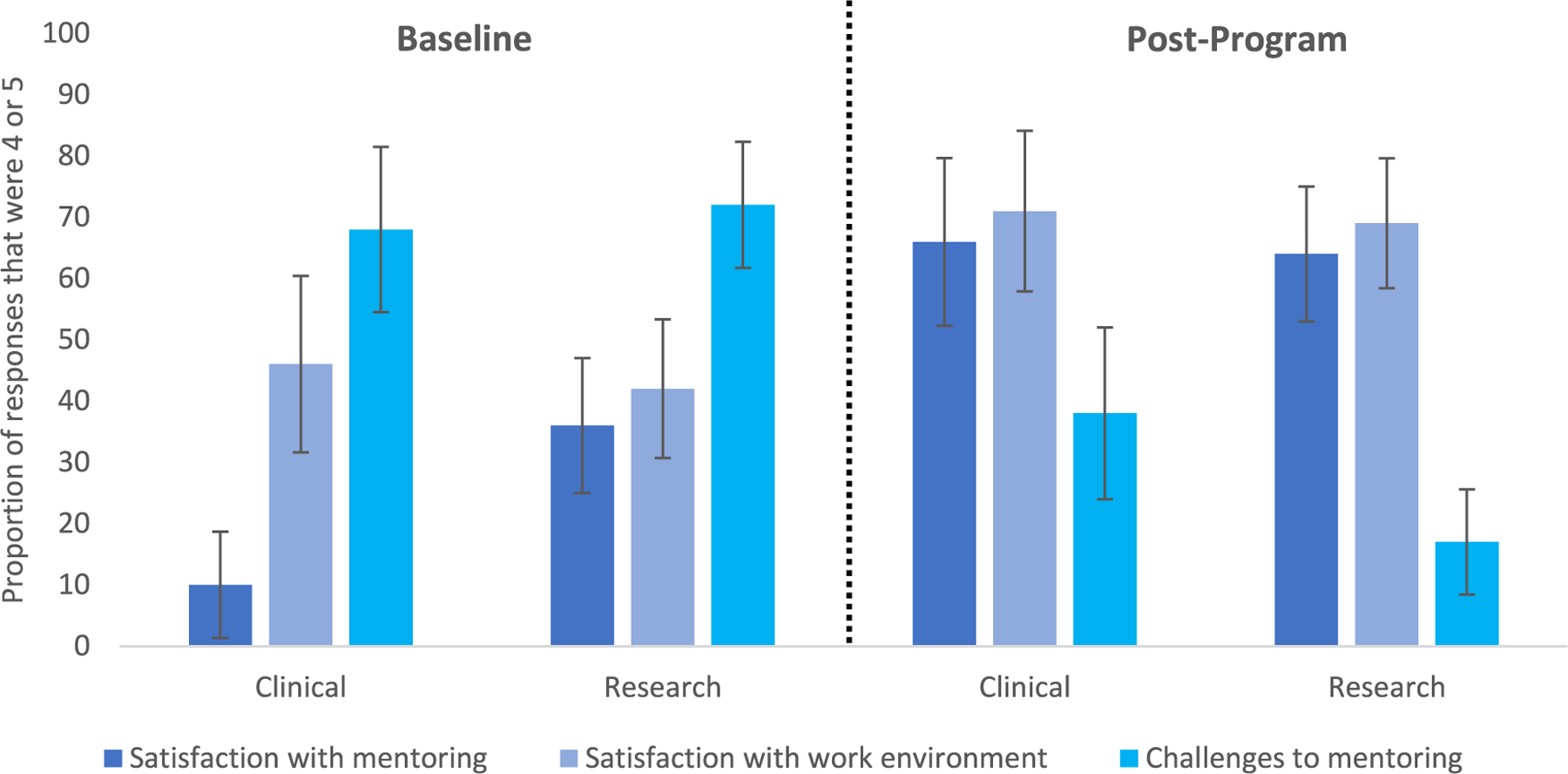
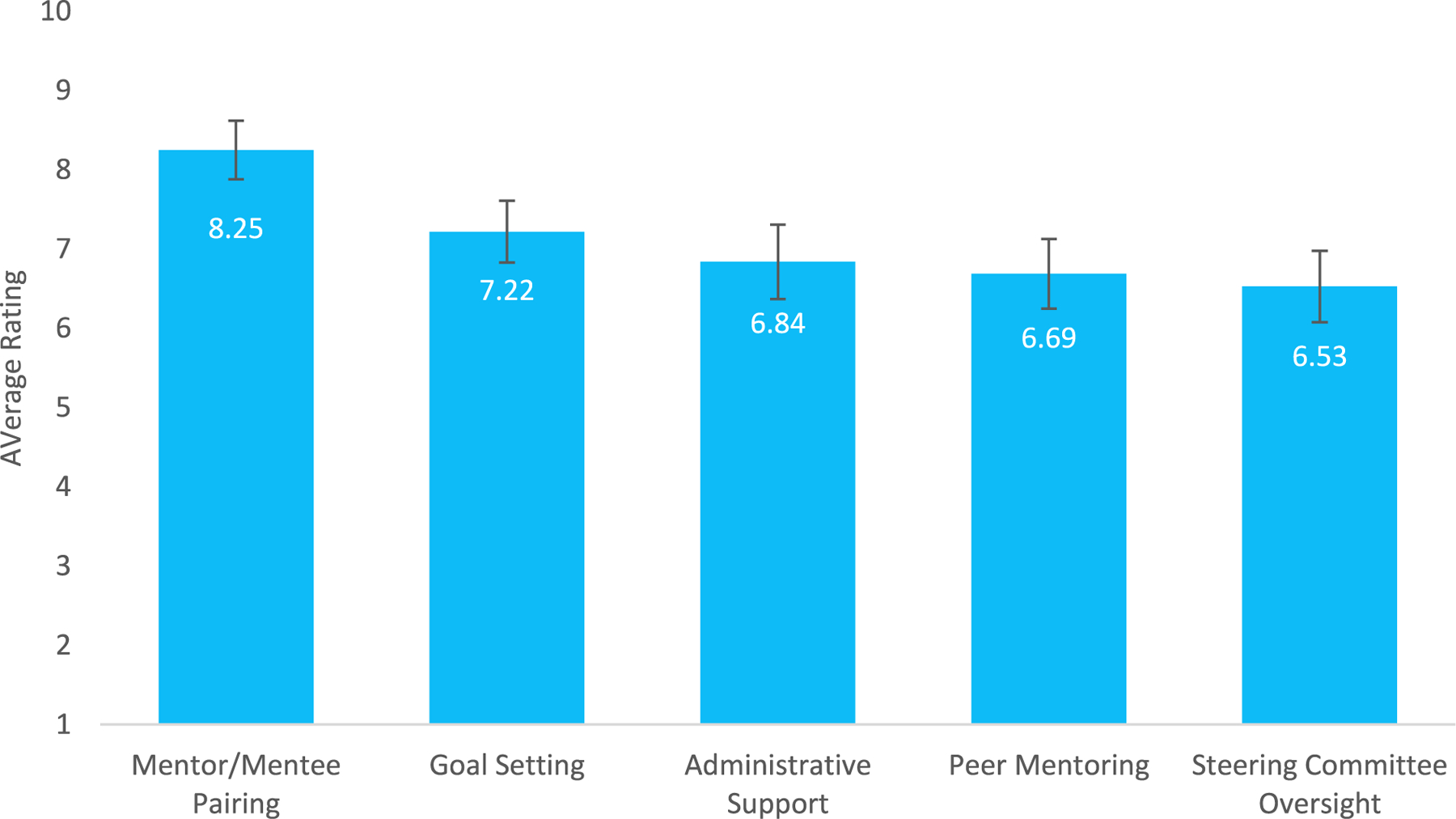
Results: Among 42 eligible junior faculty, 36 (86%) opted into the program. The median time since residency was 2.5 years (interquartile range, 1.75-5.25) on the clinical track (n = 12) and 3 years (interquartile range, 2.75-5.00) on the research track (n = 24). At baseline, research-track physicians reported higher satisfaction with mentoring than physicians on the clinical track (2.92 vs 2.16; P = .02). Among 32 physicians completing 1 year, overall satisfaction with mentoring increased compared with baseline (2.72 vs 3.87; P < .001), which persisted on subset analysis for both clinical- (2.16 vs 4.03; P < .001) and research-track physicians (2.99 vs 3.77; P = .005). At 1 year, 28 mentees (88%) opted to continue the program. Program components were rated 8.25 (SE, 0.37) for mentor-mentee pairings, 7.22 (SE, 0.39) for goal setting, 6.84 (SE, 0.47) for administrative support, 6.69 (SE, 0.44) for peer mentoring, and 6.53 (SE, 0.45) for steering committee oversight. Ratings of peer mentoring were not associated with track (P = .59) or years in practice (P = .29).
Conclusions: Clinical-track physicians may be less satisfied with mentorship than research-track faculty. However, all junior faculty, regardless of track, appeared to benefit from formalizing dyadic mentor-mentee relationships, goal setting, and peer mentoring. Further work is needed to determine the role of mentorship in addressing physician burnout.
Copyright © 2022. Published by Elsevier Inc.
Figures
References
-
- Burgess A, van Diggele C, Mellis C. Mentorship in the health professions: A review. Clin Teach 2018;15:197–202. - PubMed
-
- Sambunjak D, Straus SE, Marusic A. Mentoring in academic medicine: A systematic review. JAMA 2006;296:1103–1115. - PubMed
-
- Morrison LJ, Lorens E, Bandiera G, et al. Impact of a formal mentoring program on academic promotion of department of medicine faculty: A comparative study. Med Teach 2014;36:608–614. - PubMed
-
- Palepu A, Friedman RH, Barnett RC, et al. Junior faculty members’ mentoring relationships and their professional development in u.S. Medical schools. Acad Med 1998;73:318–323. - PubMed
Publication types
MeSH terms
Grants and funding
LinkOut - more resources
Full Text Sources
