


Application of Neurotoxin-Induced Animal Models in the Study of Parkinson's Disease-Related Depression: Profile and Proposal
- PMID: 35645772
- PMCID: PMC9136050
- DOI: 10.3389/fnagi.2022.890512
Application of Neurotoxin-Induced Animal Models in the Study of Parkinson's Disease-Related Depression: Profile and Proposal
Abstract
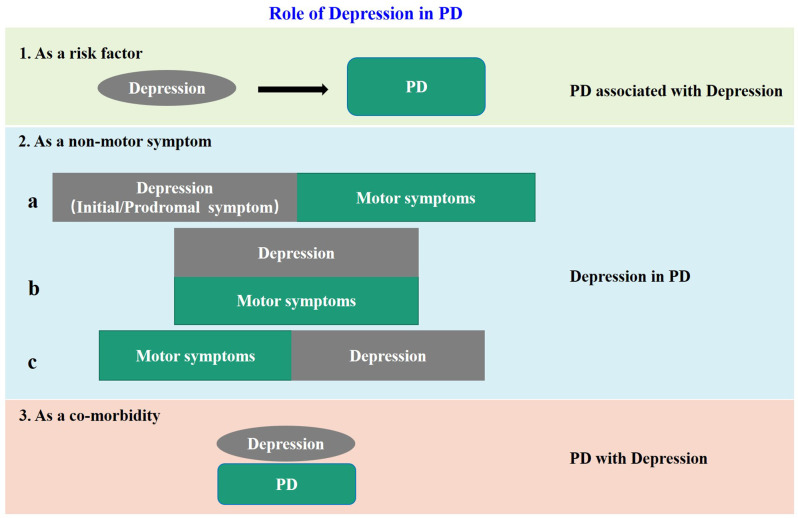
Depression can be a non-motor symptom, a risk factor, and even a co-morbidity of Parkinson's disease (PD). In either case, depression seriously affects the quality of life of PD patients. Unfortunately, at present, a large number of clinical and basic studies focused on the pathophysiological mechanism of PD and the prevention and treatment of motor symptoms. Although there has been increasing attention to PD-related depression, it is difficult to achieve early detection and early intervention, because the clinical guidelines mostly refer to depression developed after or accompanied by motor impairments. Why is there such a dilemma? This is because there has been no suitable preclinical animal model for studying the relationship between depression and PD, and the assessment of depressive behavior in PD preclinical models is as well a very challenging task since it is not free from the confounding from the motor impairment. As a common method to simulate PD symptoms, neurotoxin-induced PD models have been widely used. Studies have found that neurotoxin-induced PD model animals could exhibit depression-like behaviors, which sometimes manifested earlier than motor impairments. Therefore, there have been attempts to establish the PD-related depression model by neurotoxin induction. However, due to a lack of unified protocol, the reported results were diverse. For the purpose of further promoting the improvement and optimization of the animal models and the study of PD-related depression, we reviewed the establishment and evaluation strategies of the current animal models of PD-related depression based on both the existing literature and our own research experience, and discussed the possible mechanism and interventions, in order to provide a reference for future research in this area.
Keywords: Parkinson’s disease; animal model; depression; neurotoxin; non-motor symptoms.
Copyright © 2022 Mou, Guan, Yao, Wang, Song, Ji, Ren and Wei.
Conflict of interest statement
The authors declare that the research was conducted in the absence of any commercial or financial relationships that could be construed as a potential conflict of interest.
Figures
References
-
- Barbiero J. K., Santiago R. M., Persike D. S., da Silva Fernandes M. J., Tonin F. S., da Cunha C., et al. (2014). Neuroprotective effects of peroxisome proliferator-activated receptor alpha and gamma agonists in model of parkinsonism induced by intranigral 1-methyl-4-phenyl-1,2,3,6-tetrahyropyridine. Behav. Brain Res. 274, 390–399. 10.1016/j.bbr.2014.08.014 - DOI - PubMed
Publication types
LinkOut - more resources
Full Text Sources
Research Materials
