


An internet-based compassion course for healthcare professionals: Rationale and protocol for a randomised controlled trial
- PMID: 35646603
- PMCID: PMC9136314
- DOI: 10.1016/j.invent.2021.100463
An internet-based compassion course for healthcare professionals: Rationale and protocol for a randomised controlled trial
Abstract
Background: Severe stress is one of the most common causes of sick leave in Sweden. Previous research has shown that compassion interventions for healthcare professionals can decrease work-related stress through the introduction of self-care, self-awareness, and emotion regulation abilities when experiencing difficult situations. Internet-based stress management interventions have hitherto shown promising results in reducing stress. However, further research is needed to examine the effectiveness of internet-based compassion interventions for healthcare professionals.
Objective: In the present study protocol, a randomised controlled trial is described, aiming to examine the effects of an internet-based compassion course for healthcare professionals on work-related stress and stress of conscience.
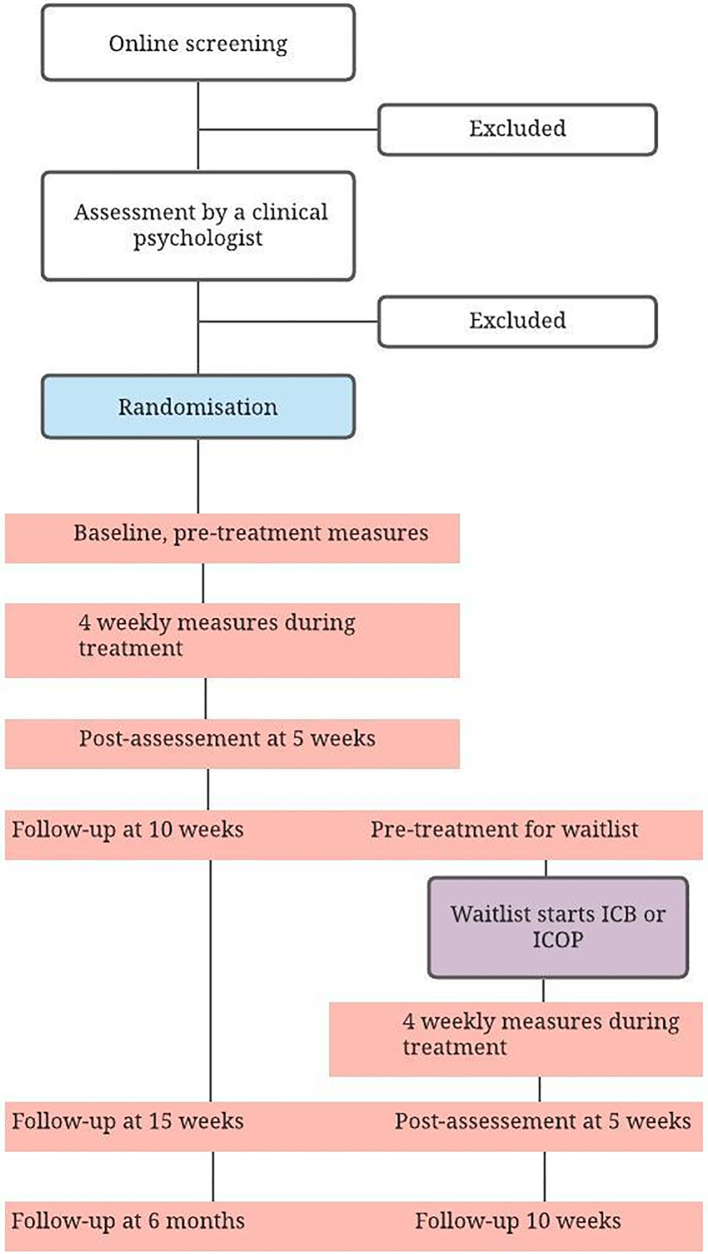
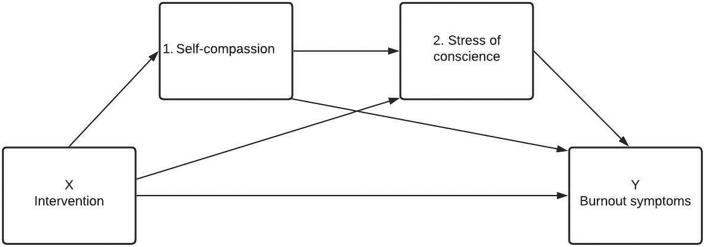
Method: Healthcare professionals will be offered an internet-based stress management course of five modules across a period of five weeks. The design is a randomised controlled study consisting of three groups enrolled in one of the following: a compassion course (n = 120), a cognitive behavioural stress management course (n = 120), or placed on a waitlist followed by either the compassion course or the cognitive behavioural stress management course (n = 36). We hypothesise that the internet-based compassion course would reduce the participants' stress of conscience to a greater degree compared to the other two groups. The secondary hypothesis is that the compassion course would increase the participants' professional quality of life (i.e., higher job satisfaction and lower empathy fatigue) and self-compassion. In addition, the internet-based compassion course is expected to reduce the participants' work-related stress and sick leave rates to the same degree (non-inferiority) as the cognitive behavioural stress management course and to a higher degree when compared to the waitlist condition. The primary outcome measure is the Stress of Conscience Questionnaire (SCQ) and the secondary outcome measures are the Professional Quality of Life Scale (PROQOL), the Work-related Stress Copenhagen Psychosocial Questionnaire (COPSOQ), and the Self-compassion Scale (SCS). Assessments will be performed at baseline, four weekly assessments during treatment, post-treatment (5 weeks), and follow-ups at 10 weeks, 15 weeks, and 6 months. The repeated measures data will be analysed using a generalised estimating equation for repeated measurements to examine whether changes over time differ between the groups and whether the improvements persist over time.
Discussion: The clinical trial is expected to provide novel data on the effects of compassion interventions and add to the existing knowledge of internet-based interventions for stress management in healthcare professionals.
Keywords: Cognitive behavioural therapy; Compassionate mind training course; Healthcare professionals; Internet-based intervention; Stress management course; Stress of conscience.
© 2021 The Authors. Published by Elsevier B.V.
Conflict of interest statement
The authors declare that they have no known competing financial interests or personal relationships that could have appeared to influence the work reported in this paper.
Figures
References
-
- Åhlin J., Ericson-Lidman E., Norberg A., Strandberg G. A comparison of assessments and relationships of stress of conscience, perceptions of conscience, burnout and social support between healthcare personnel working at two different organizations for care of older people. Scand. J. Caring Sci. 2015;29(2):277–287. - PubMed
-
- Åhlin J., Ericson-Lidman E., Strandberg G. Assessments of stress of conscience, burnout and social support amongst care providers in home care and residential care for older people. Scand. J. Caring Sci. 2021 http://onlinelibrary.wiley.com/doi/abs/10.1111/scs.12970 (n/a). Available from: - DOI - PubMed
-
- Beaumont E., Irons C., Rayner G., Dagnall N. Does compassion-focused therapy training for health care educators and providers increase self-compassion and reduce self-persecution and self-criticism? J. Contin. Educ. Heal. Prof. 2016;36(1):4–10. - PubMed
-
- Beaumont E., Bell T., Fairhurst H., McAndrew S. The impact of compassionate mind training on qualified health professionals undertaking a compassion-focused therapy module. Couns. Psychother. Res. 2021 https://onlinelibrary.wiley.com/doi/abs/10.1002/capr.12396 Mar 23];n/a(n/a). Available from: - DOI
Publication types
LinkOut - more resources
Full Text Sources
