


The Iron Response of Mycobacterium tuberculosis and Its Implications for Tuberculosis Pathogenesis and Novel Therapeutics
- PMID: 35646739
- PMCID: PMC9132128
- DOI: 10.3389/fcimb.2022.876667
The Iron Response of Mycobacterium tuberculosis and Its Implications for Tuberculosis Pathogenesis and Novel Therapeutics
Abstract
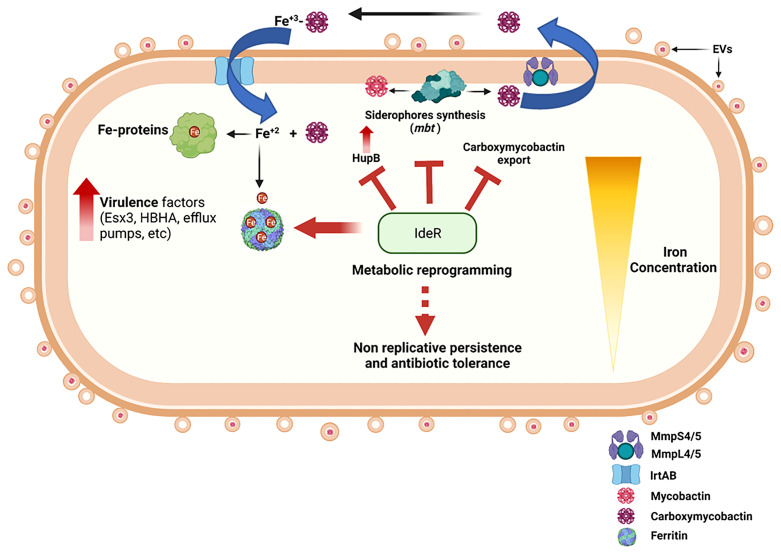
Most pathogenic bacteria require iron for growth. However, this metal is not freely available in the mammalian host. Due to its poor solubility and propensity to catalyze the generation of reactive oxygen species, host iron is kept in solution bound to specialized iron binding proteins. Access to iron is an important factor in the outcome of bacterial infections; iron limitation frequently induces virulence and drives pathogenic interactions with host cells. Here, we review the response of Mycobacterium tuberculosis to changes in iron availability, the relevance of this response to TB pathogenesis, and its potential for the design of new therapeutic interventions.
Keywords: IdeR; M. tuberculosis; extracellular vesicles; ferritin; iron-limitation; iron-response.
Copyright © 2022 Rodriguez, Sharma, Biswas and Sharma.
Conflict of interest statement
The authors declare that the research was conducted in the absence of any commercial or financial relationships that could be construed as a potential conflict of interest.
Figures
References
Publication types
MeSH terms
Substances
LinkOut - more resources
Full Text Sources
