


Potential therapeutic targets from Mycobacterium abscessus (Mab): recently reported efforts towards the discovery of novel antibacterial agents to treat Mab infections
- PMID: 35647542
- PMCID: PMC9020770
- DOI: 10.1039/d1md00359c
Potential therapeutic targets from Mycobacterium abscessus (Mab): recently reported efforts towards the discovery of novel antibacterial agents to treat Mab infections
Abstract
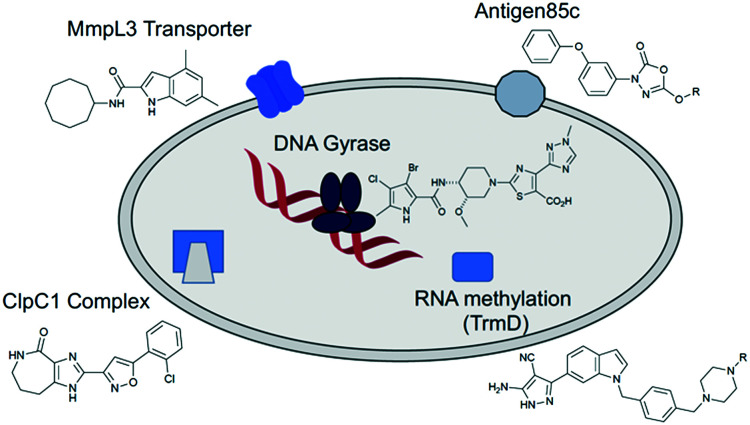
Mycobacterium abscessus (Mab) are rapidly growing mycobacteria that cause severe and persistent infections in both skin and lung tissues. Treatment regimens involve the extended usage of complex combinations of drugs, often leading to severe adverse side effects, particularly in immunocompromised patients. Current macrolide therapies are gradually proving to be less effective, largely due to emergence of antibiotic resistance; there is therefore an increasing need for the discovery of new antibacterials that are active against Mab. This review highlights recent research centred upon a number of potential therapeutic targets from Mab (Ag85C, ClpC1, GyrB, MmpL3 and TrmD), and discusses the various approaches used to discover small molecule inhibitors, in the search for future antibiotics for the treatment of Mab infections.
This journal is © The Royal Society of Chemistry.
Conflict of interest statement
There are no conflicts to declare.
Figures
References
-
- Moore M. Frerichs J. B. J. Invest. Dermatol. 1953;20:133. - PubMed
-
- Griffith D. E. Girard W. M. Wallace Jr R. J. Am. Rev. Respir. Dis. 1993;147:1271. - PubMed
-
- Mycobacteria were initially noted growing on the surfaces of cultures, appearing filamentous under a microscope with resemblance to a mould, hence the Greek prefix myco- (relating to fungi)
Publication types
LinkOut - more resources
Full Text Sources
