Review
. 2022 Jun 1;8(1):43.
doi: 10.1038/s41522-022-00304-0.

Magnetotactic bacteria and magnetofossils: ecology, evolution and environmental implications

Affiliations
Review

Magnetotactic bacteria and magnetofossils: ecology, evolution and environmental implications

Pranami Goswami et al. NPJ Biofilms Microbiomes. .

Abstract

Magnetotactic bacteria (MTB) are a group of phylogenetically diverse and morphologically varied microorganisms with a magnetoresponsive capability called magnetotaxis or microbial magnetoreception. MTB are a distinctive constituent of the microbiome of aquatic ecosystems because they use Earth's magnetic field to align themselves in a north or south facing direction and efficiently navigate to their favored microenvironments. They have been identified worldwide from diverse aquatic and waterlogged microbiomes, including freshwater, saline, brackish and marine ecosystems, and some extreme environments. MTB play important roles in the biogeochemical cycling of iron, sulphur, phosphorus, carbon and nitrogen in nature and have been recognized from in vitro cultures to sequester heavy metals like selenium, cadmium, and tellurium, which makes them prospective candidate organisms for aquatic pollution bioremediation. The role of MTB in environmental systems is not limited to their lifespan; after death, fossil magnetosomal magnetic nanoparticles (known as magnetofossils) are a promising proxy for recording paleoenvironmental change and geomagnetic field history. Here, we summarize the ecology, evolution, and environmental function of MTB and the paleoenvironmental implications of magnetofossils in light of recent discoveries.


Conflict of interest statement

The authors declare no competing interests.

Figures
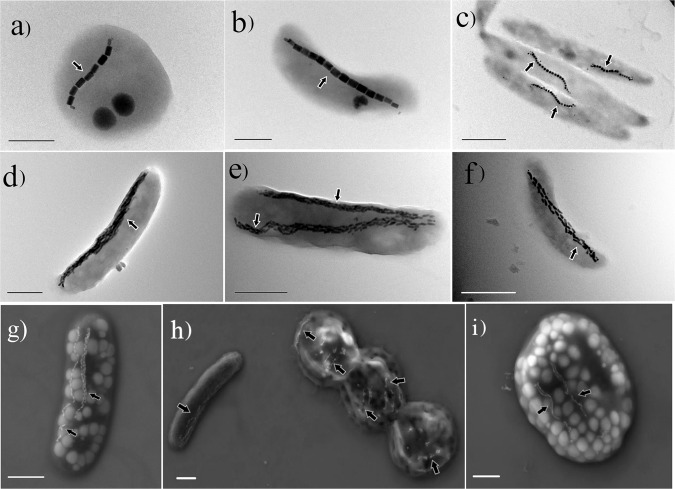
Fig. 1
Fig. 1. Electron microscope images of MTB.
Transmission electron microscope (af) and scanning electron microscope (gi) images of various MTB. Black arrows indicate magnetosome chains. Scale bars: a, b = 0.5 μm, ci = 1 μm.
Fig. 2
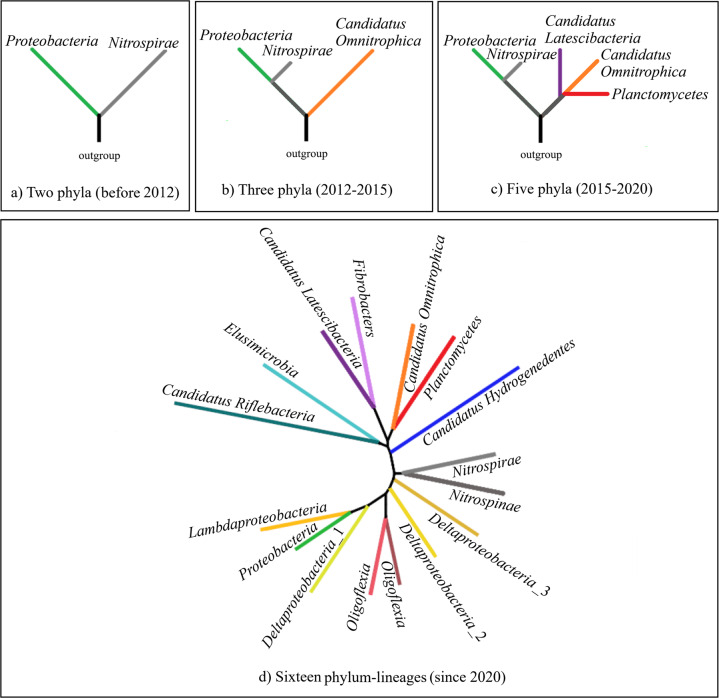
Fig. 2. Schematic representation of the gradual expansion of the phylogenetic tree of MTB in the Bacteria domain.
a Before 2012, only two phyla (Proteobacteria and Nitrospirae) were identified to contain MTB. b Between 2012 and 2015, an additional branch for the Candidatus Omnitrophica phylum was added. c Subsequently, two bacterial phyla (Candidatus Latescibacteria and Planctomycetes) were added to the MTB tree of life based on the presence of magnetosome gene clusters in their genomes. d The latest addition to the MTB tree has expanded its branches to a total of sixteen bacterial phylum-level lineages,. All taxonomic groupings are based on the NCBI taxonomy (https://www.ncbi.nlm.nih.gov/taxonomy).
Fig. 3
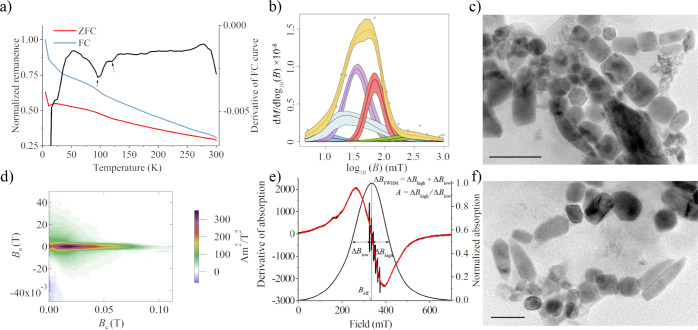
Fig. 3. Methods for identifying magnetofossils in samples from core MD01-2444 at 26.74 m depth.
a Low-temperature magnetic measurements (blue and red curves: normalized zero-field cooled (ZFC) and field cooled (FC) curves, respectively; black curve: normalized first derivative of the FC curve; peaks with arrows (~100 K and ~115 K) are indicative of biogenic and detrital magnetite, respectively). b Coercivity distribution from IRM acquisition curve unmixing (gray dots: IRM acquisition data; orange curve: spline fit based on measured data; purple and red curves: biogenic soft and biogenic hard components, respectively; shaded areas for each curve are 95% confidence intervals). c, f TEM images of magnetic extracts from the same sample. Scale bars: c = 200 nm, f = 100 nm. The main magnetofossil morphotypes are prisms, octahedra and bullets. d FORC diagram with a central ridge signature that is indicative of non-interacting single-domain magnetic particles. e Ferromagnetic resonance (FMR) and FMR absorption spectra (black curve: measured FMR spectrum; red curve: fitted FMR spectrum; black humped curve: normalized FMR absorption spectrum). Definition of commonly used magnetofossil-indicative parameters are shown in (e).
Fig. 4
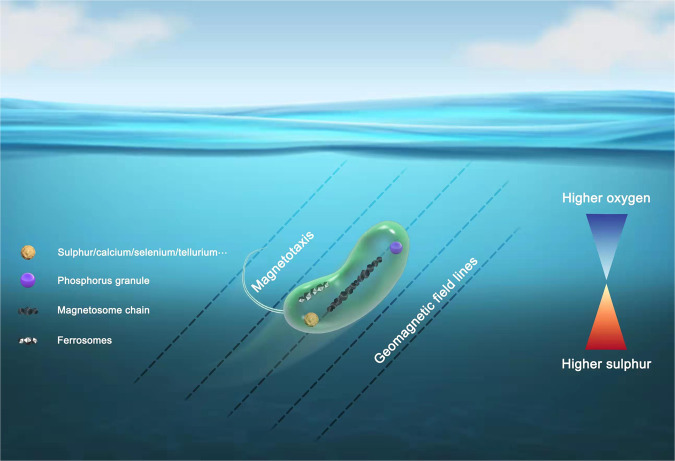
Fig. 4. Magnetotaxis, combined with chemotaxis and aerotaxis, allows MTB to efficiently locate and maintain an optimal position for survival and growth in habitats with vertical redox concentration gradients in water columns and sediments around an oxic–anoxic interface (OAI).
MTB are widely distributed in aquatic environments from marine to freshwater ecosystems and are thought to play important roles in the cycling of various elements (e.g., Fe, C, N, S, P, and some heavy metals, such as tellurium and selenium).
Fig. 5
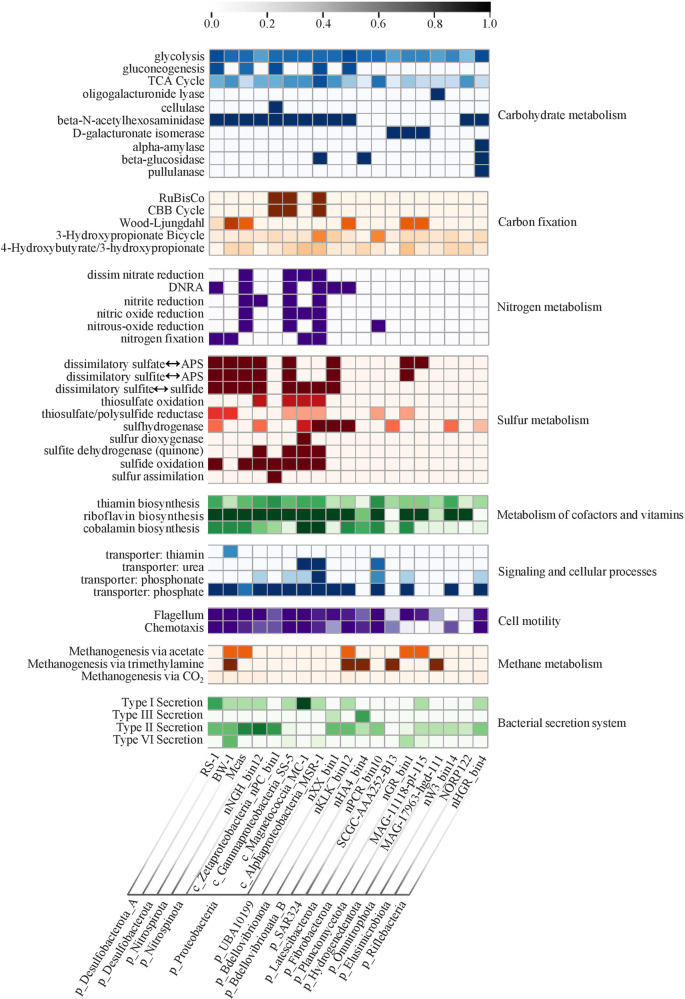
Fig. 5. Metabolic pathways of representative MTB genomes across 16 bacterial phylum-level lineages.
The color gradient represents the completeness of major metabolic pathways inferred from the presence or absence of genes. Dark represents a complete or nearly complete pathway, and white represents a pathway that is absent or mainly incomplete. Note that most available MTB genomes are draft or incomplete, so we cannot rule out that the absence or incompleteness of metabolic pathways maybe due to the fragmented nature of draft genomes. All taxonomic groupings are based on the GTDB taxonomy (Release 89, https://gtdb.ecogenomic.org).

References

    1. Kirschvink, J. L., Jones, D. S. & MacFadden, B. J. Magnetite biomineralization and magnetoreception in organisms (Springer US, 1985).
    1. Frankel, R. B. & Blakemore, R. P. Iron Biominerals (Springer US, 1991).
    1. Uebe R, Schüler D. Magnetosome biogenesis in magnetotactic bacteria. Nat. Rev. Microbiol. 2016;14:621–637. doi: 10.1038/nrmicro.2016.99. - DOI - PubMed
    1. Lin W, Kirschvink JL, Paterson GA, Bazylinski DA, Pan Y. On the origin of microbial magnetoreception. Natl Sci. Rev. 2020;7:472–479. doi: 10.1093/nsr/nwz065. - DOI - PMC - PubMed
    1. Bellini S. On a unique behavior of freshwater bacteria. Chin. J. Oceanol. Limnol. 2009;27:3–5. doi: 10.1007/s00343-009-0003-5. - DOI

Publication types