


Measurement of Sarcopenia in Head and Neck Cancer Patients and Its Association With Frailty
- PMID: 35651790
- PMCID: PMC9150392
- DOI: 10.3389/fonc.2022.884988
Measurement of Sarcopenia in Head and Neck Cancer Patients and Its Association With Frailty
Abstract
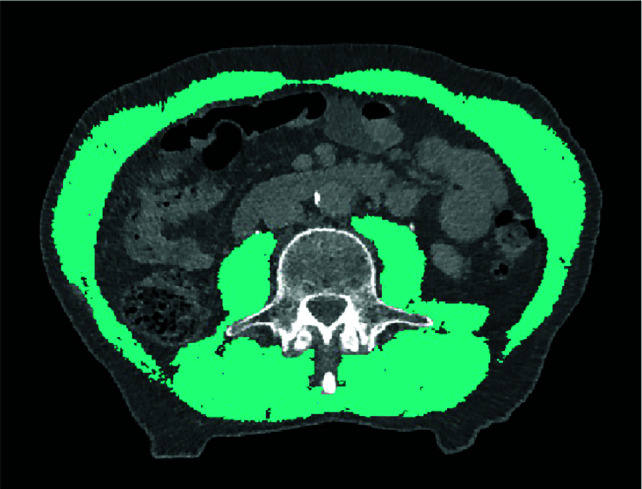
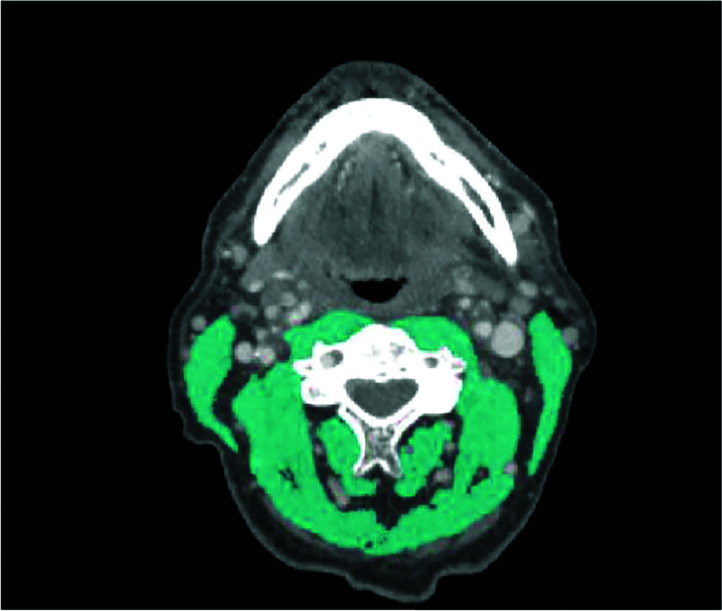
In head and neck cancer (HNC) there is a need for more personalized treatment based on risk assessment for treatment related adverse events (i.e. toxicities and complications), expected survival and quality of life. Sarcopenia, defined as a condition characterized by loss of skeletal muscle mass and function, can predict adverse outcomes in HNC patients. A review of the literature on the measurement of sarcopenia in head and neck cancer patients and its association with frailty was performed. Skeletal muscle mass (SMM) measurement only is often used to determine if sarcopenia is present or not. SMM is most often assessed by measuring skeletal muscle cross-sectional area on CT or MRI at the level of the third lumbar vertebra. As abdominal scans are not always available in HNC patients, measurement of SMM at the third cervical vertebra has been developed and is frequently used. Frailty is often defined as an age-related cumulative decline across multiple physiologic systems, with impaired homeostatic reserve and a reduced capacity of the organism to withstand stress, leading to increased risk of adverse health outcomes. There is no international standard measure of frailty and there are multiple measures of frailty. Both sarcopenia and frailty can predict adverse outcomes and can be used to identify vulnerable patients, select treatment options, adjust treatments, improve patient counselling, improve preoperative nutritional status and anticipate early on complications, length of hospital stay and discharge. Depending on the definitions used for sarcopenia and frailty, there is more or less overlap between both conditions. However, it has yet to be determined if sarcopenia and frailty can be used interchangeably or that they have additional value and should be used in combination to optimize individualized treatment in HNC patients.
Keywords: complications; elderly; frailty; head and neck cancer; sarcopenia; skeletal muscle mass; survival; toxicity.
Copyright © 2022 de Bree, Meerkerk, Halmos, Mäkitie, Homma, Rodrigo, López, Takes, Vermorken and Ferlito.
Conflict of interest statement
The authors declare that the research was conducted in the absence of any commercial or financial relationships that could be construed as a potential conflict of interest.
Figures
References
Publication types
LinkOut - more resources
Full Text Sources
Research Materials
