


Characterisation, whole-genome sequencing and phylogenetic analysis of three H3N2 avian influenza viruses isolated from domestic ducks at live poultry markets of Iran, 2017: First report
- PMID: 35654078
- PMCID: PMC9297799
- DOI: 10.1002/vms3.819
Characterisation, whole-genome sequencing and phylogenetic analysis of three H3N2 avian influenza viruses isolated from domestic ducks at live poultry markets of Iran, 2017: First report
Abstract
Background: Avian influenza type A viruses (AIV) can infect a broad range of hosts including human and birds, making them an important viral pathogen with zoonotic potential. Ducks are a known reservoir for many avian viruses including the AIV.
Objectives: To sequence the entire genome of duck-derived H3N2 and ran comprehensive phylogenetic analysis on them to study their origin.
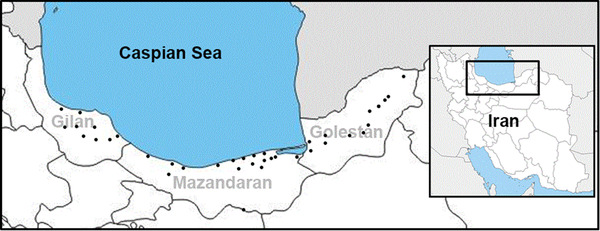
Methods: In this study, 962 cloacal swabs were collected from domestic ducks at several live poultry markets (LPMs) of Gilan, Mazandaran and Golestan provinces of Iran in the year 2017.
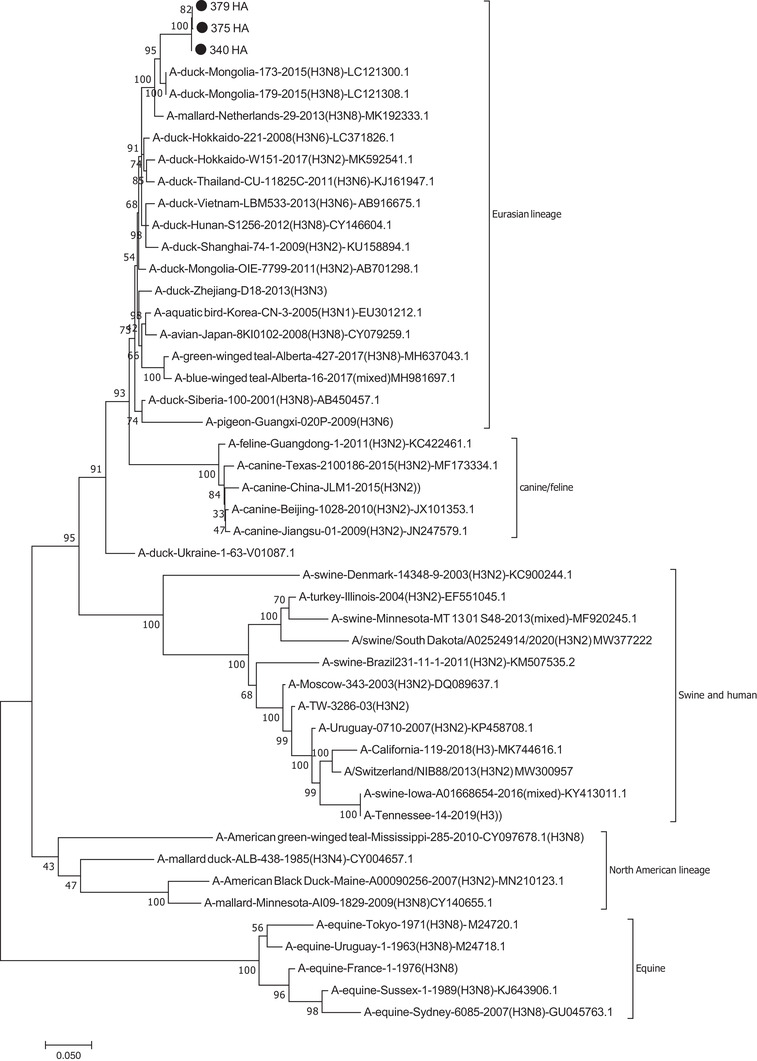
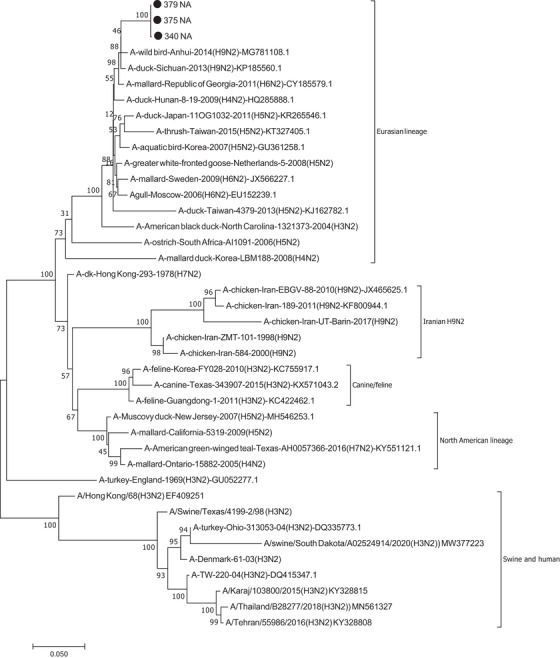
Results: Preliminary assays such as haemagglutination inhibition assay (HI), Neuraminidase Inhibition assay(NI) and RT-qPCR suggested that 0.5% of the birds were infected by H3 low pathogenic influenza viruses (LPAI). Three isolates were selected for whole genome sequencing. The cleavage site of the HA genes showed a PEKQTR/GLF motif, an indicator of LPAI. Furthermore, BLAST and phylogenetic analyses of the HA gene showed high homology to the Eurasian lineage of H3N8 AIV (95.5%-97.1% to several European and East Asian isolates). However, the NA genes showed high homology (at most 96.5-96.9%) to those belonging to AIV N2 subtype. Furthermore, internal genes showed high homology (96%-98%) to a variety of duck-origin subtypes and glycoprotein combinations, which were different for each segment. This showed a complex reassortment between different subtypes.
Discussion: This report is the first whole genome sequencing and complete characterisation of H3N2 AIV from Iran.
Conclusion: Such surveillance should continue to study the evolution and possible emergence of viruses with pandemic potential.
Keywords: H3 subtype; Iran; avian influenza virus; domestic ducks; live poultry market.
© 2022 The Authors. Veterinary Medicine and Science published by John Wiley & Sons Ltd.
Conflict of interest statement
The authors declare that they have no competing interests.
Figures
References
-
- Deng, G. , Tan, D. , Shi, J. , Cui, P. , Jiang, Y. , Liu, L. , Tian, G. , Kawaoka, Y. , Li, C. , & Chen, H. (2013). Complex reassortment of multiple subtypes of avian influenza viruses in domestic ducks at the dongting lake region of China. Journal of Virology, 87(17), 9452–9462. 10.1128/jvi.00776-13 - DOI - PMC - PubMed
Publication types
MeSH terms
LinkOut - more resources
Full Text Sources
Medical
Research Materials
Miscellaneous
